Solutions / Brand and creator
Plush Merchandise For Brands And Creators
Plush merchandise for an original character, a game, an illustration series or a creator’s audience. One character usually becomes a small range rather than a single item, and the range has to hold together.
What This Route Covers
Merchandise work is a range decision before it is a product decision.
This route is for rights holders developing their own character into plush: independent brands, game studios, illustrators, and creators selling to their own audience.
The work starts from the character, not from a product list. Proportions, expression, the number of views that exist, and how the character is recognised at small size decide which product forms are realistic.
It does not cover copies of existing licensed characters, and it does not cover unlicensed fan merchandise. A rights statement is required before sampling begins.
What To Send With A Range Enquiry
Six inputs decide whether a character survives translation into sewn plush.
- Character referencesFront, side and back views if they exist. If only one view exists, say so; hidden structure will be proposed and approved by you.
- Rights and approvalsConfirmation that you hold the rights, plus who inside your team signs off on likeness, colour and packaging.
- Range ambitionWhich forms you want to test first and which can wait. A keychain and a 40 cm plush carry very different economics.
- Audience and channelWhere the range sells and to whom, since channel rules affect labels, packaging and age marking.
- Quantity per formPlanned units for each item, and whether the range launches at once or in phases.
- Launch date and repeat planThe date the range must be sellable, and whether a second run is expected.
Forms One Character Can Take
Each form tests a different thing: recognition, price point, or reach.
Character Plush
The reference form. Proportions and expression matter most; this is where likeness is won or lost.
Plush Keychain
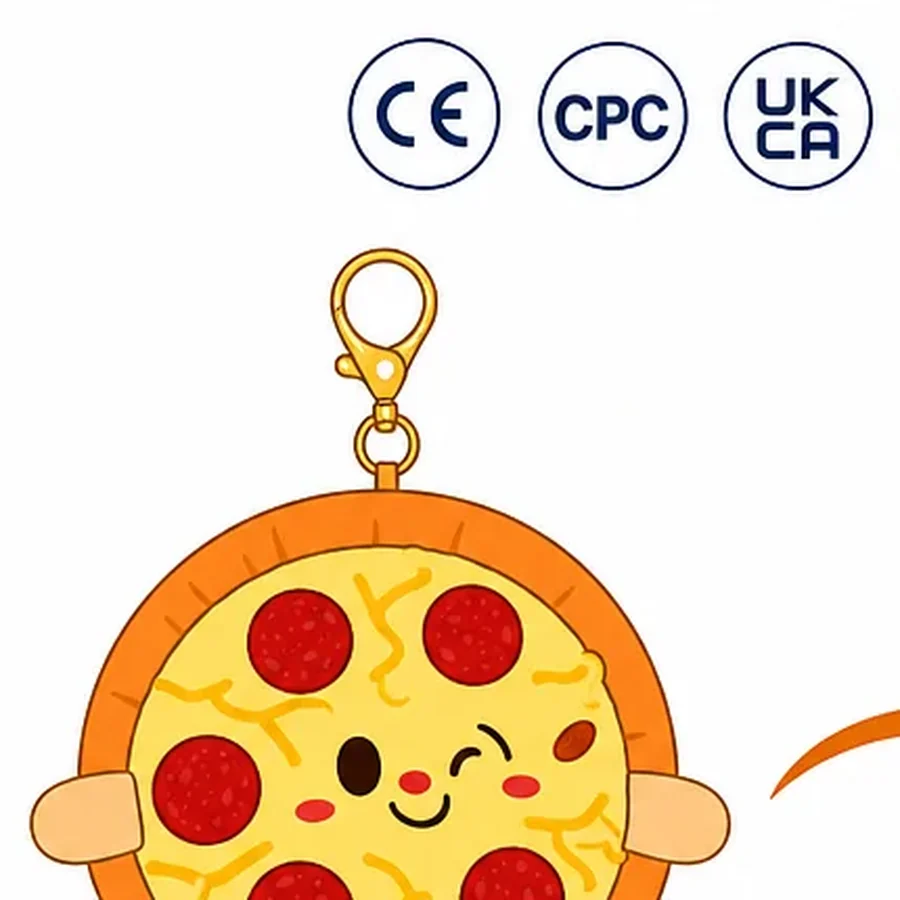
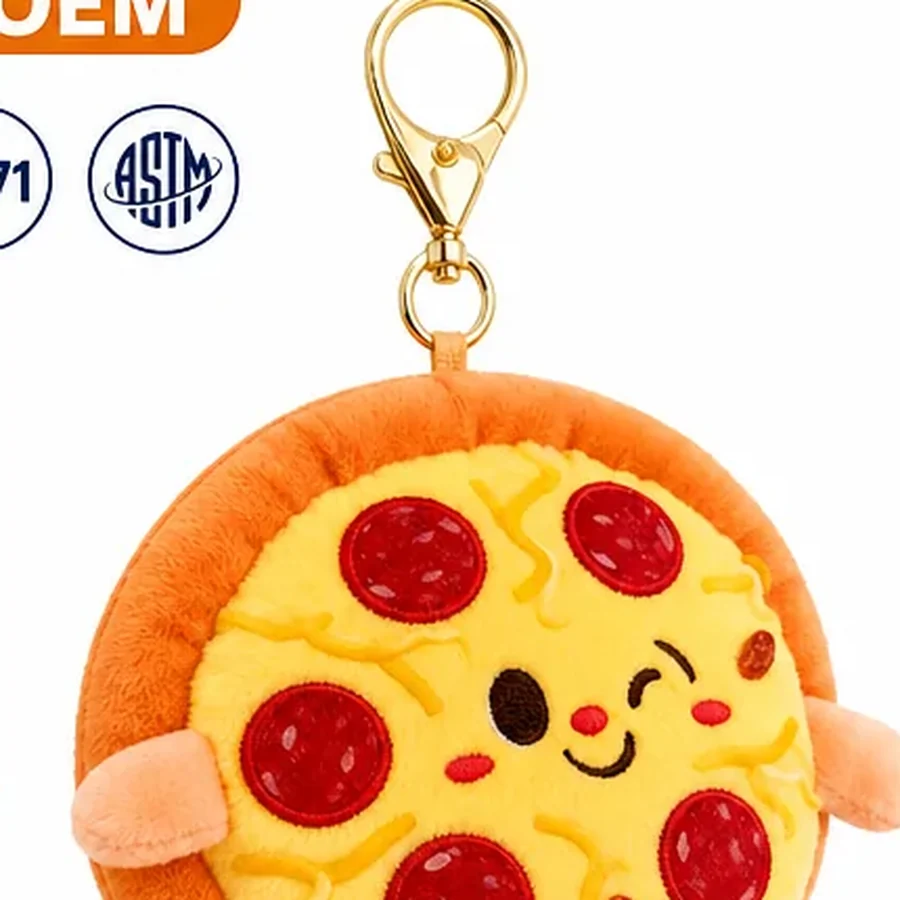
Small-format recognition test. Detail has to be simplified deliberately rather than shrunk.
Plush Backpack Or Pillow
Shape-led items that read as merchandise rather than a toy. Construction limits the character pose.
Hand Puppet
Interaction-led form for younger audiences; the mouth and hand access change the pattern completely.
Choosing By Starting Point
| Question | What To Decide | What It Changes |
|---|---|---|
| Own Character | Rights held by you | Pattern development and approval path |
| Licensed Character | Licence scope and territory | Who approves artwork and whether the licence covers production |
| Creator Drop | Short run, launch date | Sampling lead time versus launch date |
Who Decides What
Likeness approval is the recurring risk in creator projects. Agree who signs and when.
| Decision Point | What To Confirm | Why It Matters |
|---|---|---|
| Rights And Territory | You confirm rights, territory and term for every character used. | Sampling cannot start on an unlicensed character. |
| Likeness Approval | You name one approver for shape, colour and expression. | Multiple approvers is the usual cause of repeated sampling. |
| Pattern And Construction | Orui proposes patterns and explains what cannot be sewn as drawn. | A 2D design never translates literally. |
| Range Specification | Agreed per form: size, material, filling, labels, packing. | Each form is its own specification and its own specification, sampling work and quotation. |
| Launch Date | You set the date; Orui states what the date allows. | A date cannot be held before sample approval. |
| Repeat Runs | Orui keeps the approved specification for reordering. | Reorders are faster only if the specification was frozen. |
From One Character To A Shippable Range
The sequence protects likeness first and economics second, because likeness cannot be fixed at packing.
Character Feasibility
Review views, decide what the character needs to be recognisable, and choose the first form to sample.
First Sample On The Lead Form
Sample the form that carries the character best, not the cheapest one.
Approve Likeness, Then Range
Fix shape, colour and expression on the approved sample, then apply the decisions to the other forms.
Specify Each Form
Size, material, filling, labels and packing are set per item, with its own specification, sampling work and quotation.
Produce, Inspect, Pack
Bulk against the approved sample; inspection before packing; packing to your channel requirement.
Questions Creators Ask First
Four answers that decide the shape of a merchandise project.
Can One Character Become Several Products At Once?
Yes, but each form is a separate pattern, specification, sampling work and quotation. Sampling the lead form first is usually cheaper than sampling the whole range in parallel, because likeness decisions carry over.
How Much Detail Can Survive At Keychain Size?
Less than the artwork suggests. Small plush rewards strong silhouette and one or two clear features. Fine linework and small text are usually the first things to go, and that is a design decision, not a production failure.
Who Approves The Likeness?
You do. Name a single approver and record approval against a dated sample. Where a licensor is involved, their approval chain sits above yours and should be described before sampling.
Can You Reorder The Same Range Later?
Reorders use the approved specification and pattern from the original run. If material, colour or construction has to change, a new pre-production sample is approved first, so the reorder is not silently different.
Send The Character And The Range You Have In Mind
One clear character reference and a first choice of form is enough to start a useful conversation.