
Supplier Evaluation
How To Choose A Plush Manufacturer
A plush programme is usually decided before the unit price is agreed: in the pattern, in the sample nobody signed, in a fabric substitution that was never approved, or in a test report that turns out to cover a different product. This guide turns those points into questions you can put to any supplier, including us.
Reviewed October 2026
What This Guide Covers, And What It Does Not
This page is an evaluation method, not a ranking. If you are comparing the best plush toy manufacturers, or looking for the best plush manufacturer for a specific design, ask each supplier for the same brief, the same sample evidence and the same written commitments. That comparison is what this page sets up. It does not name other suppliers, score them, or claim that one plush manufacturer is best for every project, and it is written for the stage where you already hold two or three quotations and need a way to compare them that is not the price line at the bottom.
Four areas decide most outcomes: who develops the product, which processes are inside the supplier and which are not, what evidence exists for the material and the production run, and what the commercial documents actually commit to. Each section below gives you the question, the answer worth accepting, and the document that should support it.
Orui Toys is a custom plush manufacturer, and these checks also apply when evaluating our work. The short section near the end states our own position in the same terms.
Who Develops The Pattern And The First Sample
Ask who cuts the pattern and who signs the approved sample. Pattern making turns a two-dimensional drawing into a three-dimensional object, and a supplier that cannot name the person doing that work cannot tell you how your character will be interpreted.
A drawing is not a product. Pattern making decides proportion, where seams fall, how the head holds its shape, whether the eyes sit on a curved panel or a flat one, and how much hand finishing the piece needs. Two suppliers can quote the same character and produce two different objects, because the pattern work behind the price is not the same.
Ask who cuts the first pattern: an in-house pattern room, a named partner, or a freelance pattern maker. Then ask what happens when your file is incomplete. Most character sheets arrive with a front view, a colour note and no side or back. A pattern maker has to invent the missing structure, and that invention is where a sample starts to drift from the artwork.
- Who cuts the pattern, and can you speak to that person during development?
- How many revision rounds are included before the sample is re-priced?
- What do you need from me when only a front view exists?
- Who signs the approved sample, and where is it kept?
At Orui, pattern and first-sample work sits inside our Chashan production system, with partner support for part of the pattern and sample work. We do not claim that every pattern is drawn by an in-house pattern maker. If in-house pattern capacity is a condition of your project, ask us directly and we will confirm who would handle yours before you commit.
Which Processes Are In-House And Which Are Partnered
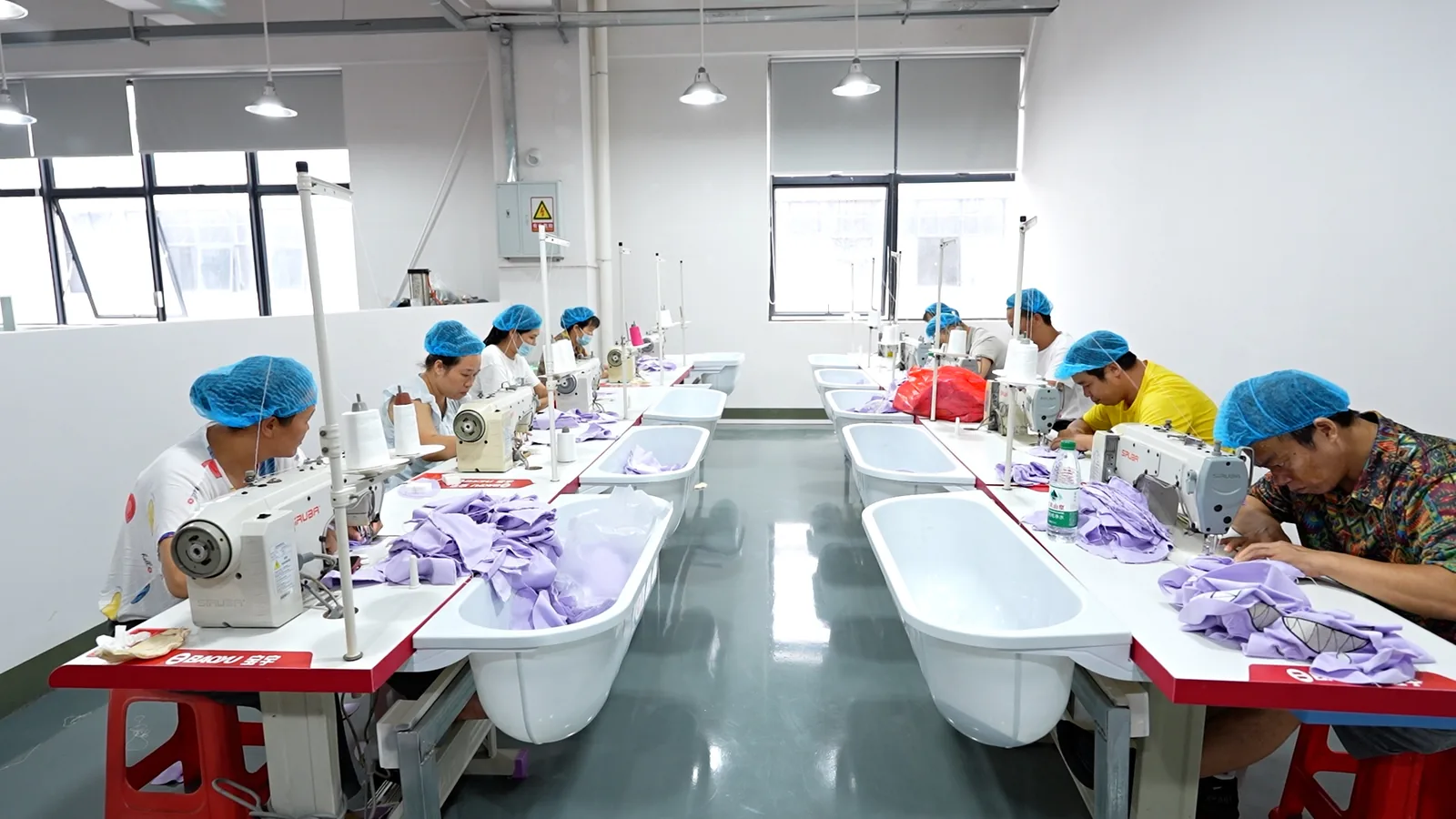
Most plush suppliers outsource some steps, and that is normal. What separates a controlled supply chain from a trading office is a process map with partner steps marked, plus a named party who inspects each handover and carries the delivery obligation.
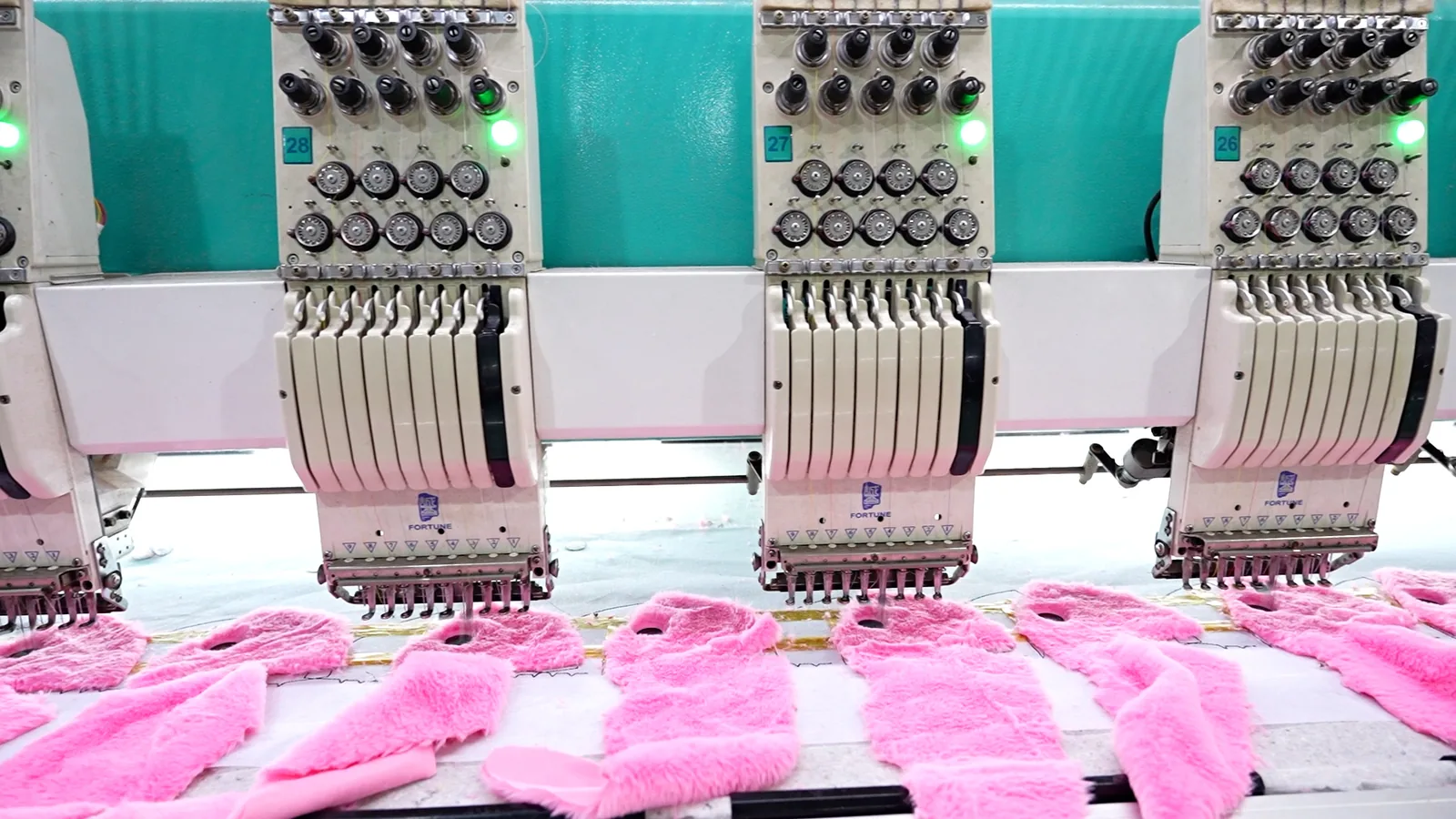
Ask for a process map rather than a factory tour video. A trading office will outsource almost every step. An integrated manufacturer will still outsource some: embroidery, printing, metal parts, sometimes part of the sewing. Outsourcing is normal in this industry. What matters is who approves the work, who inspects it, and who carries the delivery obligation when a partner step goes wrong.
Take the list below and ask the supplier to mark each step as own team, partner, or bought in. Then ask what happens at the handover: is partner work inspected on arrival, against what standard, and who is allowed to reject it.
- Pattern and sample making
- Fabric and trim purchasing
- Cutting and laser cutting
- Sewing
- Embroidery and printing
- Filling and weighing
- Hand finishing and seam closing
- Inspection, packing and cartoning
- Testing coordination and export documents
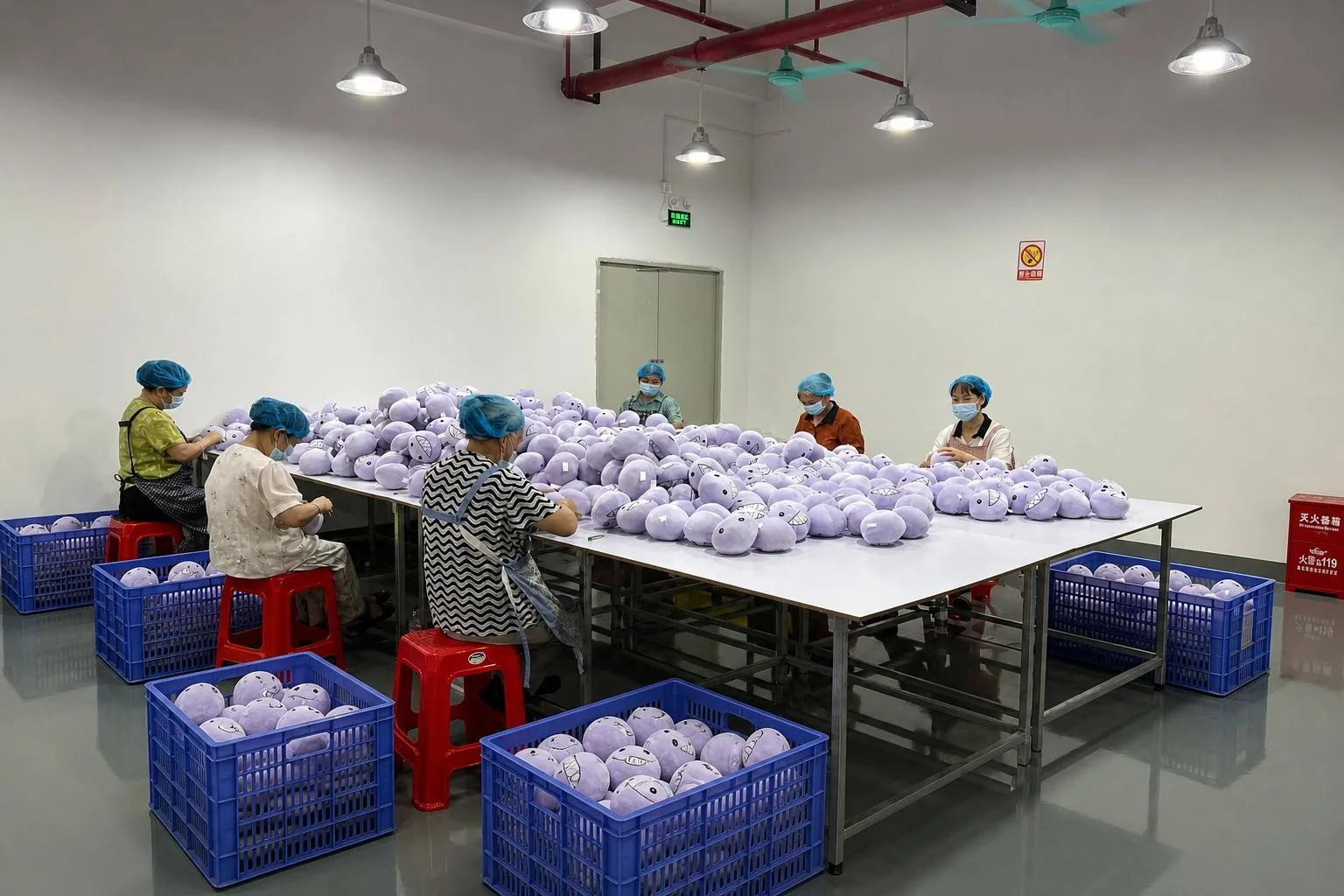
Our own split is straightforward. Sewing, filling, cutting, finishing, packing and inspection are organised on site. Embroidery, printing and part of sewing come from partner workshops that we select, brief and inspect, and partner workshops are not named publicly. We do not describe those steps as fully in-house, because they are not.
How The Approved Sample Is Controlled
The approved sample has to be a controlled document. One signed physical piece, a version number on the specification, and a defined trigger for making a new pre-production sample when anything material changes.
The approved sample is the only object production can be measured against. If it is not a controlled document, the factory is working from memory, from a photograph, or from the most recent version in someone’s chat history.
Ask whether one physical sample is signed and dated, whether it carries the project and version number, whether both sides hold a copy, and whether a new pre-production sample is required when the fabric, filling, structure or packing changes. A supplier that answers these questions without hesitation usually has a version system; one that answers with “we will match the sample” has a promise.
- Which version number appears on the specification sheet, and where does it appear on the sample?
- If a fabric is discontinued mid-project, is a new sample approved before production?
- Who is allowed to authorise a change, and in what form?
- What is compared at final inspection: the approved sample, a photograph, or a written specification?
How Materials And Colour Are Confirmed
Approve colour on a physical standard, not on a screen. A Pantone reference, a lab dip or a swatch card is the only reference that survives a dye lot change, a different monitor or a photograph taken under factory lighting.
Screen colour is not a standard. A hexadecimal value looks different on a phone, a laptop and a printout, and pile fabric changes colour as the fibres catch light from different angles. Colour has to be approved against something physical: a Pantone reference in the correct substrate, a lab dip, or a swatch card sent to you.
Ask how the supplier handles batch variation, what happens if the mill’s next dye lot is visibly different, and whether custom colours carry a minimum quantity. A supplier that only shows photographs of fabric is asking you to approve a screen.
For a project, colour is approved against a physical standard before production, and a change of material or colour is treated as a change to the approved specification rather than a purchasing decision.
What Quality Records Exist For Your Order
Ask for the inspection plan, not a percentage. The plan names the stages, the sampling level, the defect classes and the person who releases the goods; a number without those four things cannot be checked.
Inspection claims need a plan behind them. “100% inspection” can mean anything from a visual glance at every piece to a defined check sheet with measurements, pull tests and a release signature. Ask what is checked, at which stage, by whom, and what happens to a batch that fails.
A workable structure groups checks by stage: incoming material, first article, in-process, and final. Each stage needs a sampling decision, a list of defect classes, and a named person who can hold or release the goods. Without those three, a percentage is a slogan.
- Incoming: fabric shade, weight, pile direction, trim and component conformity, label accuracy
- First article: dimensions against the size sheet, proportion, feature placement, seam quality
- In-process: cutting, embroidery or print position, sewing, filling weight, symmetry
- Final: appearance against the approved sample, function of any mechanism, packing and carton marks
Two controls deserve their own question. The first is metal and needle control: ask how needles are issued and logged, what happens when one breaks, whether the affected work is isolated, and whether finished goods pass through metal detection. The second is batch traceability: ask how a carton can be traced back to its fabric lot, its production run and its inspection record. Both should be answered for your order, not with a sitewide percentage.
Our inspection team is small, under five people, and checks are grouped by those four stages. For your order, the plan will state the sampling level, the defect classes and who releases the goods. We do not publish a sitewide “100% inspection” claim, because a percentage without a defined check is not evidence of anything. We also do not publish a needle-detection rate or a traceability claim; if either is a condition of your order, ask for it to be specified in writing before production begins.
What A Test Report Actually Covers
A test report covers one sample, one bill of materials (BOM) and one date. It is evidence about that product, not a certificate for a factory and not a pass for every item in a range.
A test report is scoped evidence. It covers a sample, a bill of materials and a date. It does not certify a supplier, a factory, or every product that supplier makes.
When a report is offered, read the first page before the conclusion. The applicant and report holder tell you who owns the document. The report number and date tell you whether it is current. The product description and bill of materials tell you what was tested. The standard and its version tell you what it was tested against. The age group tells you which requirements applied.
Then ask whether you are looking at the complete report or an excerpt. A two-page extract with a passing summary is not the same document as the full report with the sample photographs and test clauses.
Two document types are often confused. A product test report covers a specific item. A factory or platform verification covers the supplier. Alibaba.com lists Orui as a Verified Supplier, verified by SGS; that is a platform verification of the supplier and not a product certificate.
Testing for our projects is arranged per project with an accredited third-party laboratory, with Orui named as applicant on the report. The report refers to the sample and bill of materials tested on that date, which is why we do not present one report as covering a whole range. The documents we can show today, with their reference numbers, dates and page limits, are listed under Reports & Supporting Documents.
What Makes Two Quotations Comparable
Two quotations are comparable only when they describe the same product. Same specification, same quantity tiers, same packing and same trade term, with each supplier listing what it has excluded. A total without those conditions is not a price, it is a starting position.
The component breakdown of a plush quotation is covered on Custom Plush Costs, Samples And MOQ. This section stays on the comparison itself: six lines to write down for every supplier before you look at the totals.
| Line To Compare | What To Write Down | Why It Changes The Comparison |
|---|---|---|
| Specification Version | The version number each supplier quoted, and the size, materials and decoration it refers to | Two quotes for different specifications are two different products |
| Quantity Basis | Units per style, colour and packing variant, not just the order total | A per-unit price at a different split is not the same price |
| Sample Scope | Sample fee, revisions included and what a further round costs | A cheap sample that needs four rounds is the expensive option |
| Packing Scope | Bag, retail box, labels, barcode, carton marks and who supplies artwork | Retail-ready packing is a per-unit cost, not an afterthought |
| Trade Term | Incoterm, named port, what is excluded and who clears import | Ex-works and delivered prices describe different amounts of work |
| Validity And Payment | How long the price holds and the deposit and balance triggers | A price that expires before your approval date is not a commitment |
Orui quotes per project. Custom work starts at one piece, there is no ready stock to ship, and a single piece still goes through sampling or production before dispatch. Price and timing are confirmed against the specification rather than published as a fixed table.
When The Production Clock Starts
Production starts when the inputs are fixed, not when the email is sent. Approved sample, signed order, deposit, frozen bill of materials, confirmed materials and an agreed test plan; ask what the quoted date is measured from.
A lead time is only a schedule once the inputs are fixed. Ask what the clock starts from. If the answer is “from order confirmation”, the date is an estimate, because the approved sample, the bill of materials and the test plan may still be open.
The conditions worth having in writing: the approved sample, the signed order or proforma invoice, the deposit received, the final bill of materials frozen, key materials and components confirmed, and the test plan agreed. Once those exist, a production window means something, and any later change to design, material, quantity or packing resets it.
Ask a supplier what happens to the schedule when a client changes the colour of one panel after the fabric is ordered. The answer tells you whether the date is a plan or a hope.
Who Owns The Design And Who Can See It
You keep the artwork; the supplier holds the production files only to fulfil the order. Manufacturing permission is separate from permission to display the finished product, and both belong in writing.
Production permission is not display permission. A supplier may manufacture your character and still have no right to show it in a portfolio, a trade show stand, a factory video or a social post. Those are separate permissions and both belong in writing.
- Ownership: you retain the artwork, character and brand; the supplier holds pattern, bill of materials and production files to fulfil the order.
- Confidentiality: an NDA with the entity that actually signs the order, not a trading name. For Orui that entity is Dongguan Orui Toys & Gifts Co., Ltd.
- Access: who inside the supplier can see the files, and whether partner workshops receive them.
- Display: whether finished pieces, photographs or the project name may appear publicly, and for how long.
There is also a condition on your side. Work is accepted only where you hold the rights to the character, logo or artwork. Projects that copy a protected character without authorisation are declined, and an obviously well-known character will be queried before a quote is prepared.
Ten Questions, Answered Side By Side
Use this table in a supplier call. The fourth column is the part most buyers skip: the document that should exist afterwards.
| What To Ask | What A Strong Answer Contains | Why It Matters | Document To Request |
|---|---|---|---|
| Pattern And Sample Development | A named team or partner, the revision rounds included, and a clear answer for incomplete views | Development delay is the most expensive delay in the project | Pattern version sheet and sample revision log |
| Process Ownership | A step-by-step map with partner steps marked, and who inspects each handover | Control, not ownership, decides consistency | Process map with responsible party per step |
| Sample Approval | One signed sample with a version number, and defined triggers for a new sample | Production is measured against this object, not against a promise | Signed sample record with date and version |
| Material And Colour Control | Physical swatch or Pantone approval, and a stated position on batch variation | Screen colour and dye lots both drift from the reference | Swatch or lab-dip approval sheet |
| In-process Inspection | Stage list, sampling level and defect classes | Early detection avoids reworking a finished run | Inspection plan for your order |
| Final Inspection And Release | A named release authority and a record of what was checked | Release without authority hides defects until the carton is open | Final inspection report |
| Test Reports | Applicant, report number, date, bill of materials and age group | A report is scoped evidence, not a range certificate | Complete report with scope pages |
| Quotation | Itemised costs, exclusions and a validity period | Unequal quotes cannot be compared on the total alone | Itemised quotation against one specification |
| Schedule | Start conditions and the events that reset the clock | A date without conditions is an estimate | Written schedule with stated prerequisites |
| Design Control | NDA, ownership clause and separate display permission | Separate display permission prevents unintended portfolio or marketing use | NDA and ownership clause |
What Useful Evidence Looks Like
Evidence is not a folder of factory photographs. It is the small set of records that lets you check a claim without visiting. Seven items cover most of the risk.
- Versioned pattern and bill of materials so the object being quoted is the object being made.
- Approved sample record with a date, a version number and the signature of the person who approved it.
- Inspection plan naming the stages, sampling level, defect classes and release authority.
- Order-level inspection records for your production, not a generic sample from another run.
- A scoped test report showing applicant, report number, date, product and age group, with the pages that define the scope.
- An itemised quotation that separates materials, labour, decoration, packing and testing from freight.
- A written schedule that states what has to be fixed before the clock starts.
Claims Worth Clarifying
Most of these phrases are not dishonest; they are unfinished. The follow-up question is usually enough to separate a working system from a slide.
- Best plush manufacturer. Ask who made the ranking and which criteria were used, which products were assessed, and whether placement was paid.
- 100% inspection. Ask what is inspected, whether it is every piece or a sample, which defects count, and who signs the release.
- CE certified factory. CE marking applies to products under specific directives. Ask for the declaration of conformity and the product it covers, not a factory badge.
- No MOQ. Ask what the minimum billable quantity is once sampling, custom fabric and setup are counted.
- A fixed lead time. Ask from which date it is measured and what resets it.
- All products tested. Ask for the report number that covers the product family you are ordering.
Compare Quotes On The Same Basis
Put every supplier on one specification sheet before you compare anything. Then compare unit price, sample revisions, packing, trade term and schedule conditions instead of the total at the bottom of the page.
A comparison is only as good as the specification behind it. Before you open the spreadsheets, put every supplier on the same sheet.
- One specification document, identical for every supplier, with the version number quoted back to you.
- The same quantity tiers, so the unit price refers to the same volume.
- The same packing, labelling and carton requirements.
- The same trade term and named port, or a clear statement of what is excluded.
- The number of sample revisions included, because a cheap sample that needs four rounds is not cheap.
- The schedule start conditions, not just the number of days.
- The payment terms and the currency, before you convert anything.
Where Orui Toys Fits
Orui Toys is the storefront brand of Dongguan Orui Toys & Gifts Co., Ltd., registered in 2018, working from a production site in Chashan, Dongguan that the company profile describes as about 1,650 m². The team covers requirement assessment, development coordination, purchasing, production organisation, quality control and delivery management; embroidery, printing and part of sewing come from partner workshops.
Work is custom only, from one piece, with no ready stock, and price and timing are confirmed per project. Testing is arranged per project with an accredited laboratory. We do not describe ourselves as the best manufacturer, and we do not publish a defect rate or an on-time figure, because no verified statistic exists for either.
Frequently Asked Questions
What Is Your Minimum Order?
One piece. Orui provides custom work only, with no ready-to-ship stock, so even a single piece goes through sampling or production before dispatch. Price and lead time are confirmed per project rather than taken from a stock list.
How Long Does Sampling Take?
It depends on the completeness of the file and the complexity of the piece. The clock is normally counted from the point where the specification, dimensions, colours and any functional requirements are confirmed, and complex structures, special fabrics or electronic parts are scheduled separately. Ask for the sampling window in writing for your specific design.
Will You Sign An NDA And Who Owns The Pattern?
We can work under an NDA signed by Dongguan Orui Toys & Gifts Co., Ltd., the contracting entity. You keep the rights to your artwork and character; the pattern, bill of materials and production files are held to fulfil the order and are not reused for other clients. Display of finished work is a separate permission and is never assumed.
Can You Match A Pantone Colour?
Colour is matched against a physical standard rather than a screen value. Send a Pantone reference, a swatch or a physical sample, and expect the approval to happen on a real piece of the actual fabric, because pile and lighting change how a colour reads. Custom colours can carry a mill minimum, which is confirmed with the quotation.
Can You Provide Test Reports For My Market?
Testing is arranged per project for the target market, with Orui named as applicant, and the report covers the sample and bill of materials tested on that date. Standards referenced in our material include CE/EN71, CPC/ASTM F963, CPSIA and REACH; which one applies depends on the product, the age group and the market. A report for one product is not presented as a certificate for a range.
Can You Copy An Existing Character Or Brand?
No. Work is accepted only where you hold the rights to the character, logo or artwork, and an obviously protected character will be queried before any quotation. Similar-looking generic designs are treated the same way if the resemblance is close enough to create a rights problem.
Discuss A Project
Bring the artwork or a reference, the target market, the quantity and the date you need the goods. That is enough to assess feasibility and to tell you what is still missing before a quotation.