Quality and safety
Quality And Safety
Quality on a custom plush project is built from four control points and one written standard. This page explains what is checked, what the checks are compared against, and what the company does not claim.
What Quality Control Covers Here
The subject is consistency between the approved sample and the delivered goods, plus the safety requirements that follow from the product’s market and age group.
Custom plush is not measured against a catalogue tolerance. It is measured against the sample the buyer approved, and against the written specification frozen before production.
That makes two things decisive: whether the approved sample is unambiguous, and whether the acceptance criteria are written down before the run starts.
This page does not publish certificates, test reports or audit grades. Those belong to a specific product and a specific project, and are supplied for that project rather than displayed as a general claim.
Four Control Points
Each point catches a different class of defect; skipping one moves the problem downstream.
Incoming Material
Fabric, filling and trims are checked against the specification: colour against the approved standard, pile and handfeel, and batch consistency.
First Piece
The first assembled unit is compared with the approved sample for proportion, expression, colour and construction before the line continues.
In Process
Cutting, decoration, sewing and filling are checked as the batch moves, so a drift is caught on the line rather than at the end.
Before Packing
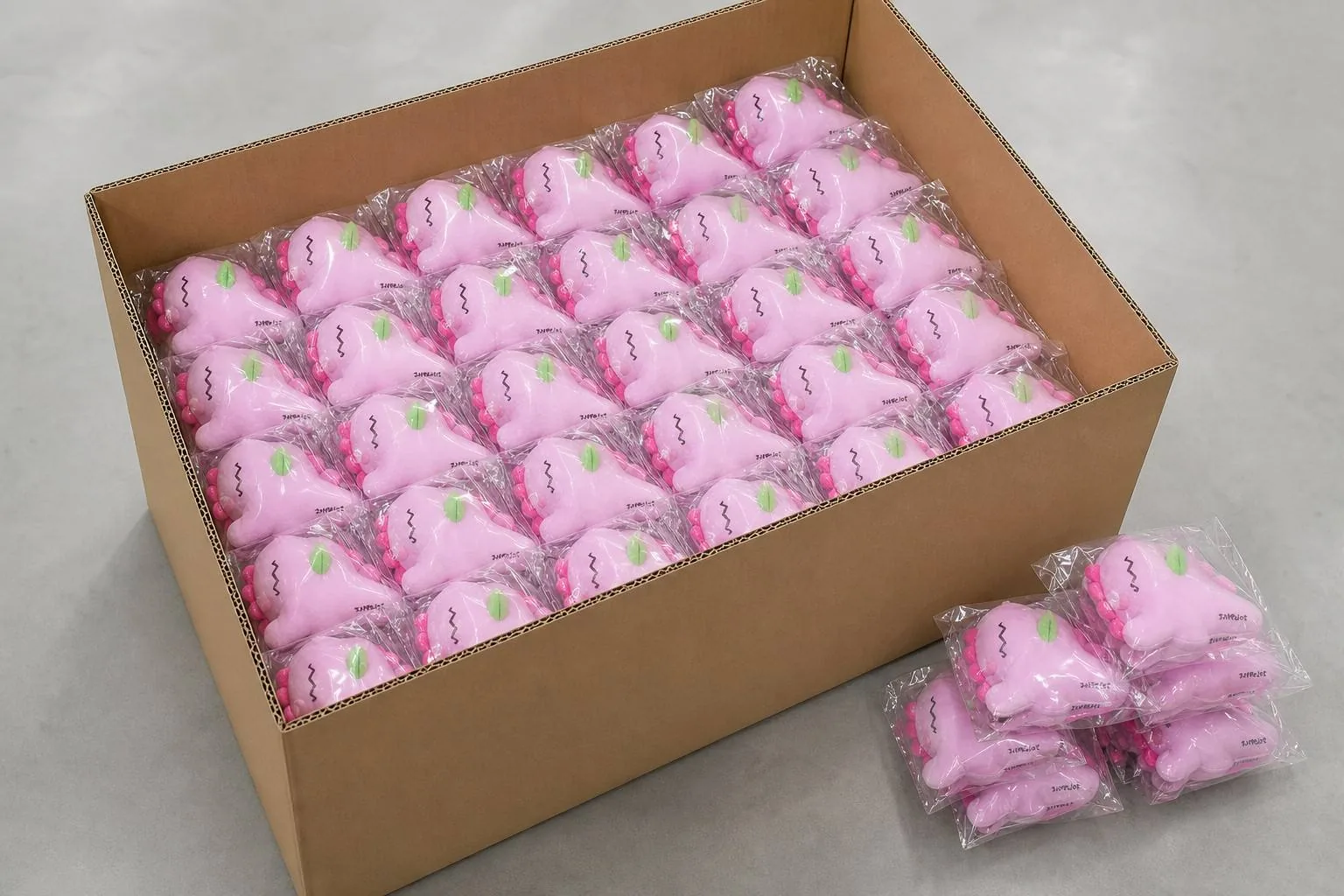
Finished goods are compared with the sealed sample and the agreed criteria; packing and labels are checked at the same time.
Needle Control And Anomaly Records To Confirm In The Inquiry
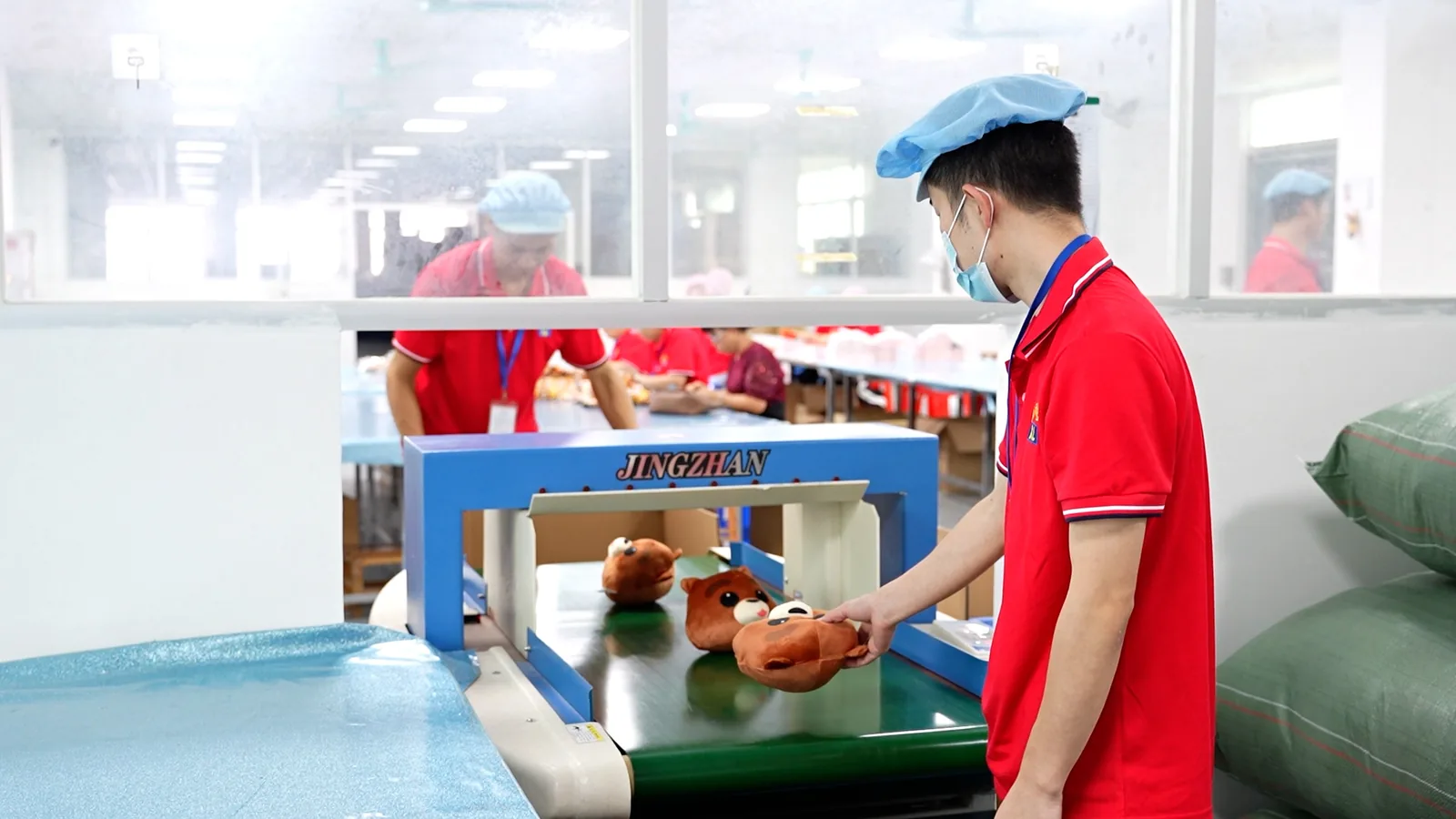
Soft toys carry a needle risk that a visual check cannot see. Before production is released, confirm with the factory which needle-control records apply to your order: needles and parts issued and returned, broken-needle reports, detection pass recorded by batch or carton range, and what happens to units held back when a check fails.
Frequency, coverage, equipment verification and the record format are not published here; they are agreed per order and confirmed in writing.
What The Checks Are Compared Against
A check without a reference is an opinion. These are the references used.
| Decision Point | What To Confirm | Why It Matters |
|---|---|---|
| Appearance | The sealed approved sample: shape, proportion, expression, colour placement. | A verbal description cannot replace it. |
| Dimensions | The approved size chart with stated tolerances. | Unstated tolerances become arguments at delivery. |
| Materials | The frozen BOM and the approved material reference. | Substitution without approval breaks consistency. |
| Workmanship | Agreed defect classes and acceptance criteria in the order. | No formal AQL scheme is published; criteria are project-specific. |
| Labels And Packing | Approved label proof, barcode data and packing specification. | Checked before packing, not after. |
What This Page Does Not Claim
Stating the limits is part of the quality position, not a disclaimer bolted on.
No factory-wide certificate is claimed. A test report belongs to the product, material and standard it was issued for, and is supplied for the project that needs it.
No laboratory is claimed in house. Testing is carried out by third-party laboratories against the standard agreed for the destination market.
No audit grade or platform badge is used as a quality argument. Where a buyer needs a specific audit or scheme, it is discussed as a project requirement.
A buyer who needs a specific standard, record type or inspection scheme should state it in the enquiry so it can be confirmed before production.
Where To Go Next
Quality questions usually continue in one of three directions.
Testing And Market Requirements
What information the buyer supplies, what is tested, and what a report does and does not cover.
Testing and complianceProduction And Delivery
How the checks sit inside the production sequence and what a change after approval costs.
Production and deliveryCustom Plush Costs And MOQ
Why inspection and testing appear as separate lines in a quotation rather than inside a unit price.
Costs and MOQ
Questions Buyers Ask About Quality
Four answers that set expectations correctly.
Can You Provide CE Or EN71 Certificates?
A test report can be arranged for the specific product and standard through a third-party laboratory. What is supplied is the report for that product; a general certificate covering everything the factory makes is not claimed.
How Do You Make Sure Bulk Matches The Sample?
The approved sample is sealed and dated, production is compared against it at the first piece and in process, and finished goods are checked before packing. Material or construction changes require a new pre-production approval.
Do You Inspect Every Unit?
Inspection combines checks during production with a final check before packing. The acceptance criteria and the sampling approach are agreed in the order; a published AQL scheme is not claimed.
Who Is Responsible If A Defect Is Found After Delivery?
Responsibility is assessed against the approved sample, the agreed criteria, inspection records, packing and transport evidence. The remedy follows the order terms rather than an assumption.
State The Standard You Need
If a market, age group or buyer requirement applies, say so early; it changes the test plan and the inspection criteria.