Custom Plush › Backpacks & Bags
Custom Plush Backpacks & Bags
A plush backpack has two jobs at once. It has to keep the character recognisable, and it has to open, close and carry what the buyer puts inside it. This page covers the decisions that have to be settled before a sample is cut.
Plush backpacks, crossbody bags and pouches developed from your artwork or a physical sample.
The opening, the lining, the strap anchors, the hardware and the clear opening size, agreed before patterning.
Send views, dimensions, intended contents, market, age, quantity and date, and we will say what is still missing.
Scope
Which Plush Backpack And Bag Projects This Page Covers
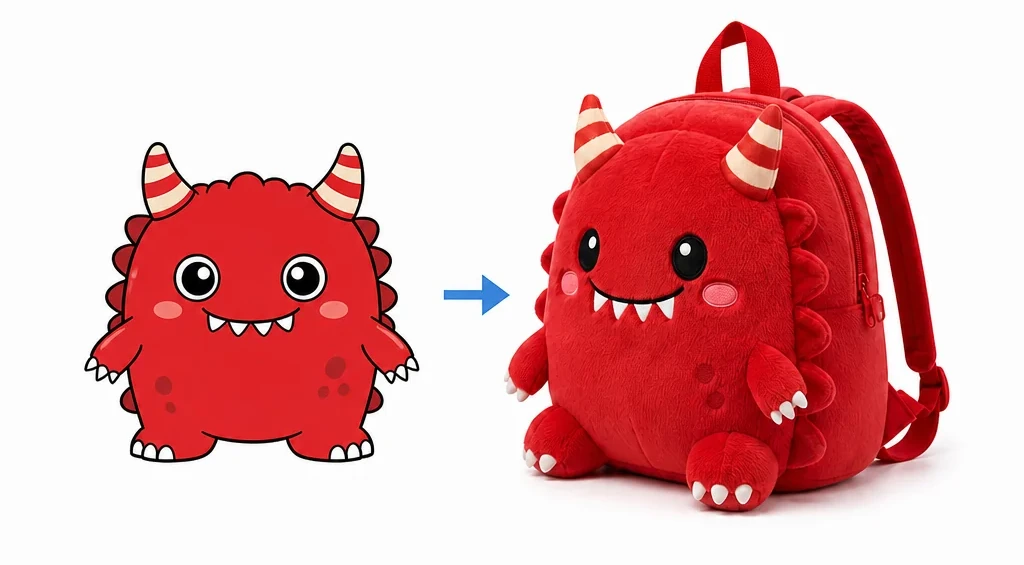
Orui Toys develops plush backpacks and bags as a standing product category alongside plush toys. The work sits in the same development path as a character plush: artwork or a physical sample comes in, a pattern is built, a sample is approved, and the approved version goes to production. What changes is that the pattern now has to carry a lining, an opening, straps and hardware as well as a face.
Typical enquiries come from children’s and teen brands, cultural-creative ranges, gift programmes and retail buyers. The three shapes below are the usual starting points, and each brings a different structural question.
Character Backpacks
The body is the character. The question is where the opening and the strap anchors can sit without breaking the face, the ears or the tail.
Crossbody Bags And Pouches
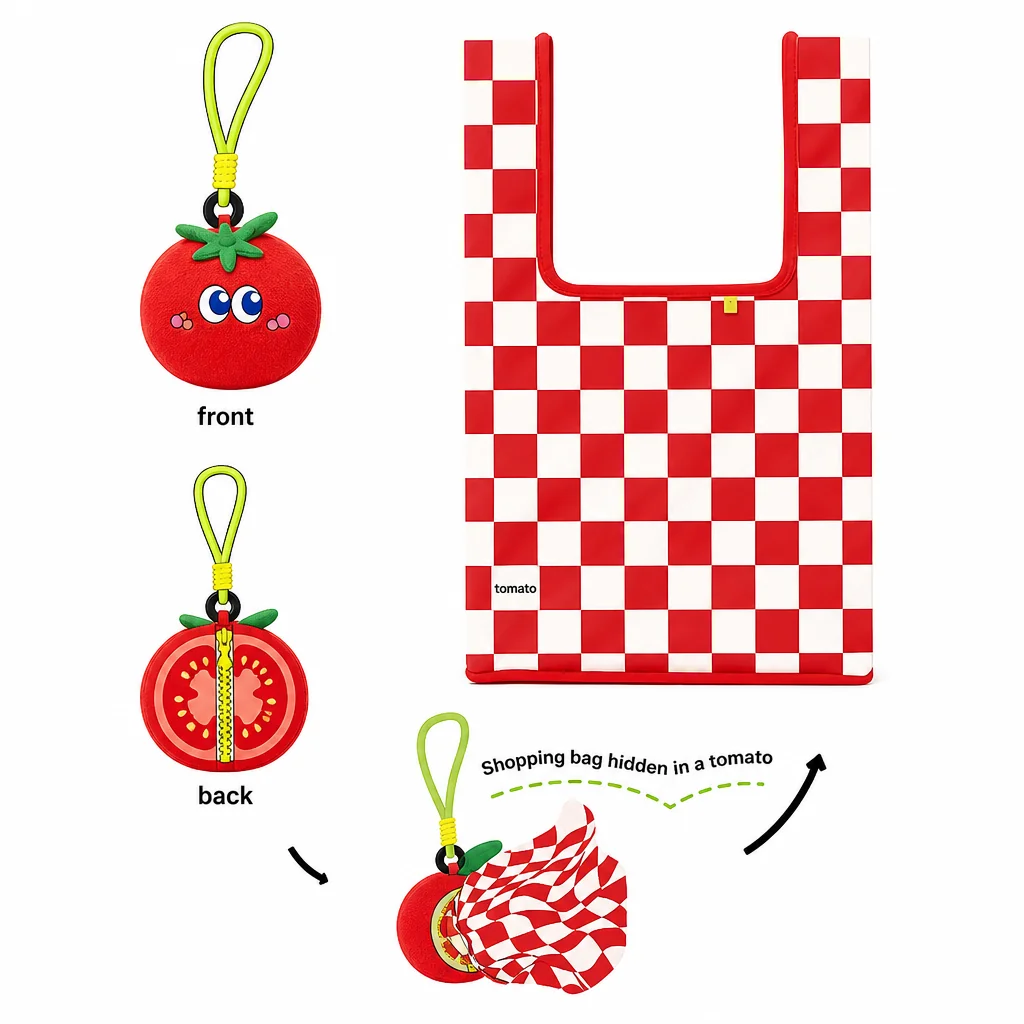
Smaller volume, one strap, often a zip across the back. The clear opening and the position of the hardware are the two things to fix on the sample.
Gift And Promotional Bags
Fixed event dates, brand elements and packing that has to survive shipping. Structure is usually simpler; the schedule and the labelling are not.
Not this page: plush keychains, bag charms and clips are covered on Custom Plush Keychains & Bag Charms. The product page for this category, Plush Backpacks & Bags, is still being prepared. This page is about developing a bag to your own design.
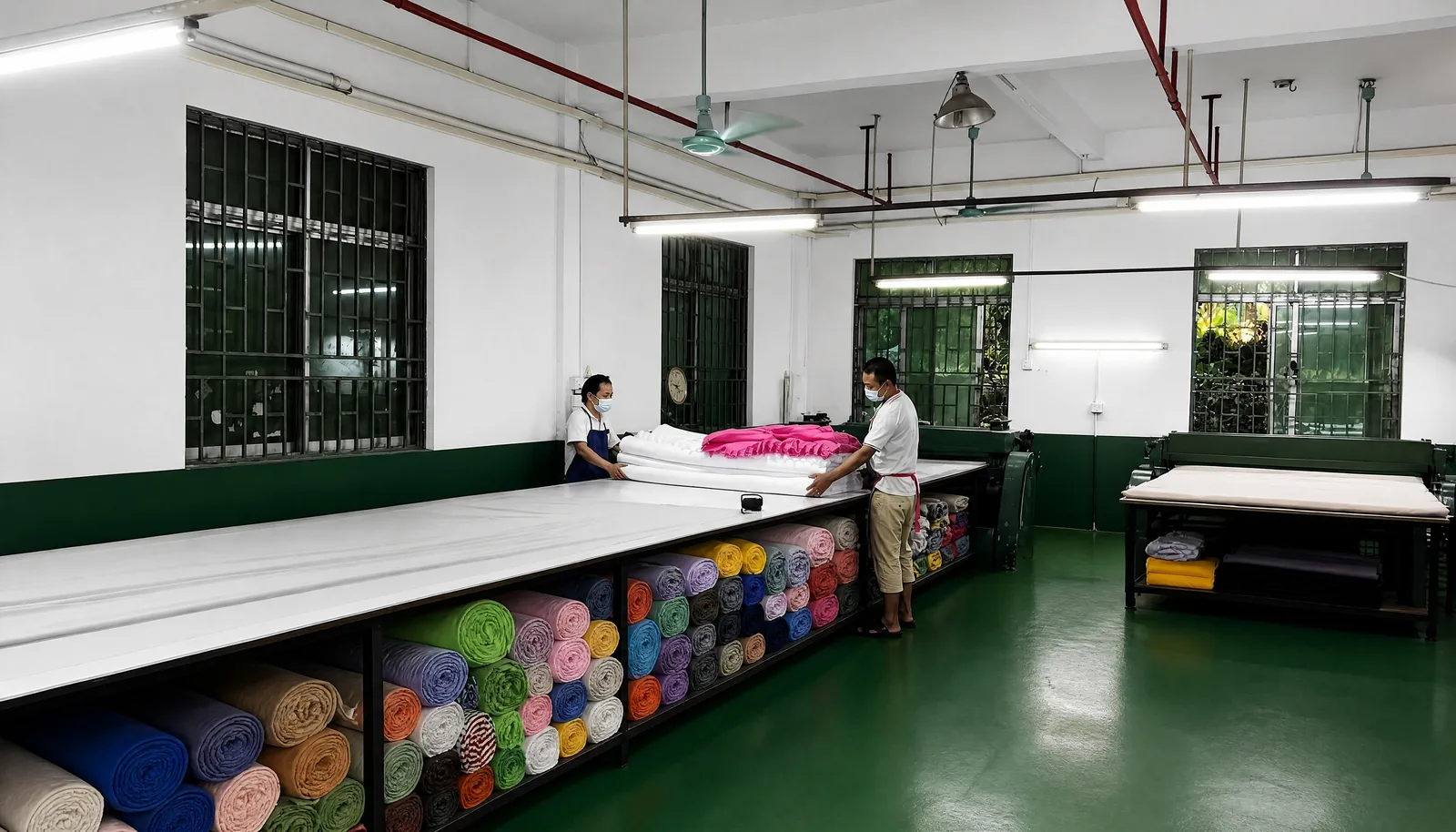
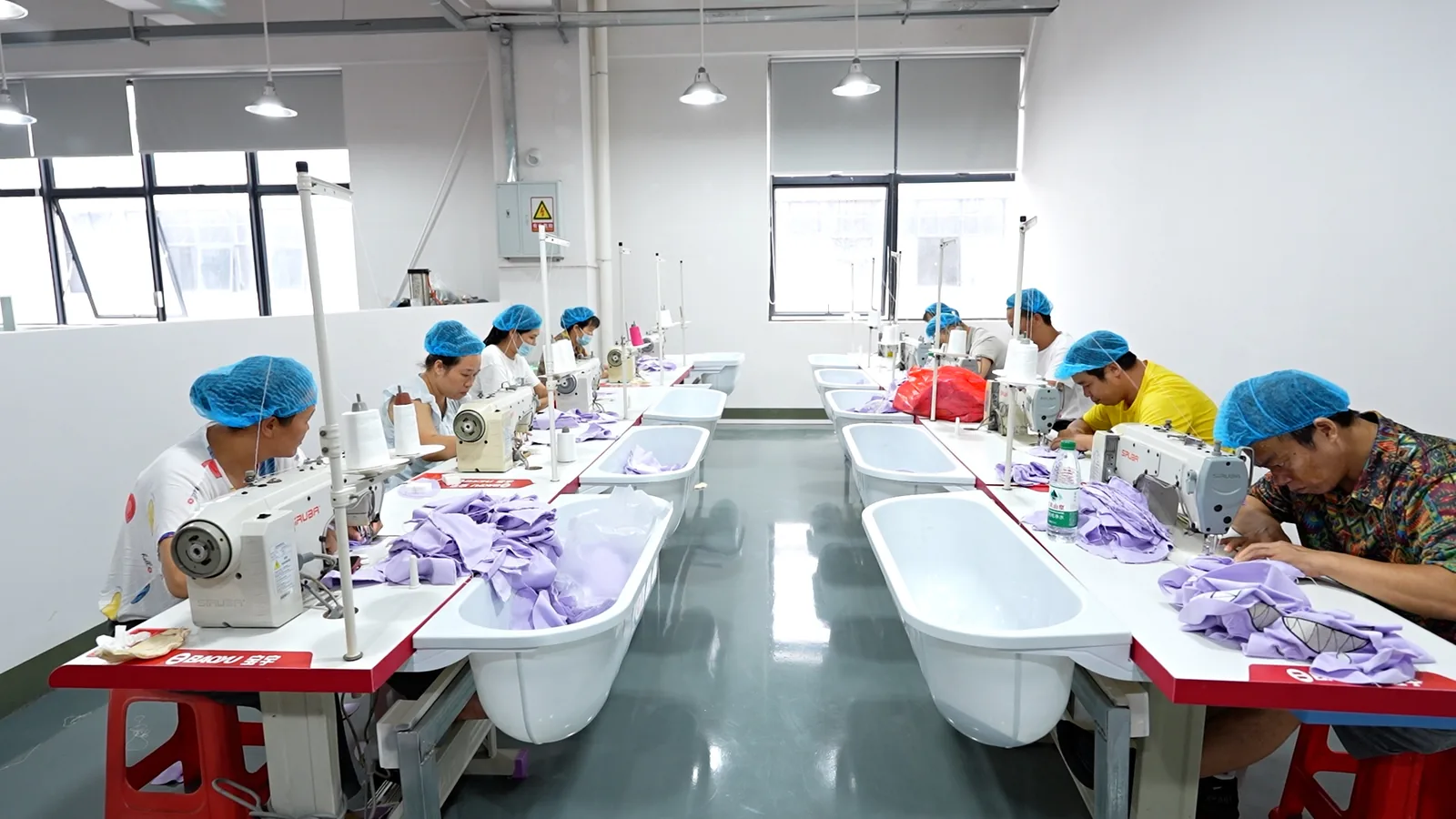
Pattern making, sewing, embroidery, printing, cutting and filling are performed by production partners within Orui’s Dongguan Chashan production system, with partner capacity for those steps. Orui holds the project: the design review, the sampling decision and the delivery commitment stay with our team, and how each process is scheduled, checked and accepted is agreed for the project.
Dimensions and capacity
Sizing A Bag That Has To Hold Something
Capacity on a shaped plush bag is decided by the measurements below, not by the outside silhouette alone. The head, limbs and fill take volume away from the inside, so the usable space is always smaller than the shape the character gives.
The finished size is set from the artwork together with the contents the buyer expects the bag to take: a small water bottle, a pencil case, a phone, keys or a snack box. The two rarely agree on the first pass, and deciding the contents first is faster than adjusting a pattern later. The clear opening on your own design is the number to settle first.
| Measurement | Why It Is Agreed Early |
|---|---|
| Overall height, width and depth | Sets the pattern block and the carton size; changing it later changes both. |
| Clear opening length | Decides what actually fits through the zip or flap, which is usually less than the outer width. |
| Usable internal depth | Outer depth minus plush wall, lining and fill; the number buyers are surprised by. |
| Inner pocket size and position | Has to clear the zip tape and the fill, and stay reachable when the bag is worn. |
| Strap length range | Determines adjuster travel and where the bag sits on the back or shoulder. |
| Target contents | The reference load for the fit check on the sample. |
Litres and load follow from the finished pattern, the fill density, the strap construction and the hardware of that design. They are agreed together with the measurements rather than quoted from a different bag.
Lining and opening
Lining, Opening And What Goes Inside
The plush shell and the lining are different materials bought in different lots, and the lining is the part that takes the wear. It also hides the seams that hold the bag together, which is why the lining choice affects how flat the bag sits when it is empty.
The opening decides how much of the character survives. A zip across the back keeps the face untouched and is the usual choice for a character backpack. A top opening preserves the silhouette but reduces the clear opening, and the zip pull then sits where a head or an ear would like to be. A flap with a closure keeps the silhouette softest; how well it stays closed is a question for the sample and the intended use.
Inner pocket placement is a small decision with a large effect: it has to clear the zip tape, avoid the fill that gives the character its volume, and stay reachable when the bag is on a child’s back.
Straps and load points
Straps, Handles And Where The Load Sits
Strap material, width, padding and anchor position decide comfort and how the bag hangs. Webbing covered in plush keeps the character look and adds bulk at the shoulder; plain webbing is flatter and easier to adjust. A top handle is worth considering on a children’s bag, since it is often how the bag is carried between lessons.
Load points are part of the brief. Where the anchor sits, how it is reinforced and what the bag is expected to carry are agreed on the pattern, then checked on the sample with the intended contents. Any load figure belongs to that sample, because it moves with the strap, the anchor construction, the hardware and the contents.
Ask for on the sample: the strap length range, the anchor construction, the adjuster travel and the intended contents on one sheet. Those four decide whether the bag sits where it should once it is loaded.
Closure and hardware
Zips, Pulls And Hardware On A Shaped Body
On a flat bag the zip is a straight line. On a plush body it follows a seam, so the seam line becomes a design decision: it has to avoid the face, it has to sit where the bag will open wide enough, and the tape has to lie flat on pile without puckering. That is why the zip is chosen together with the pattern, not after it.
Whether a nylon coil or a moulded plastic zip suits the bag is a sample question: the seam radius, the pull force you want and the look decide it, with the supplier confirming what is available. The pull is part of that decision: a fabric pull, a cord loop or a plush tab changes how easily the bag opens in cold hands, and a cord loop is also reviewed as a loop near the body.
D-rings, clips and strap adjusters are specified with the artwork and the anchor position. Any metal or small plastic part that could work loose is a small-part question, and on a bag intended for children it is reviewed as one, alongside plastic eyes and any attached charm.
Shape and graphics
Keeping The Character Readable: Shape, Graphics And Print
Every plush bag is a negotiation between the silhouette the artwork wants and the flat panels a bag needs. The table below sets out the trade-offs buyers usually weigh; which way it goes is decided per project and confirmed in writing before the pattern is cut.
| Design Choice | What It Gives | What It Costs |
|---|---|---|
| Ears, horns, tails or fins in full 3D | Strong character read from the front and side | They occupy the space a strap or zip line wants, and can be crushed in packing |
| Face on the front panel | Recognisable at a glance, good for retail | Pushes the opening to the back or the top, which reduces the clear opening |
| Embroidery on pile | Keeps an edge on pile and reads as raised detail | Dense areas stiffen the panel and add stitch time |
| Screen print or applique | Covers a large area as a flat graphic | Print can distort on a curve; applique adds a seam that has to be placed |
| Flat back panel | A stable surface against the back and a simpler anchor line | Can flatten the character when the bag is worn |
Graphics on a curved surface are checked on the pattern rather than on the flat artwork. Size and position shift once the panel is sewn and filled, and a face that looks centred on screen can sit low on the finished bag. Placement is confirmed on a physical sample, not on a render.
Inputs
What To Send Before A Bag Can Be Quoted
A brief that answers these questions can be quoted. A brief that answers half of them usually comes back with questions first, which is still useful but slower.
- Front, side and back views, plus top and bottom if the shape changes there.
- A close-up of the face and of any part that has to be reproduced exactly.
- Posture, and how worn accessories or charms attach.
- Overall height, width and depth; clear opening; strap length range.
- Pantone or a physical colour reference for the pile, the lining and the hardware.
- Pile length, fill feel, and where embroidery or print sits.
- Labels, packing, target market, target age, quantity and required date.
Photographs of a similar bag help, but only as a reference for structure. A 3D file is treated as an appearance reference: a plush bag still needs a sewable pattern, and the pattern is what decides whether the shape holds when it is filled.
If the artwork is still a sketch, the first useful step is a manufacturability review rather than a price. That review lists what is still undecided (opening position, anchor placement, hardware, lining) and what it would take to close each one.
Sampling
Sample Approval: From Pattern Trial To The Approved Sample
The sample is where a plush bag is actually designed. The pattern trial shows whether the panels close around the shape; the first sample shows whether it still looks like the character once it is filled; the fit check shows whether the intended contents go in and come out without a fight.
The revision scope is written into the quotation for the project: how many correction rounds are included, what counts as a correction rather than a change, and how a change of design, size, material or function is re-quoted. That is agreed before the first sample is cut, because a change at that stage moves the pattern rather than a detail.
Before bulk, the approved sample is the reference for appearance and hand-feel, and whether a pre-production sample is needed is decided when material, construction or packing changes after that approval. Which sample is retained, and in what form, is confirmed with the buyer at approval rather than assumed.
On a bag, approval questions come back to the same five points: whether the three-dimensional body still reads after filling, where the lining and inner pocket sit, whether the opening is wide enough in use, whether the strap anchors stay put under the intended contents, and whether the embroidery or print lands where the artwork put it.
Fit check on the first sample: load the bag with the real contents, wear it, open and close it with one hand, and check the anchors and the strap adjuster under that load. Adjustments after this point are cheaper than after bulk starts.
Batch control
Batch Consistency Across A Run
Batch consistency is agreed at kick-off: which reference documents travel with the order (pattern version, BOM, embroidery and print files, colour and material records, sample photographs) and in what form approvals and changes are recorded.
On a bag the points that drift first are specific: the pattern version, the seam and stitch consistency at the strap anchors, strap length tolerance, the zip lot and slider, the shell and lining lot, the fill quantity, and the hardware finish. Each can pass a visual check and still fail as a set, which is why they are compared against the approved sample rather than against the previous carton.
Agree at kick-off how a substitution of fabric, colour, zip or clip will be raised and approved, because any of them changes the approved sample.
Branding and packing
Labels, Packing And The Unboxing
Brand elements on a plush bag appear in four places: a woven label in a seam, a care label inside the lining, a hangtag on the strap, and the packing itself. Agree availability and timing for each of them before sampling, because an item that arrives after the sample is approved reopens the sample.
Packing formats to discuss for the project: an individual PE or OPP bag, labels and barcode, an instruction leaflet, an inner box, a colour or gift box, an export carton and carton marks. Availability and specification are confirmed with the packing supplier for the project. Vacuum packing equipment is on site, but a structured bag is a different case from a soft plush: compression can flatten the shape, mark long pile and press on hardware. If vacuum packing is proposed, ask for a recovery check on the packed sample before approving the method.
Care labelling is written to the market and the material, and the wording is agreed with the buyer before the labels are ordered.
Quantity and timing
Quantity, MOQ And Timing
Custom orders start from 1 piece, and there is no ready stock; a single piece also goes through sampling or production, with cost and lead time confirmed for the project. Quantity is set per project from the pattern and construction complexity, the size, the fabric and custom-colour minimums, embroidery or print set-up, special hardware, the number of styles and colours, labelling, packing, testing samples and the delivery window. Two bags in different constructions each carry their own sampling, material purchasing and cost, although the product minimum stays at 1 piece.
Multi-style, mixed-colour, mixed-packing and repeat orders can be quoted. Each style brings its own pattern and sampling cost, colour minimums apply per fabric, and a repeat order is checked against the approved pattern version and the material lot rather than the original enquiry.
Timing starts from the approved sample, the confirmed order, frozen packing and label files, and locked materials, not from the enquiry date. Complex shapes, custom hardware, printing and testing each add their own step, and a date agreed before the sample exists is a guess.
Payment and delivery terms are agreed in the quotation and the PI. The trade term, the origin, the destination and who clears what are written into the quotation, and the export port is confirmed with the order rather than assumed.
Testing scope
Testing Scope: Toy Standard Or Bag Standard
A plush bag sits between two product worlds. Whether it is assessed as a toy, as a bag, or as both depends on its intended use, the market it is sold in and how it is presented on the shelf. That is a project decision, not a category rule, and it is the first thing to settle when a target market is known.
Small parts, straps and loops, closure hardware, plastic eyes and any attached charm each call for an extra risk review, since each is a place where a bag is used hard. Where testing is required, the laboratory and the test scope are confirmed for that specific project, based on the product, the target age and the market. The applicable standards and the report scope depend on the design, the materials, the market and the report itself.
Products for infants and children under three are not presented as a standing capability. Where a project targets that age group, the restrictions are reviewed case by case before a sample is committed.
Questions
Custom Plush Backpack Questions
Can You Make A Plush Backpack From A Character Drawing?
Yes, when the drawing can be read in three dimensions. Front, side and back views plus the overall height, width and depth are enough to start a pattern review; a single front view can be assessed, but the pattern maker will come back with questions about the parts that are hidden. A 3D file is useful as an appearance reference, and still needs to be converted into a sewable pattern.
How Is The Size Of The Bag Decided?
From the contents, then the artwork. Overall height, width and depth, the clear opening and the usable internal depth are agreed before pattern making. A new size is set by what has to fit inside the bag: the contents decide the clear opening, and the character decides the outer volume around it.
What Is The Minimum Order?
Custom orders start from 1 piece, and there is no ready stock; a single piece also goes through sampling or production, with cost and lead time confirmed for the project. Custom orders start from 1 piece, with no ready stock; a single piece still goes through sampling or production, and cost and lead time are confirmed for the project. Material purchasing conditions sit outside the product minimum and are quoted with the project.e inputs.
Can The Bag Carry Our Labels And Our Packing?
Woven labels, care labels, hangtags, barcodes, leaflets, inner and outer bags, colour or gift boxes and carton marks can be quoted per project, and each item is confirmed with its supplier before sampling. Private-label orders also start from 1 piece, with no standing stock.
Which Tests Apply To A Plush Bag?
It depends on the intended use and the market. A bag sold as a children’s item may be assessed as a toy, as a bag, or as both, and small parts, straps, loops, closure hardware and attached charms each add a risk review. Where testing is required, the laboratory and the applicable standards are confirmed for that specific product and market rather than assumed from this page, and the report scope stays tied to that submission.
Discuss This Product
Send the artwork, the intended contents, the target market and age, the quantity and the date. Those details are what make an answer possible; without them the open questions (opening position, anchor placement, hardware, lining and packing) come back first.
The quote form on this site is still being completed. Until it is live, write to landy@oruitoys.com and we will take the brief from there.
Dongguan Orui Toys & Gifts Co., Ltd., Chashan, Dongguan, Guangdong, China.