Orui Toys develops custom animal plush and custom plush animals for animal-series brands, importers, and cultural-tourism gift and retail programmes. This page is about the animal itself: how a shape, proportion, fur and filling, posture, face and series standard are chosen before a sample is made.
For buyers comparing plush animal manufacturers, Orui Toys offers project-based OEM/ODM development from designs or physical samples. Share the species, intended use and order plan so the construction can be assessed. Pattern availability must be confirmed for the particular design and pose.
For a named character or mascot, see Custom Character & Mascot Plush. To browse animal forms, visit Stuffed Animals.
Prefer email? landy@oruitoys.com
Animal Categories
Six groups of animal appearance references, six styles in each. Choose the group closest to your animal to see the styles, then send your own design or reference for assessment.
Wild Animals
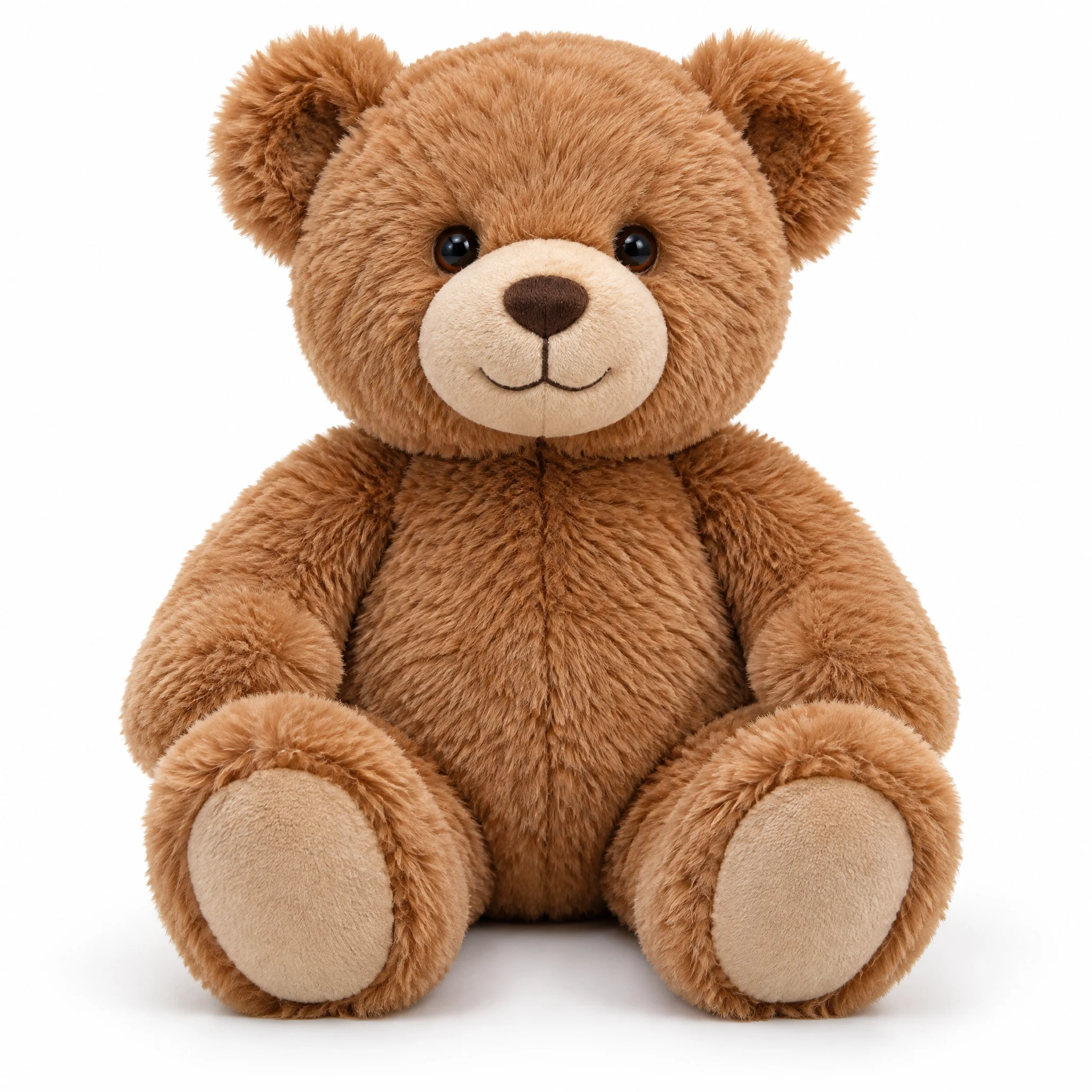
Wolf, leopard, tiger, lion, hippopotamus and bear.
View six styles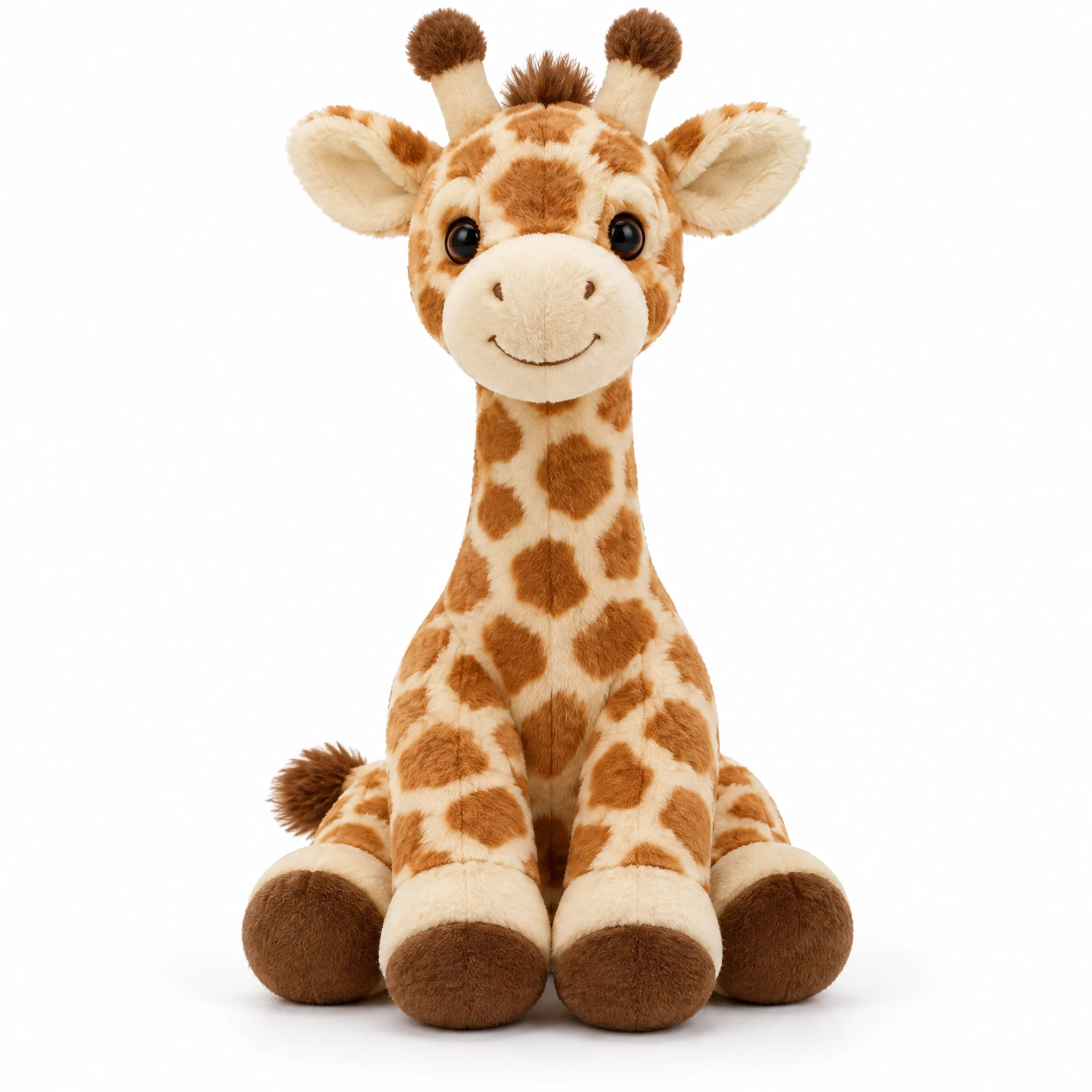
Zoo Animals
Penguin, giraffe, zebra, snake, monkey and elephant.
View six styles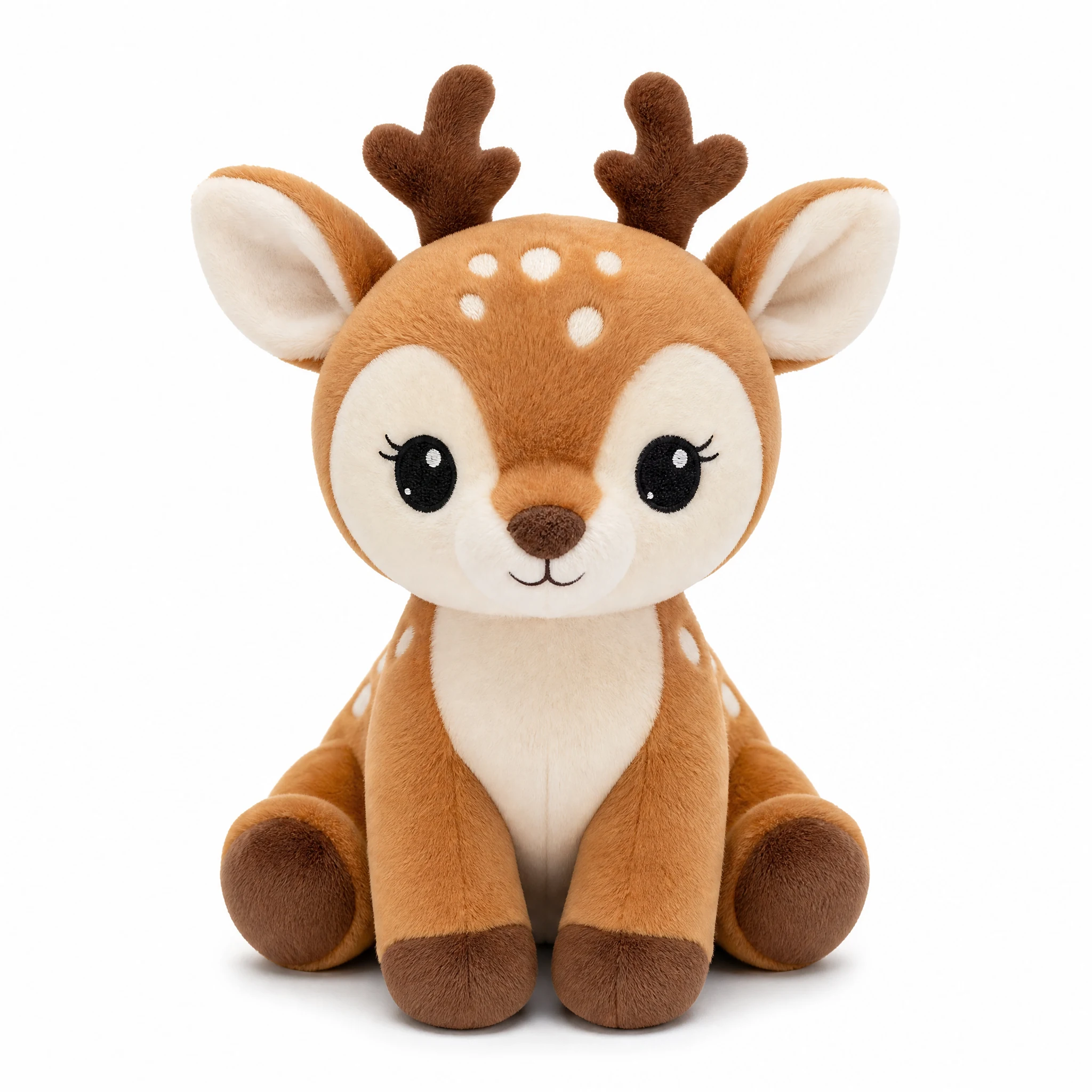
Forest Animals
Deer, fox, rabbit, squirrel, hedgehog and owl.
View six styles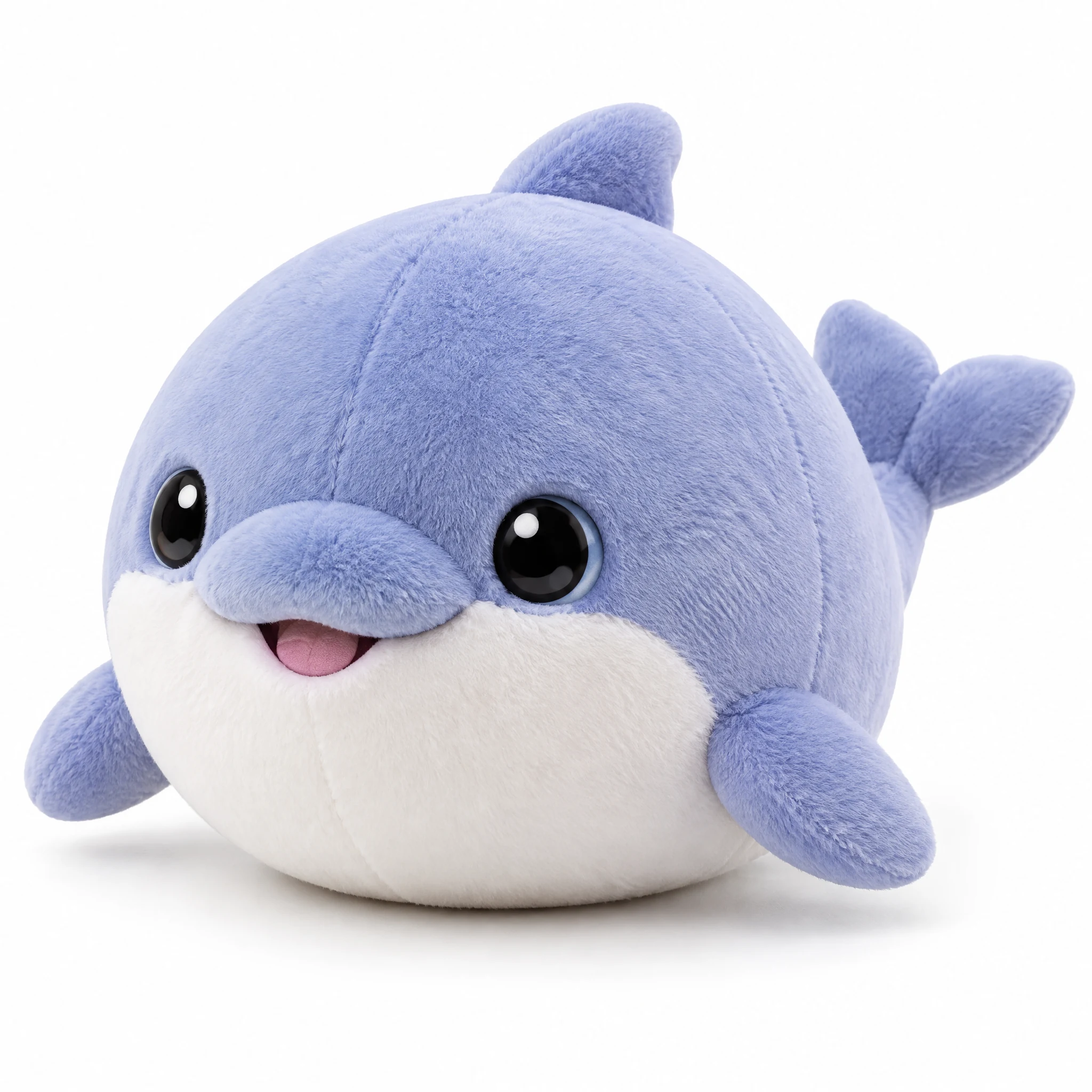
Ocean Animals
Dolphin, whale, shark, octopus, turtle and lobster.
View six styles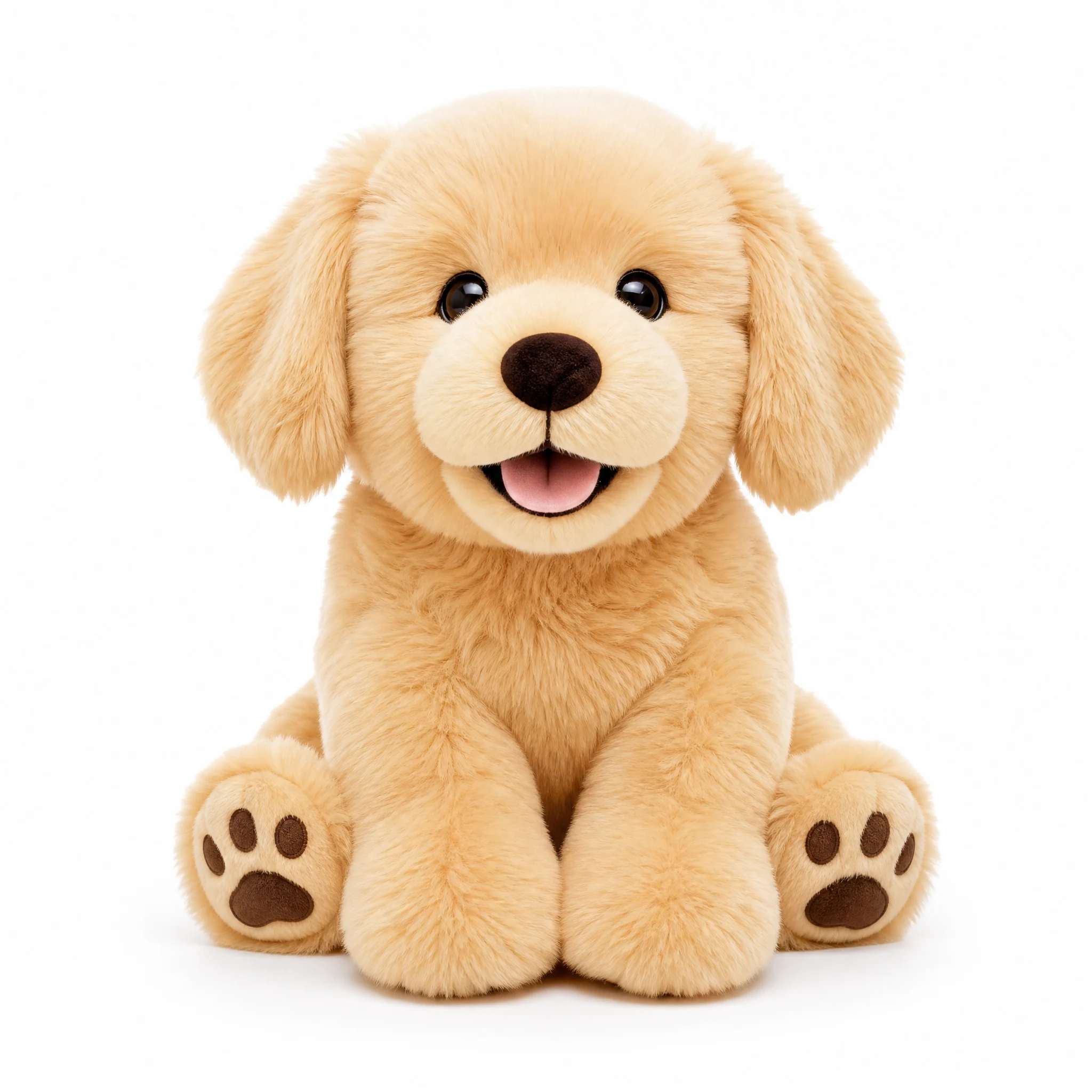
Domestic Pets
Parrot, cat, bunny, dog, guinea pig and hamster.
View six styles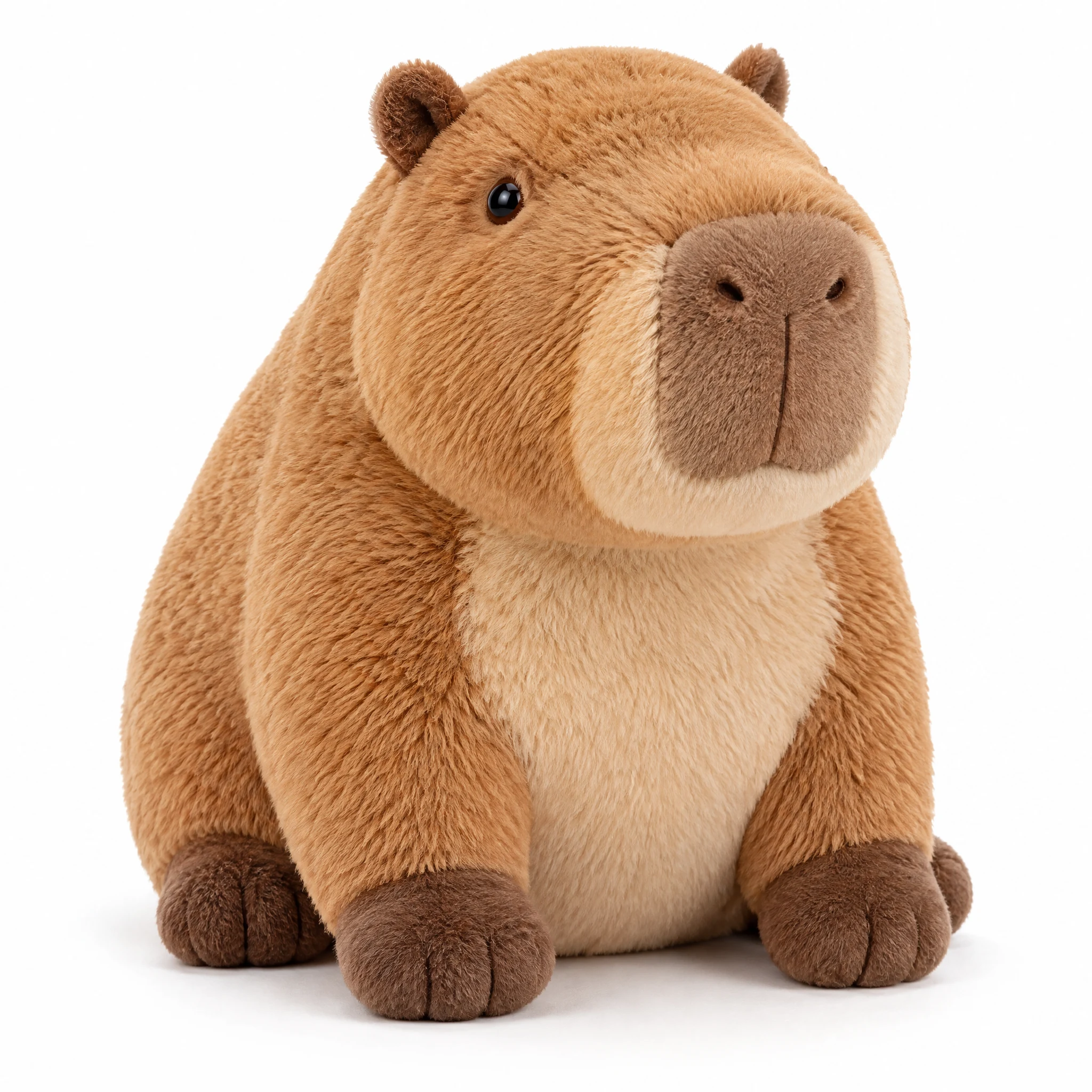
Exotic Animals
Capybara, seal, flamingo, koala, sloth and peacock.
View six styles
Every image below is a design reference supplied for this page. It is not a stock item, a delivered customer case or a certification record; it is an appearance reference.
Wild Animals
Wolf, leopard, tiger, lion, hippopotamus and bear. The six styles below share a simple seated silhouette; the differences sit in muzzle length, ear shape and coat pattern.
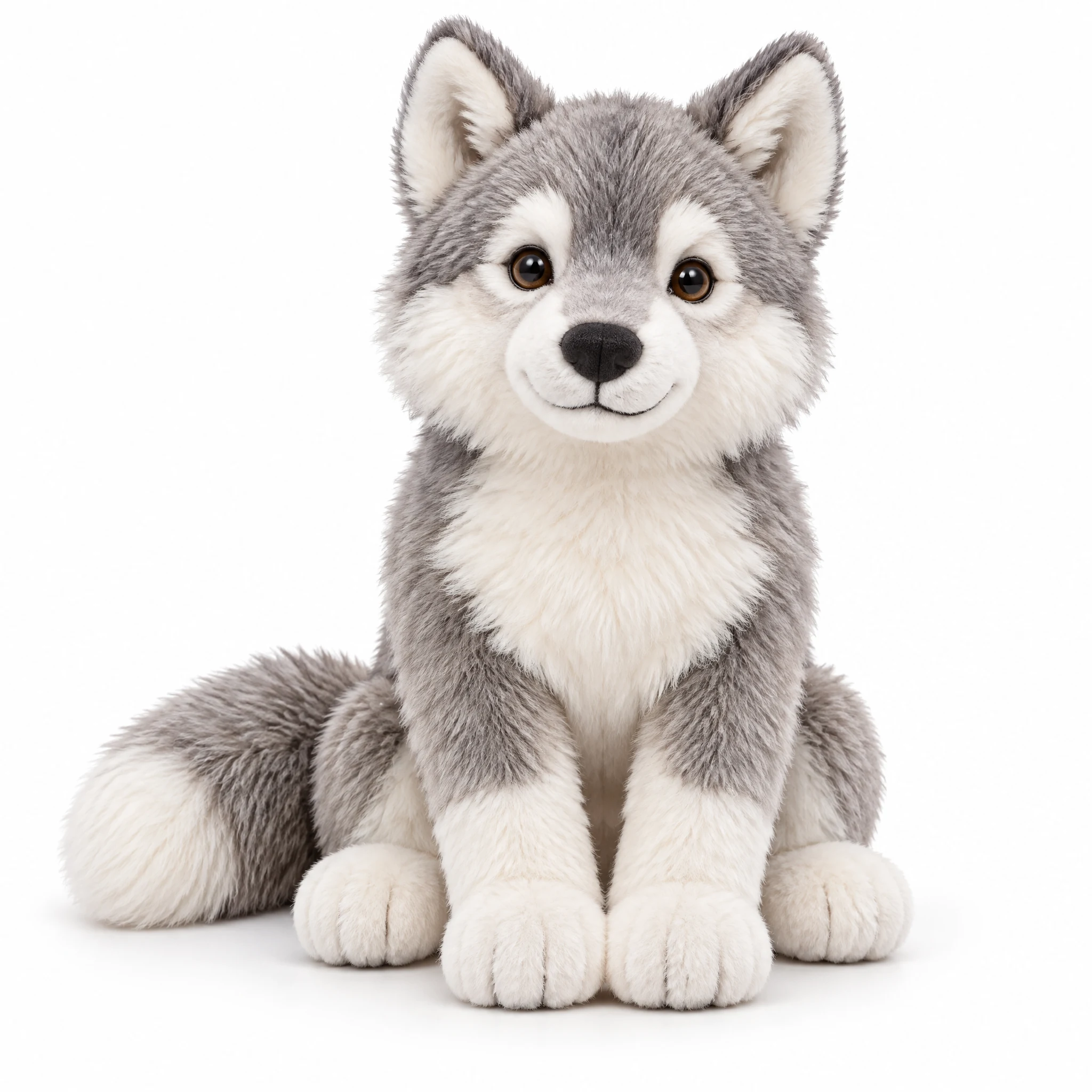 WolfGrey and white two-tone coat, seated with upright ears.
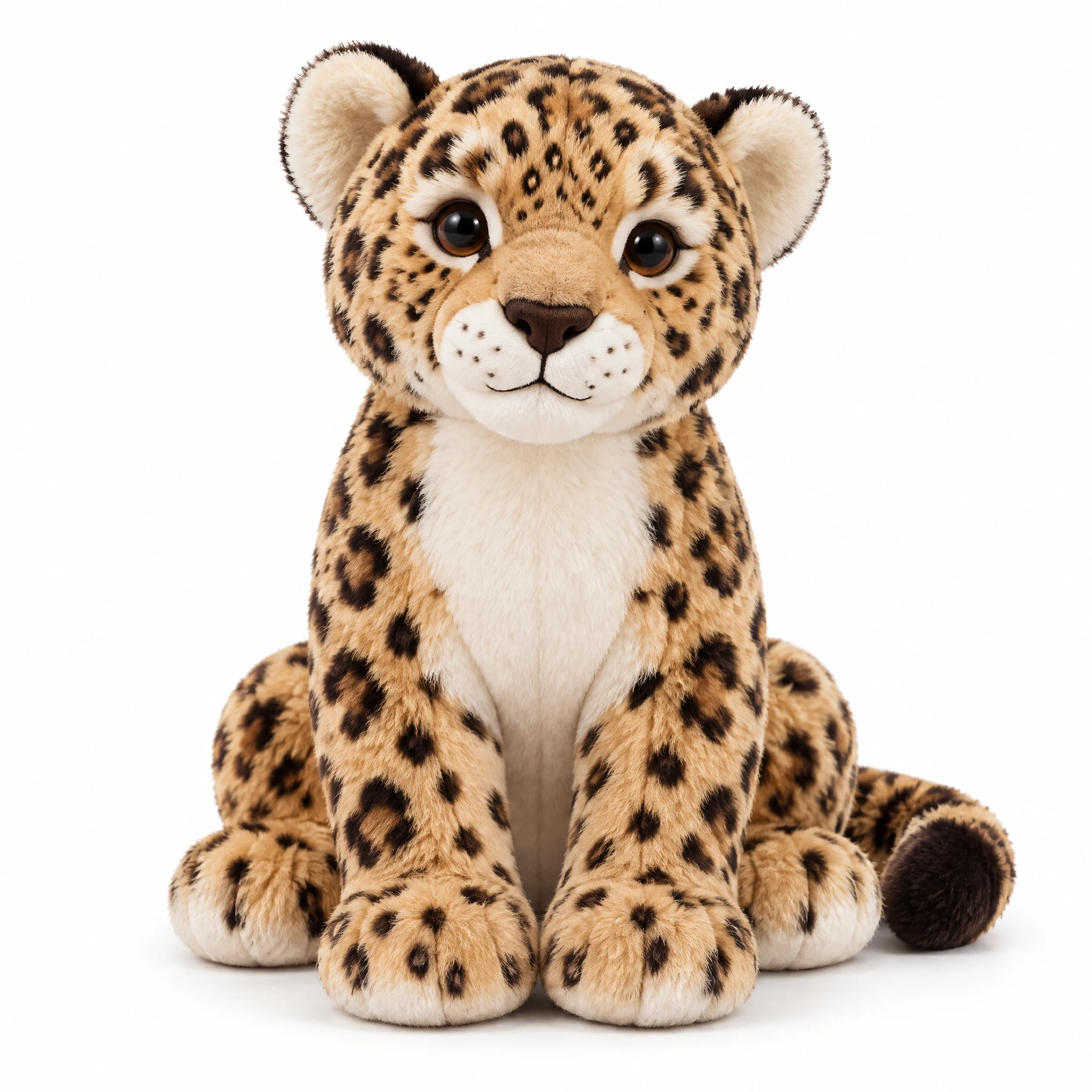 LeopardCream coat with dark rosettes and rounded ears.
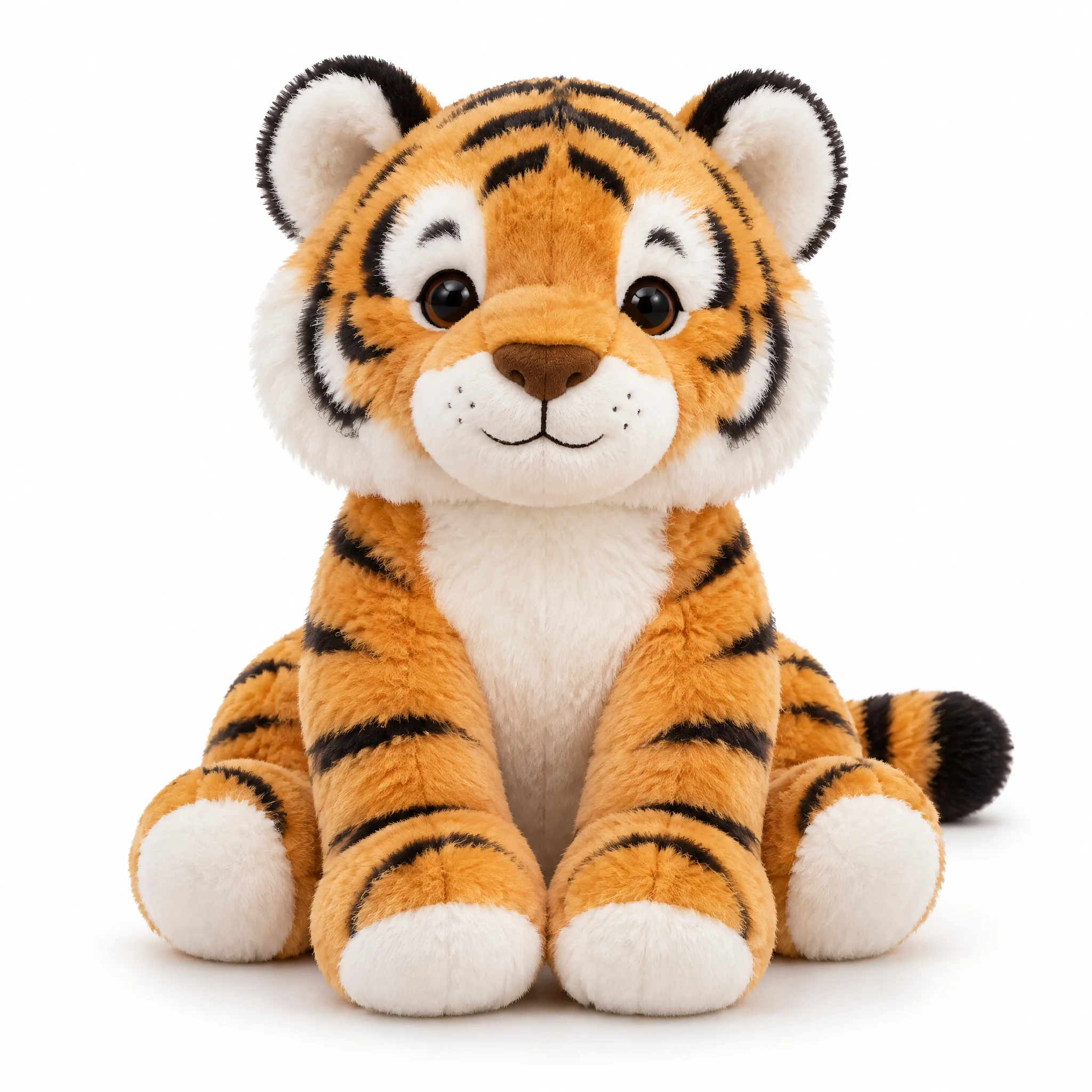 TigerOrange coat with black stripes and a white muzzle.
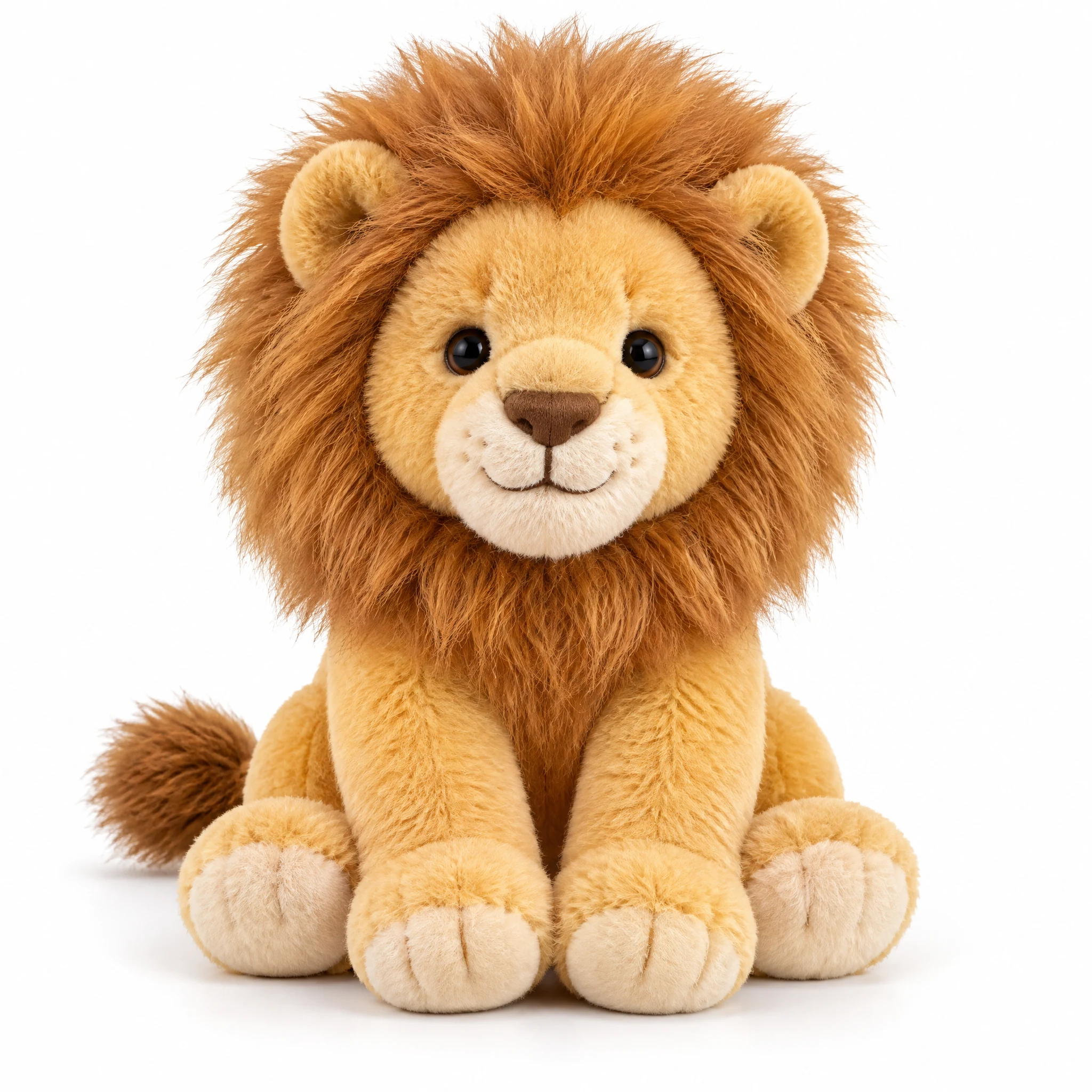 LionAmber mane around the face over a golden body.
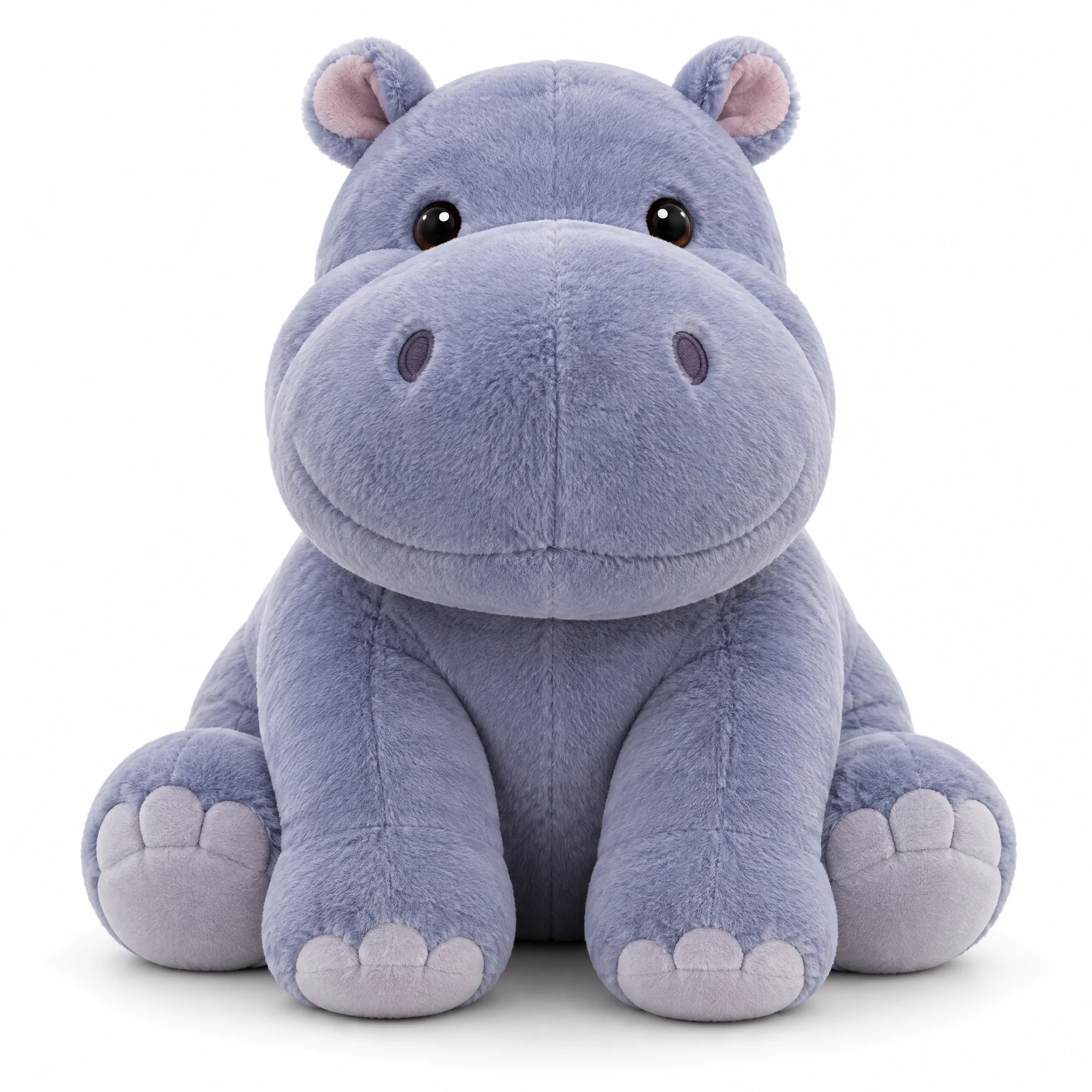 HippopotamusSoft lavender-grey body with a wide muzzle.
- BearWarm brown plush with a cream muzzle and paw pads.
Zoo Animals
Long neck, trunk, coil or tall ears: each shape changes how many panels the pattern needs. These six are the styles where proportion and part placement need the most planning.
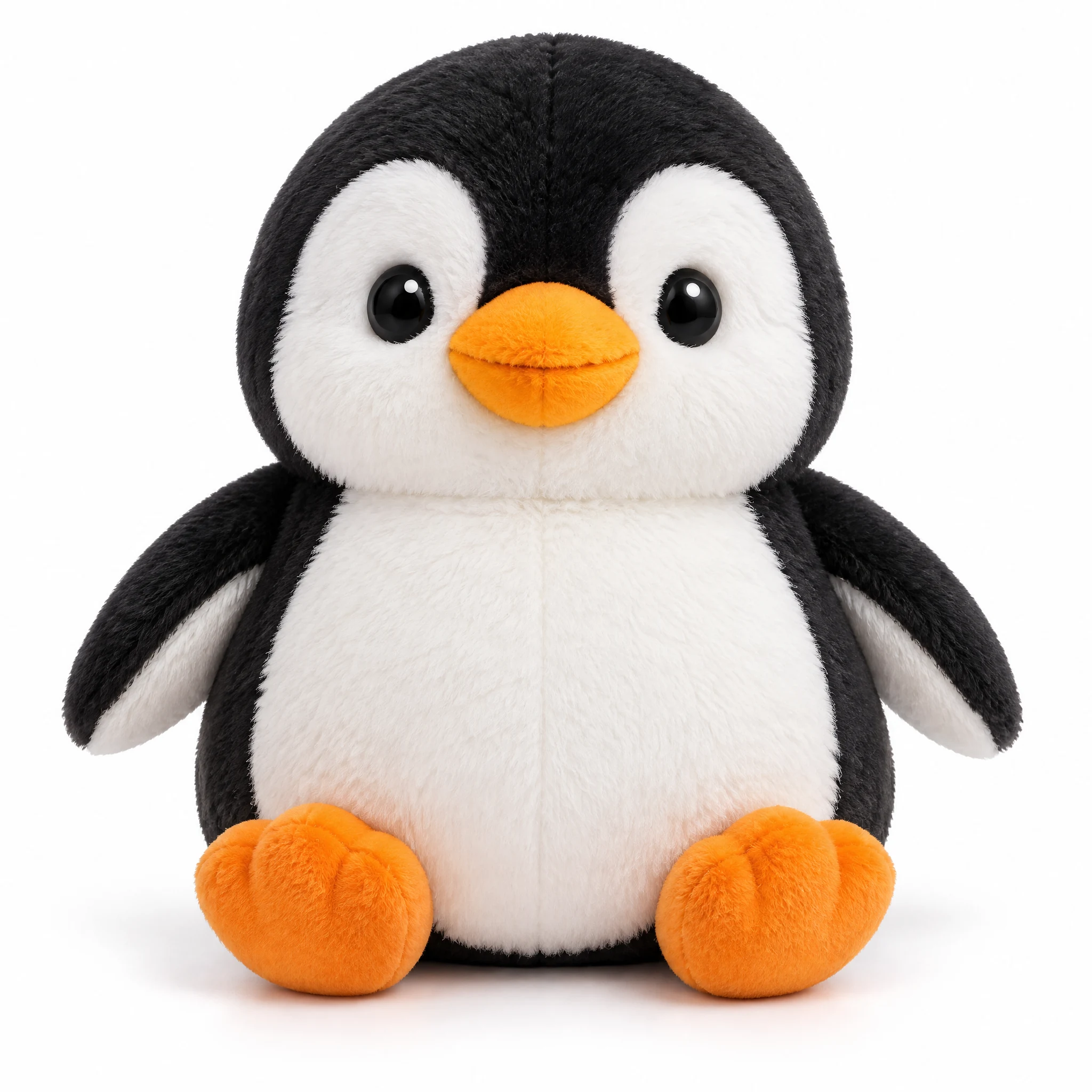 PenguinBlack back, white face and belly, orange beak and feet.
- GiraffeLong neck with brown patches on a tan coat.
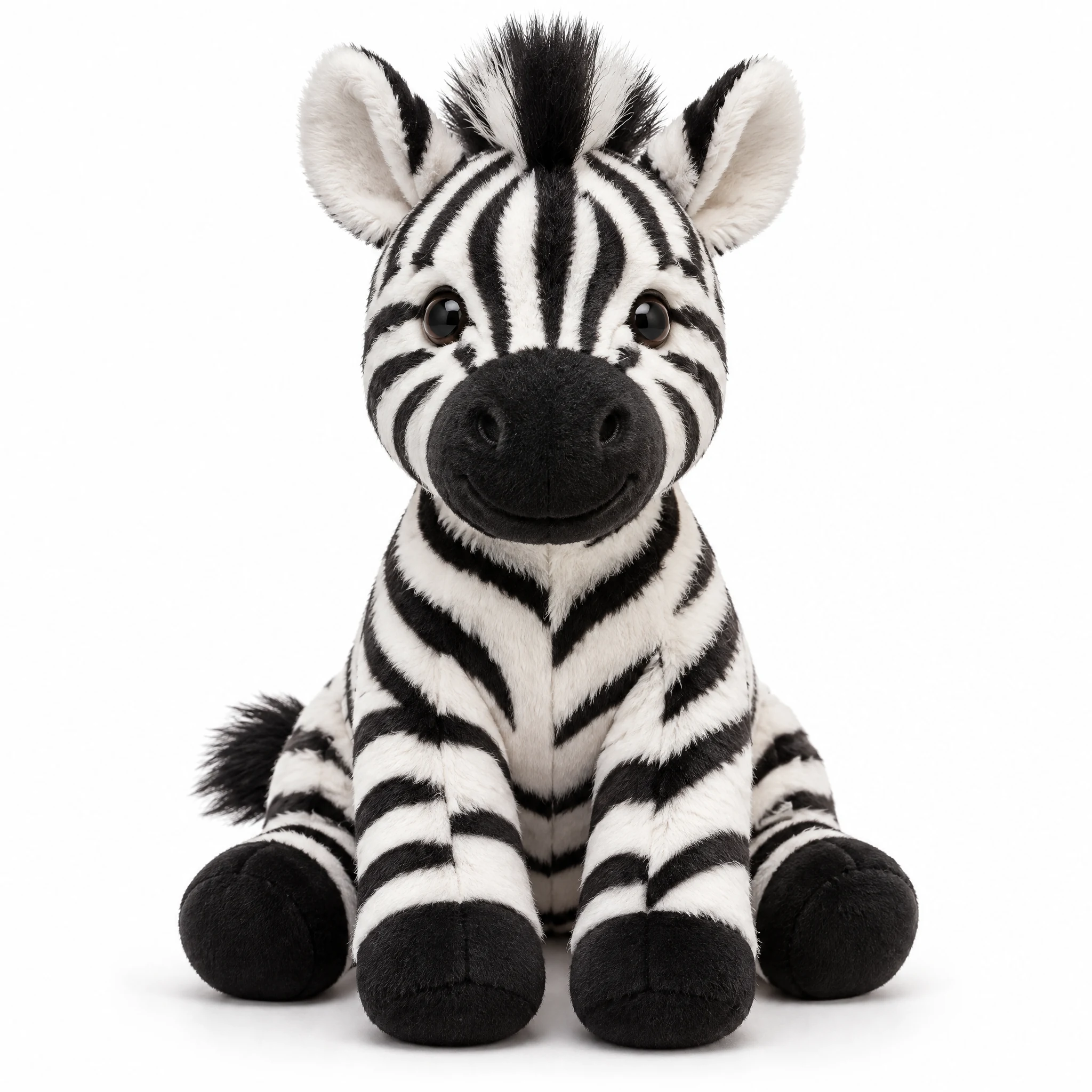 ZebraBlack-and-white stripes with a dark mane.
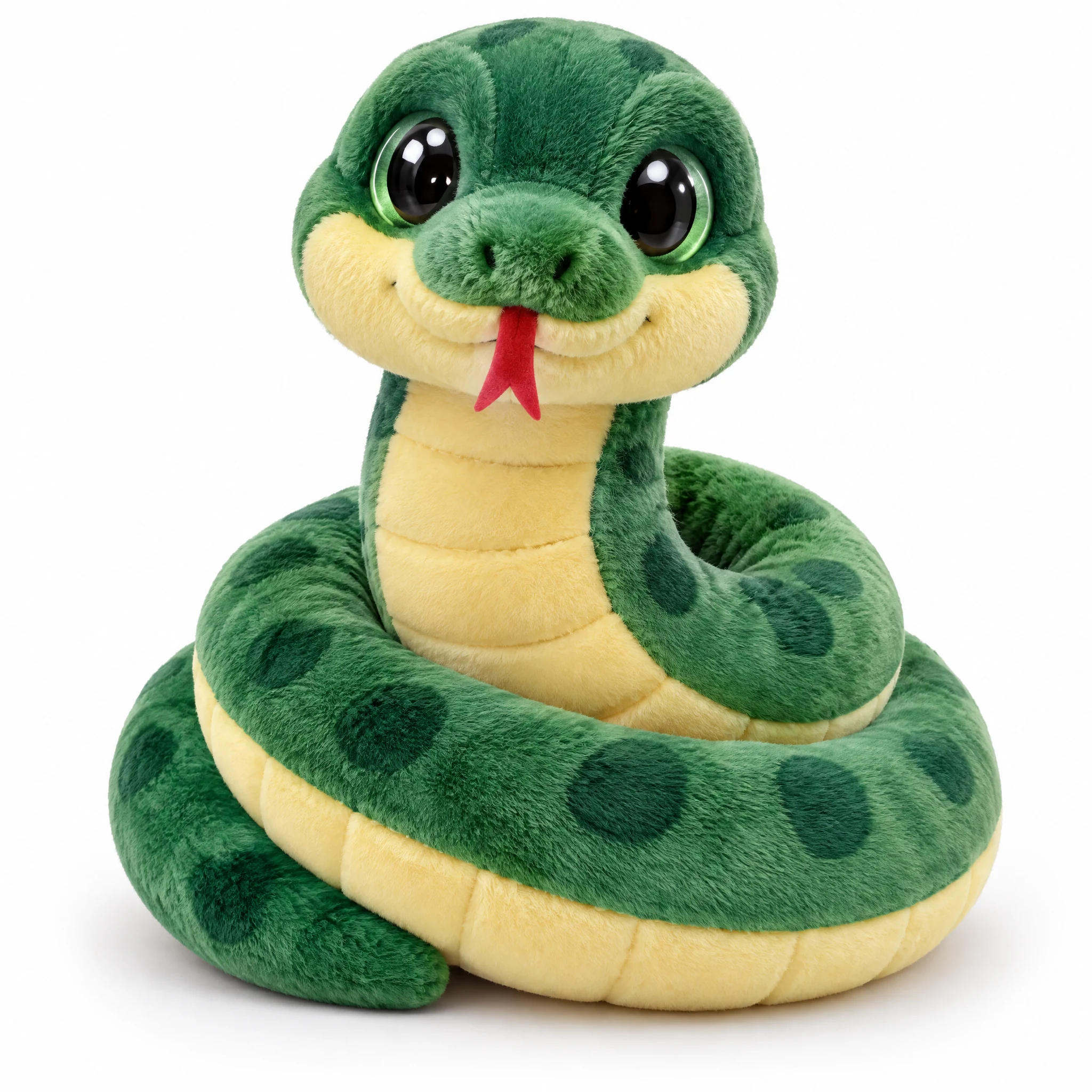 SnakeCoiled green body with darker spots and a cream underside.
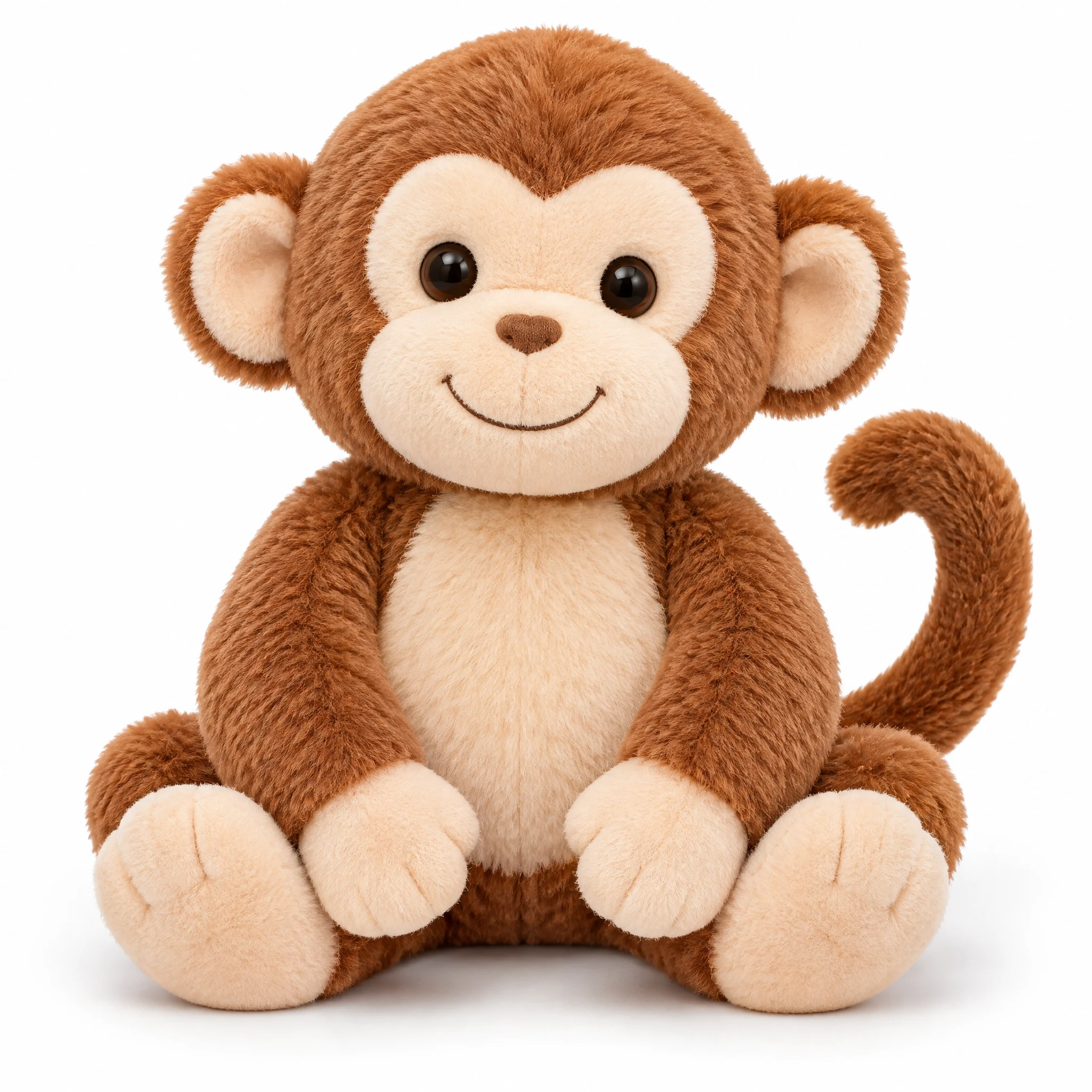 MonkeyBrown coat, lighter face and belly, curled tail.
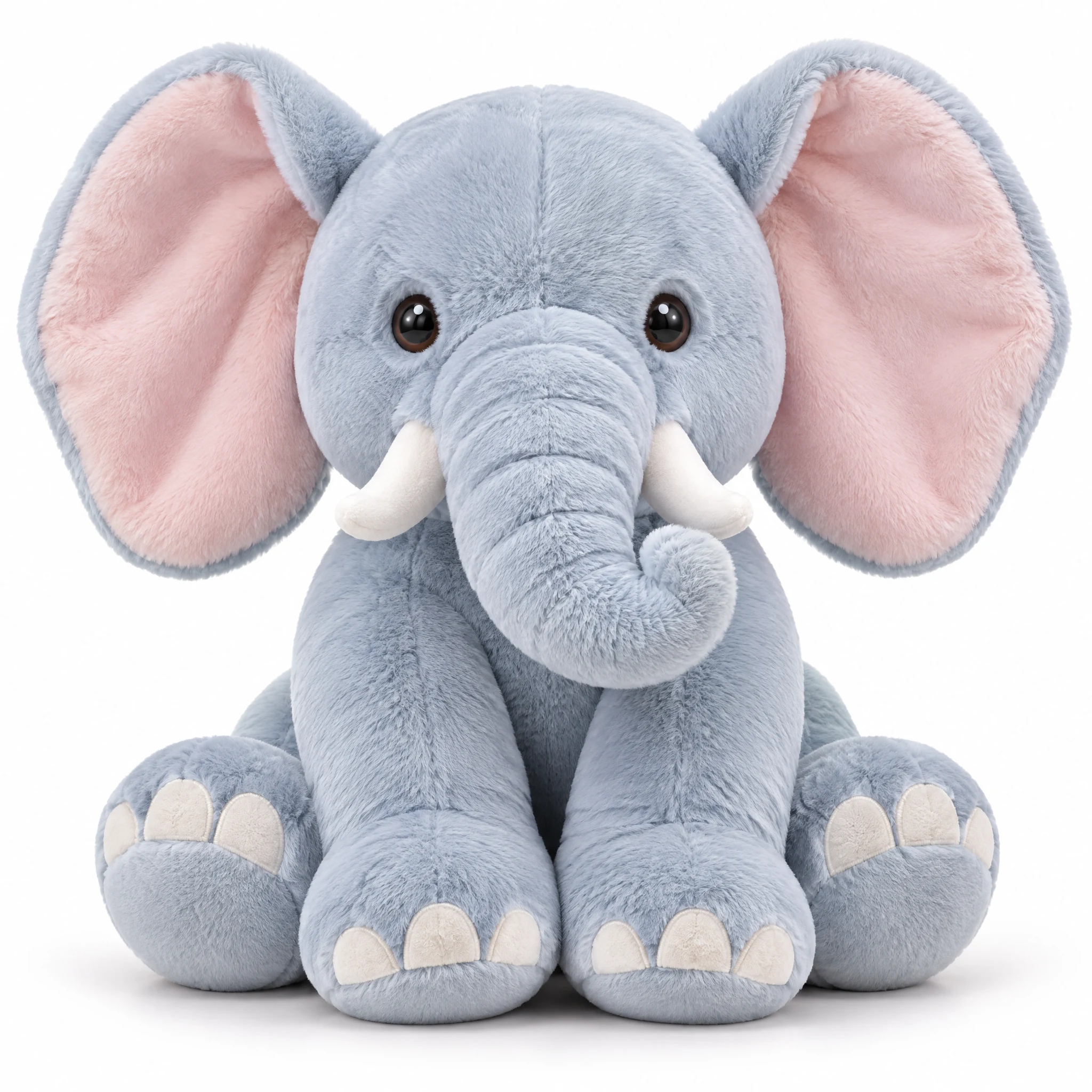 ElephantGrey-blue body, pink inner ears and white tusks.
Forest Animals
Small bodies, large ears and surfaces that change direction: forest animals are where pile direction, small parts and surface texture matter most.
- DeerSpotted fawn coat with small antlers.
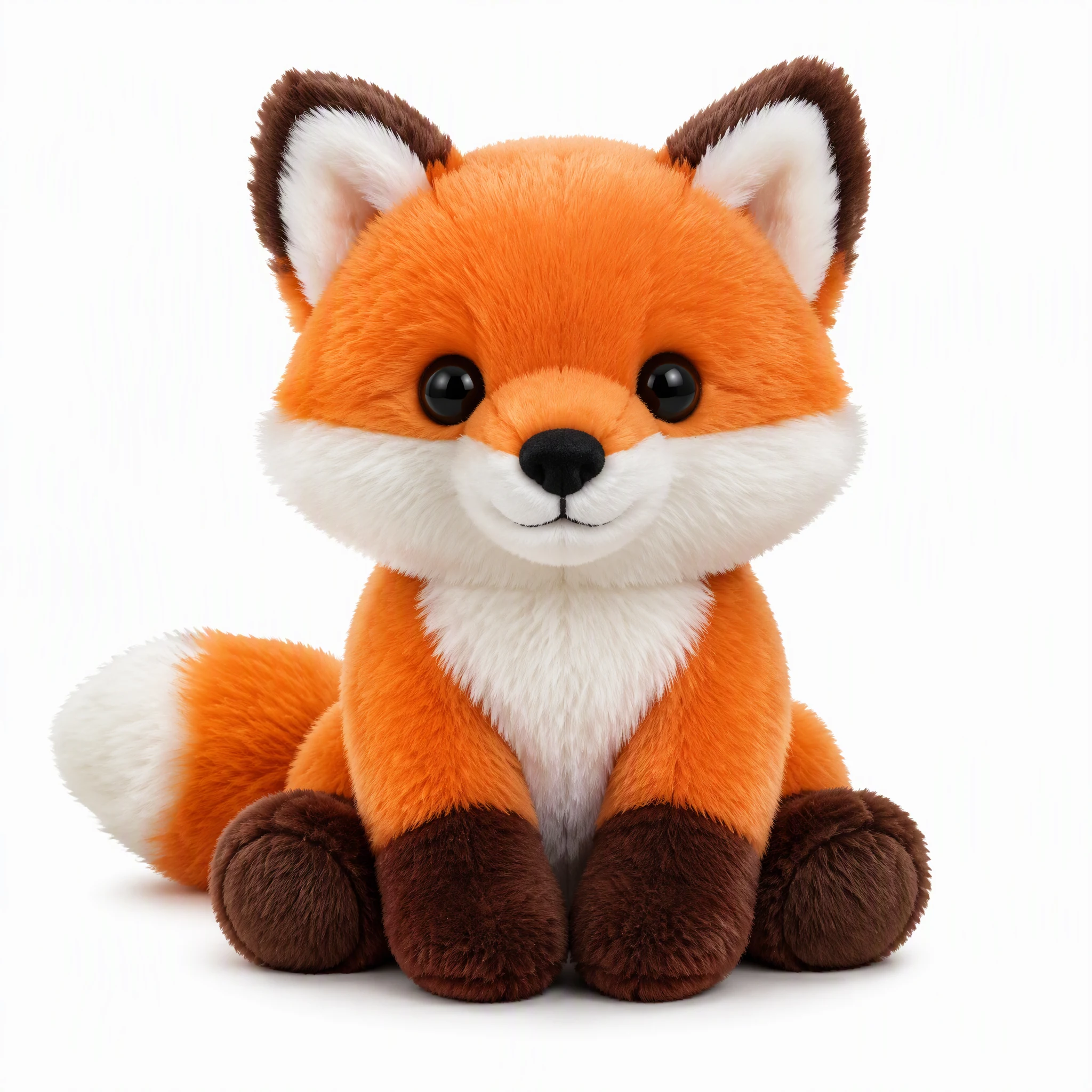 FoxOrange coat, white muzzle and dark legs.
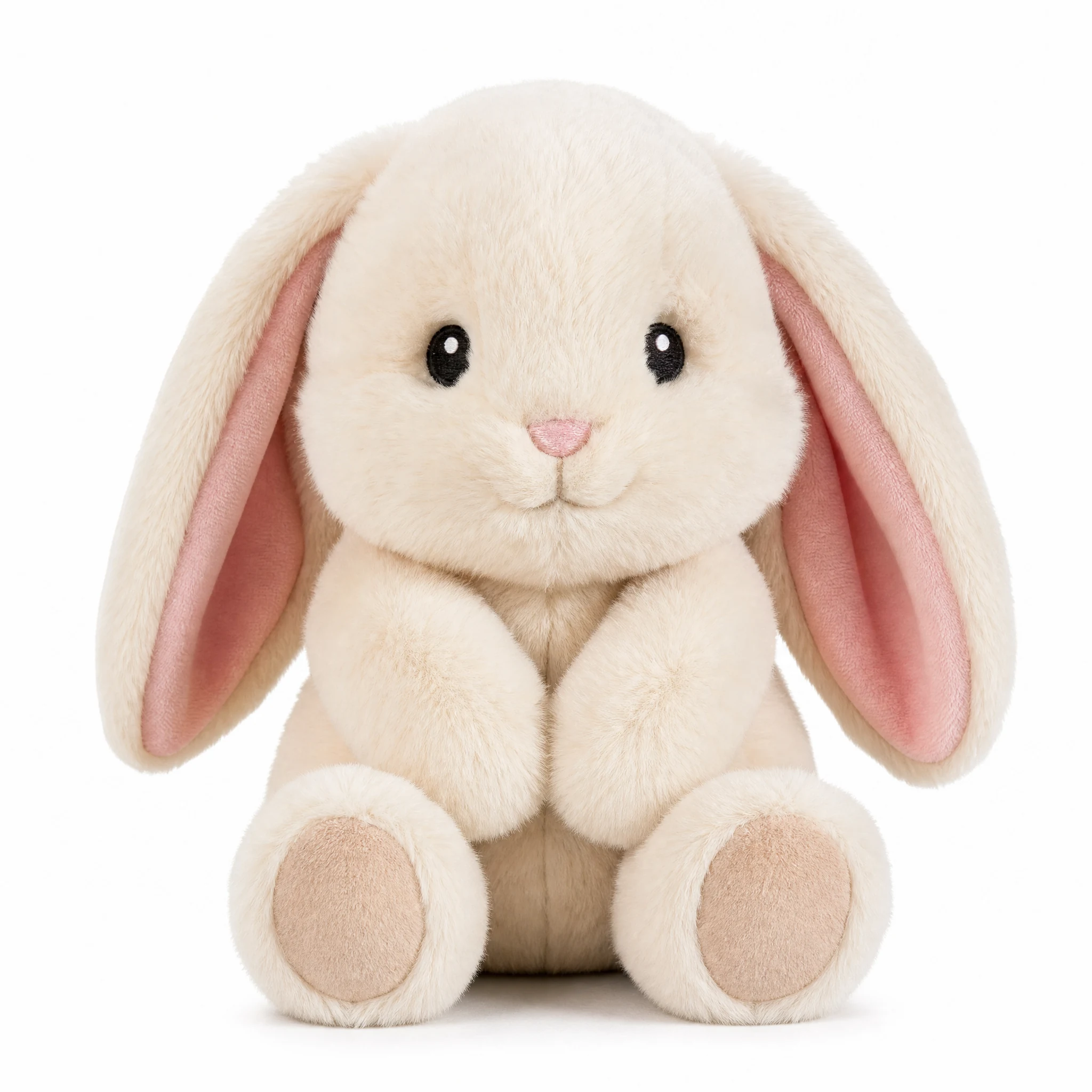 RabbitLong floppy ears with pink lining, seated.
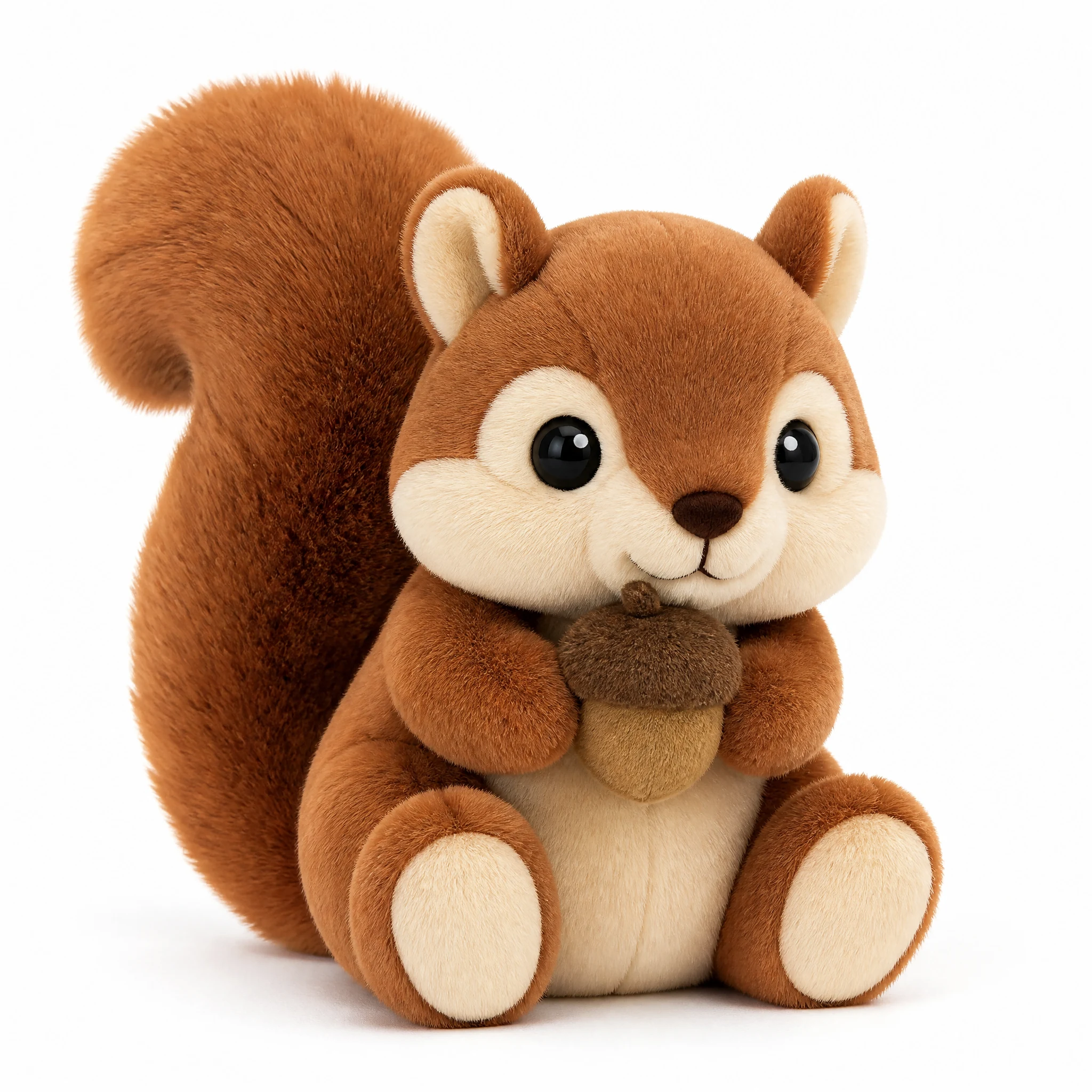 SquirrelBushy tail curled behind, holding a nut.
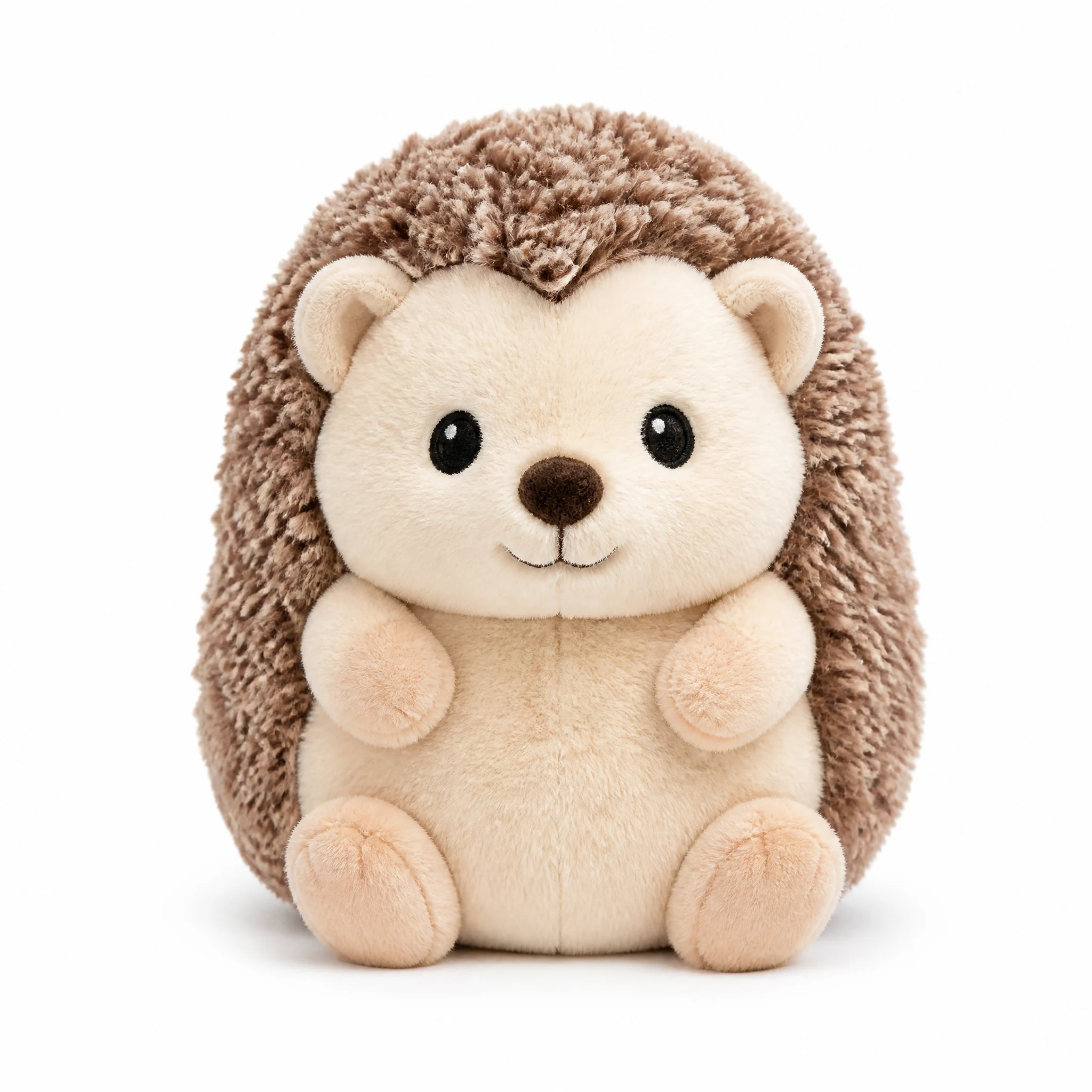 HedgehogTextured spine coat over a cream face and belly.
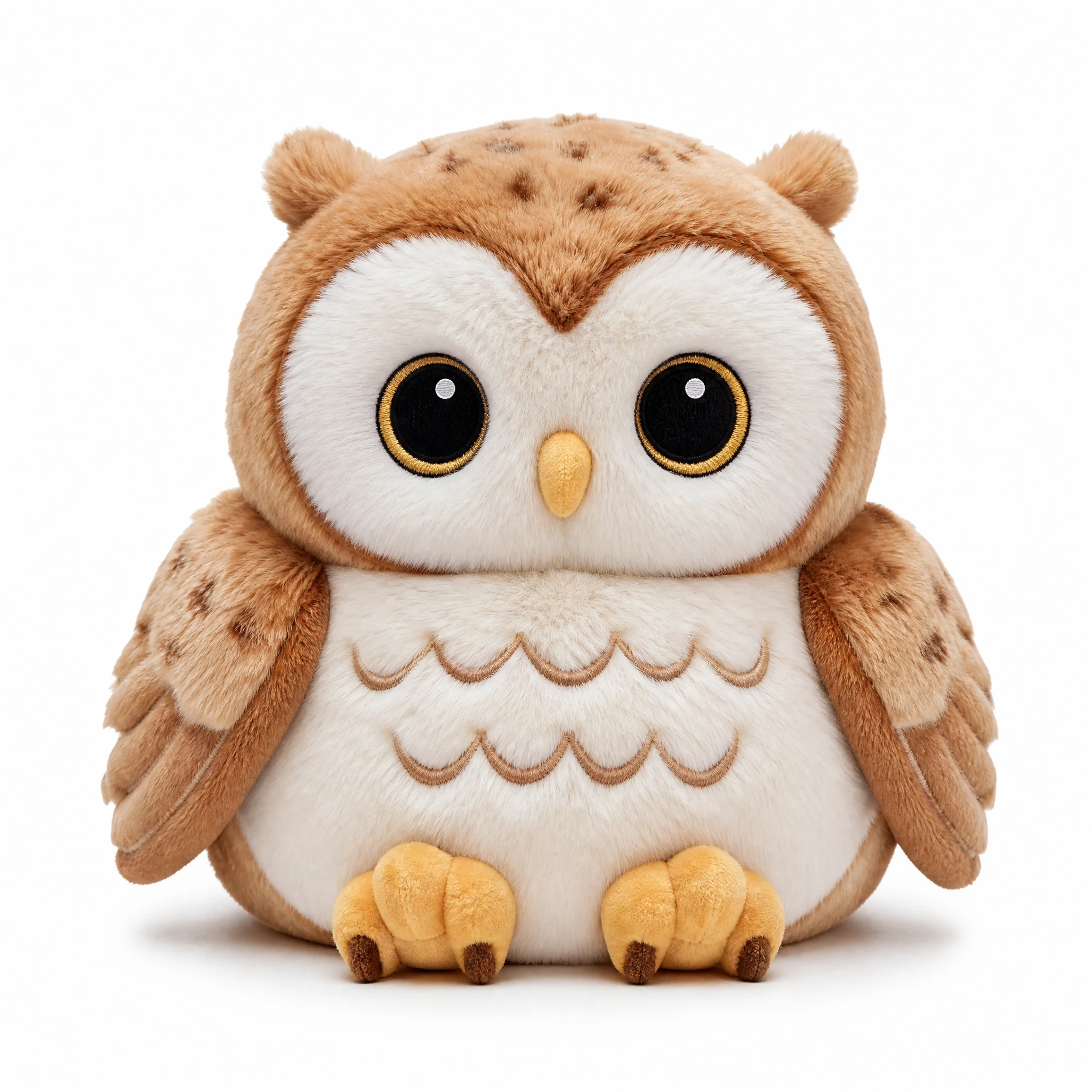 OwlRound body with layered wing feathers and large eyes.
Ocean Animals
Fins, flippers and tentacles have no obvious seam line, so the pattern has to carry the shape. These six show where that matters most.
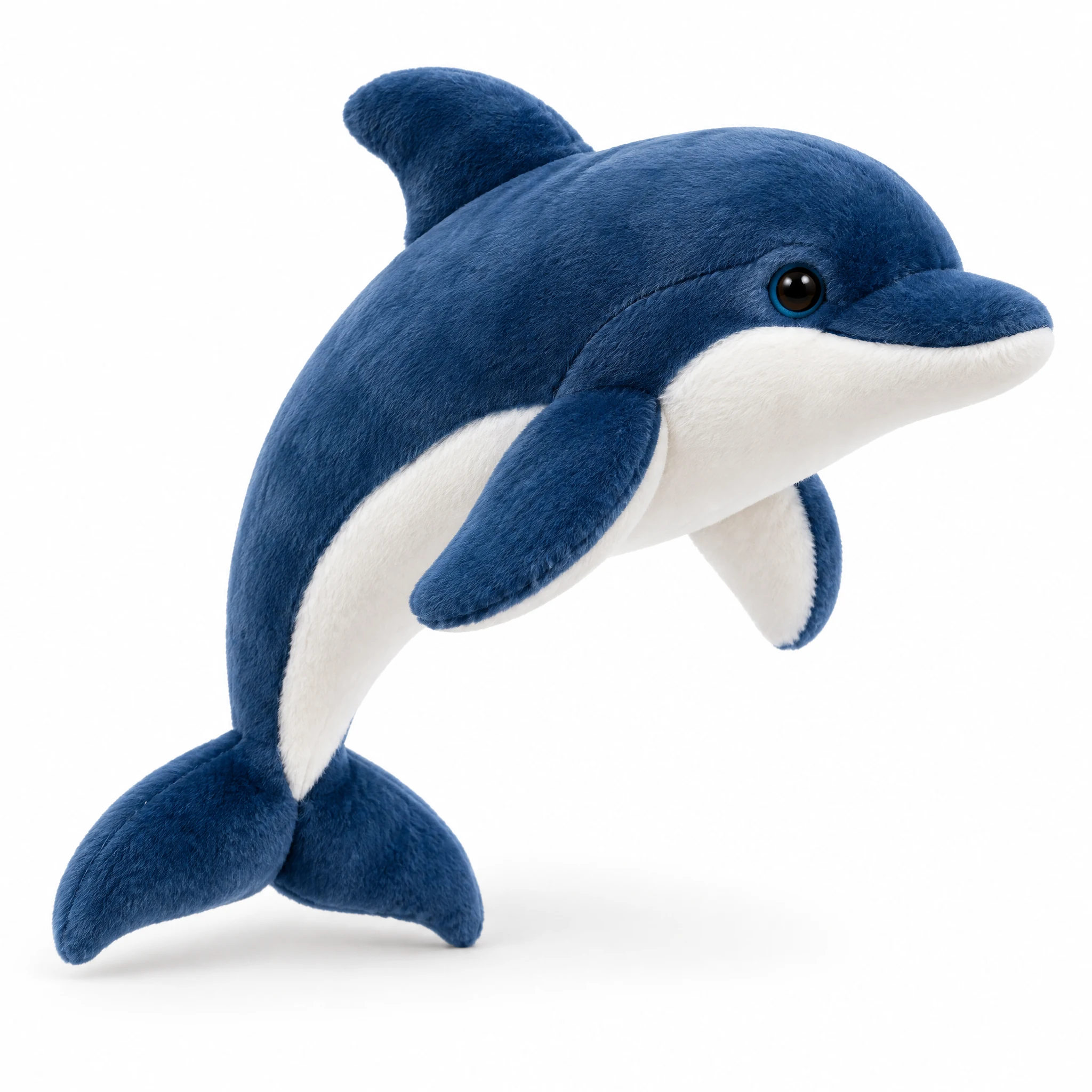 DolphinArched leap, navy back and white belly.
- WhaleRounded body, soft blue-grey back and white belly.
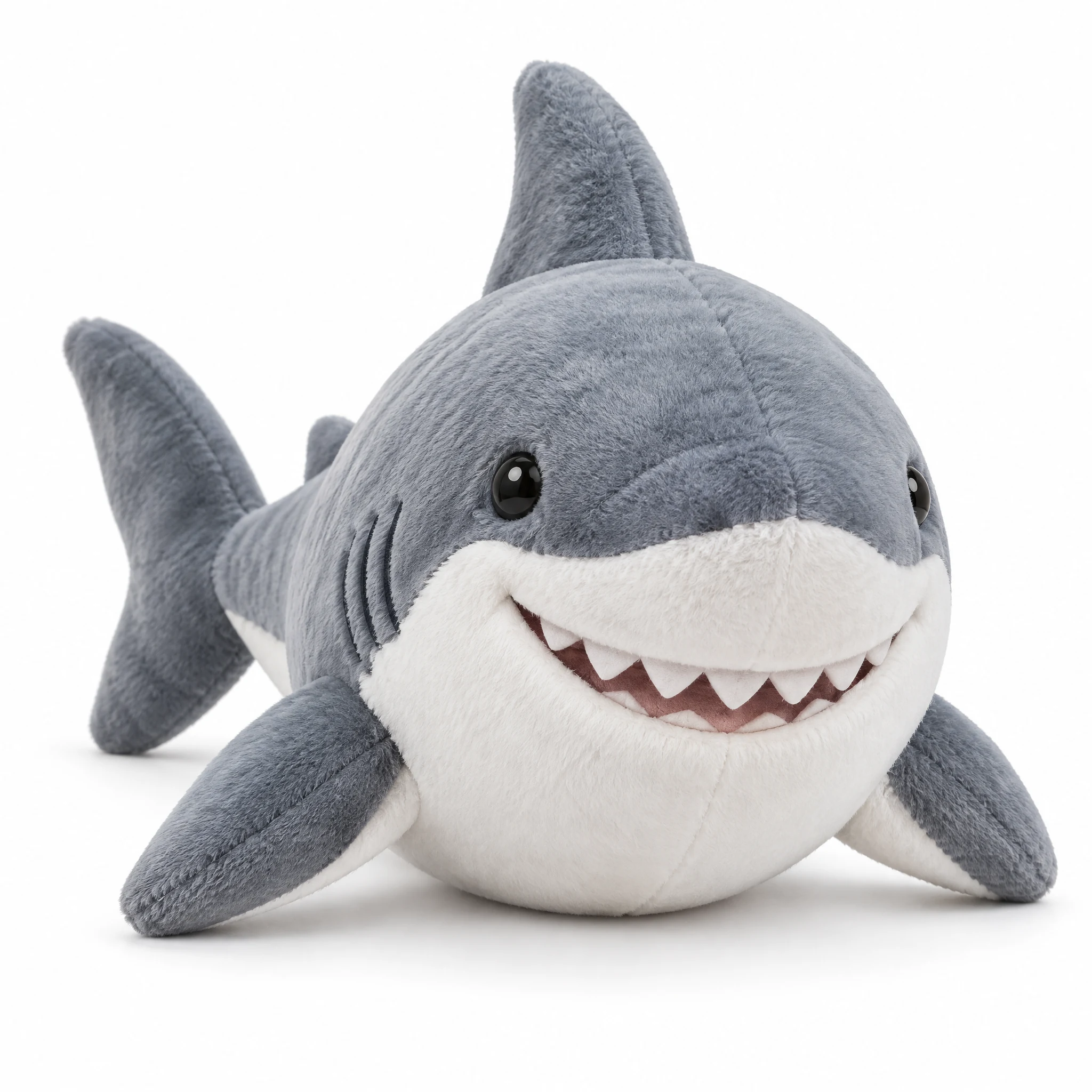 SharkGrey back, white belly and an open mouth with teeth.
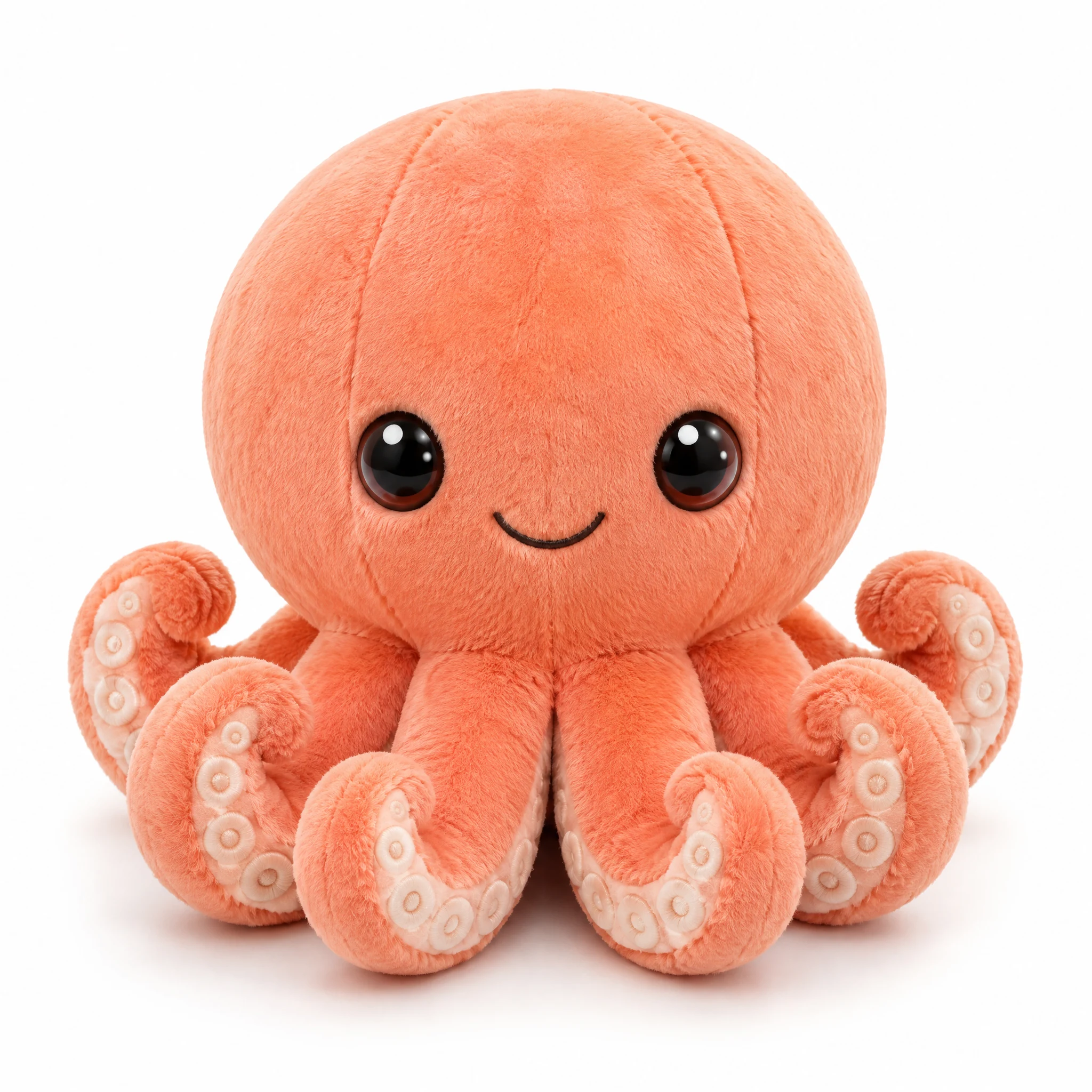 OctopusCoral body with eight curled tentacles.
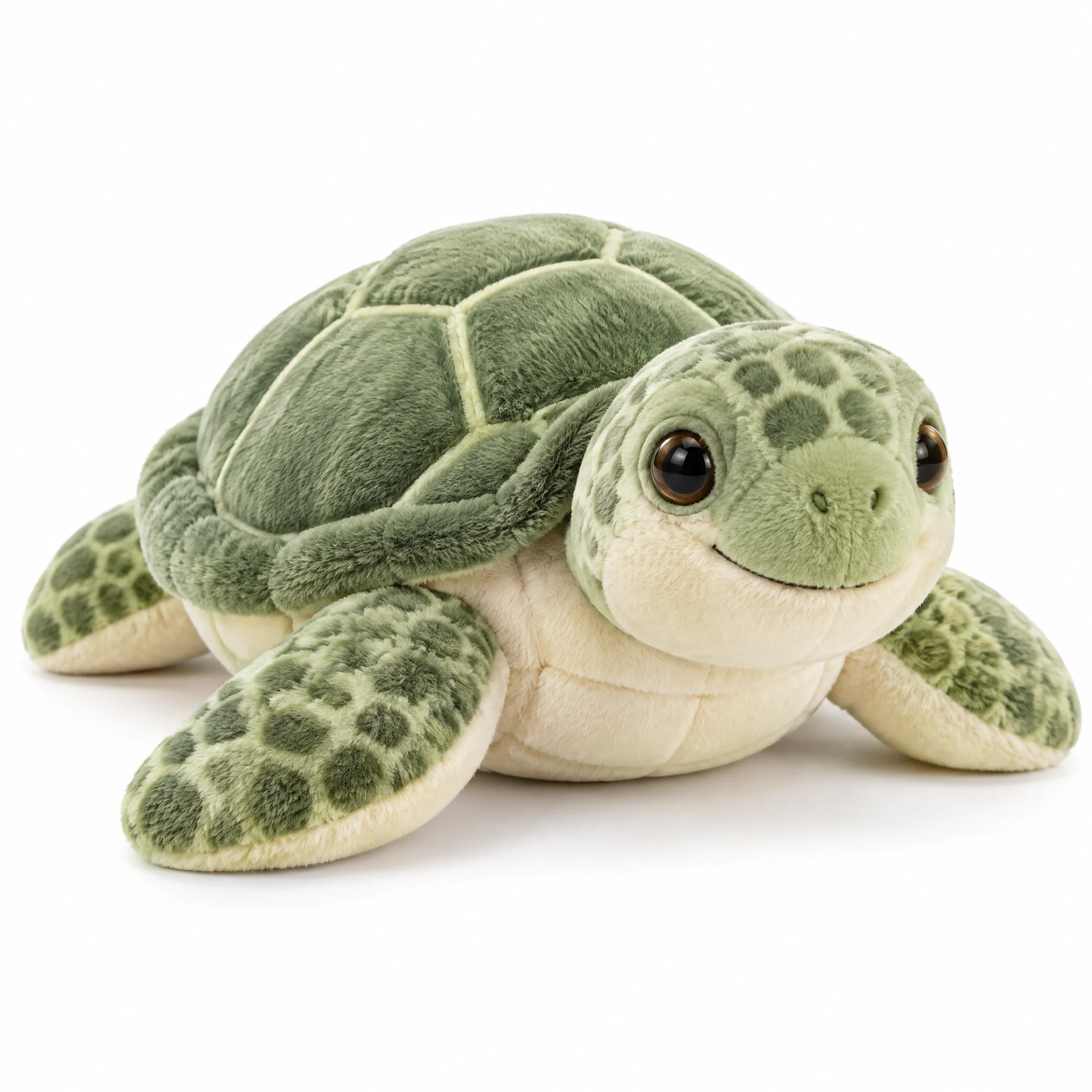 TurtleGreen shell with a raised scute pattern.
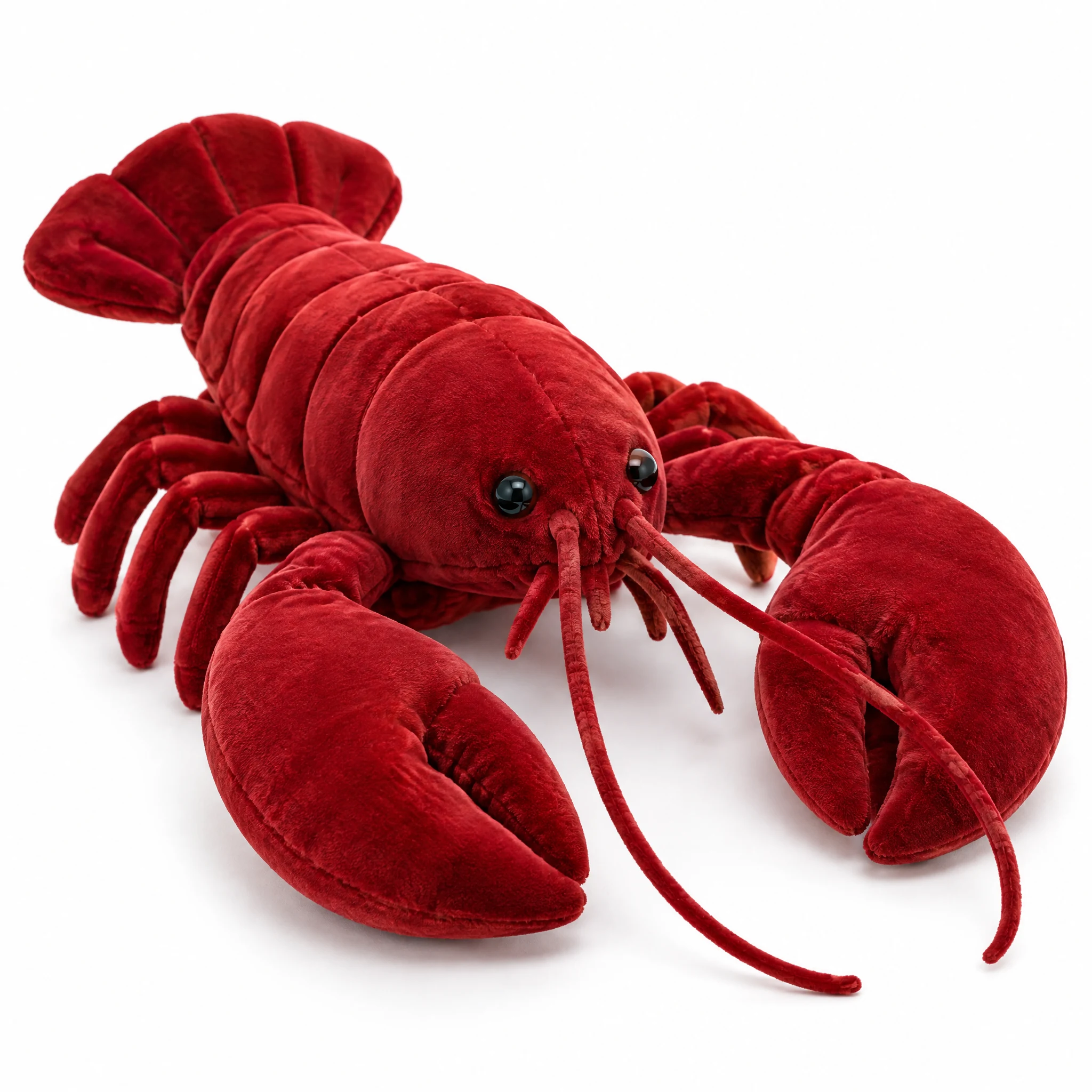 LobsterDark red shell, segmented tail and large claws.
Domestic Pets
Pets are judged on the face. Ear set, muzzle length and eye spacing do most of the work, and small changes read clearly at any size.
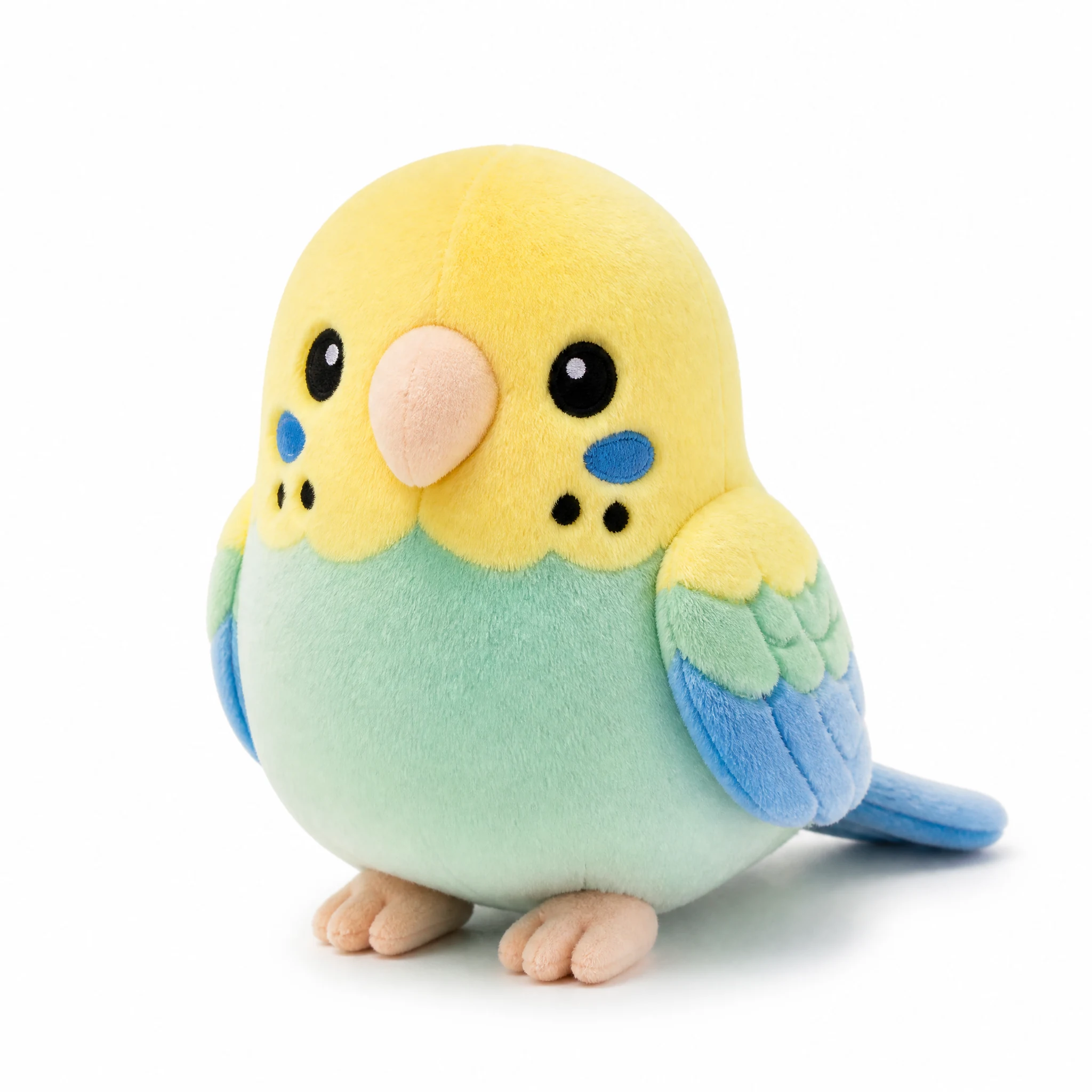 ParrotYellow head and back, blue-green belly, small cheek spots.
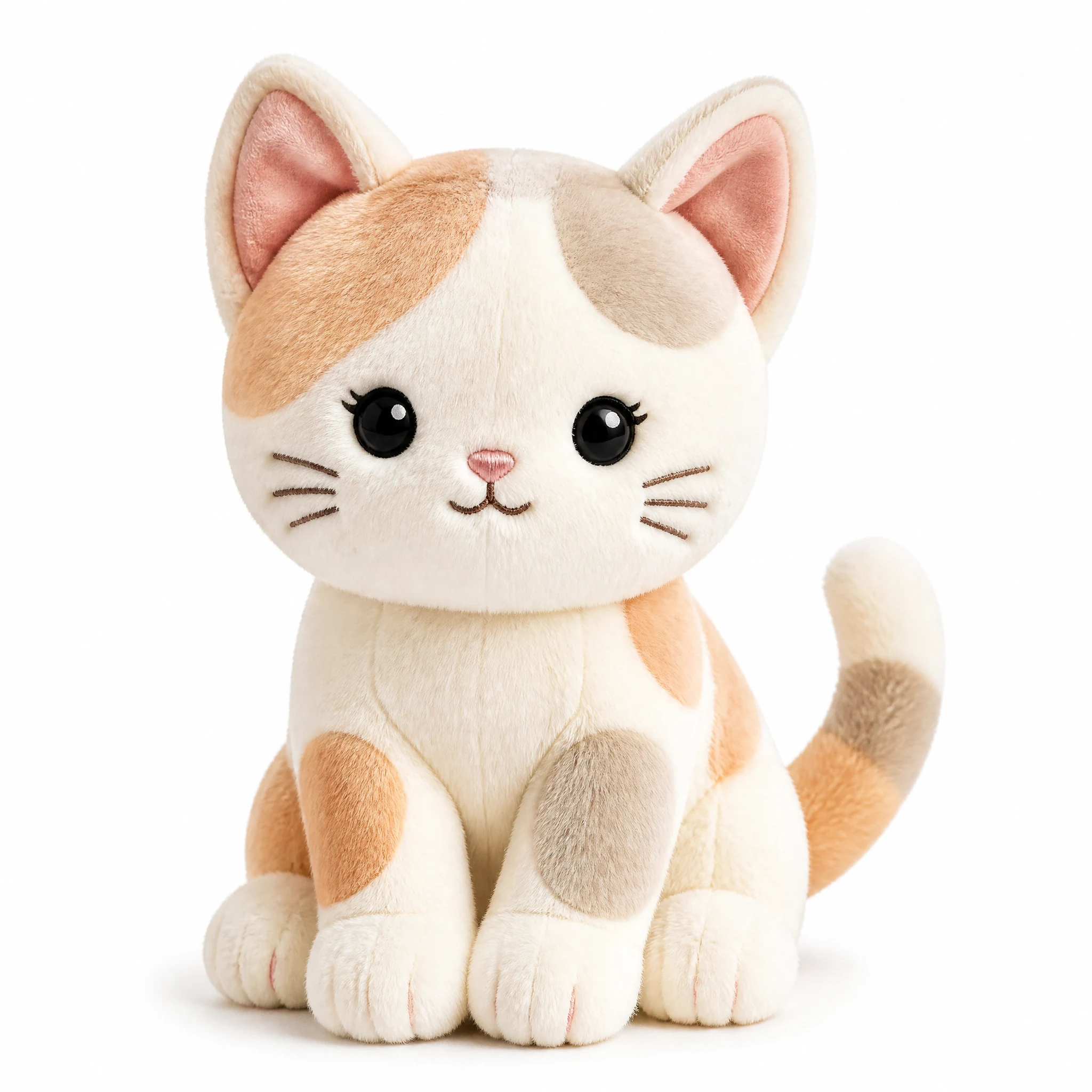 CatCream coat with orange patches and an upright tail.
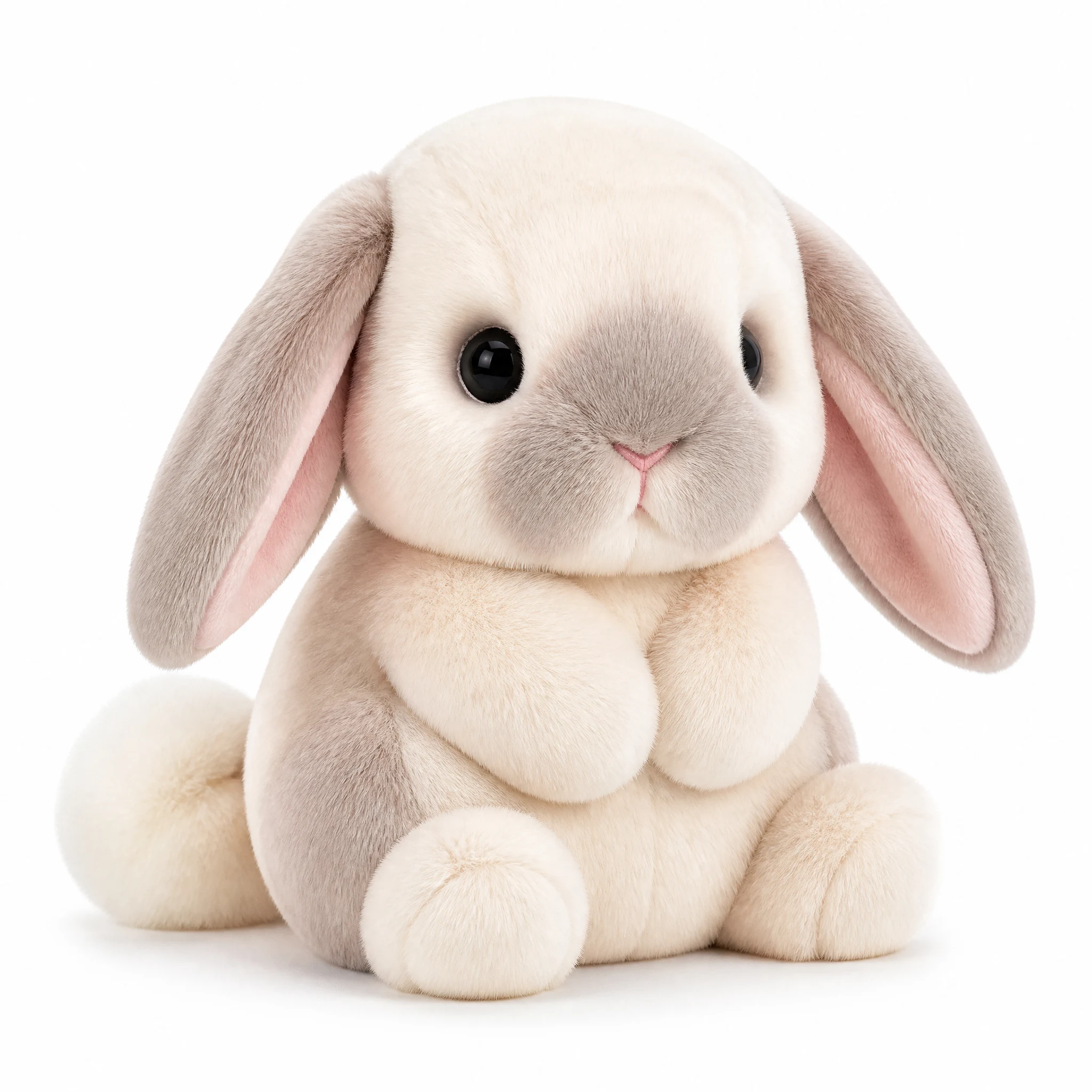 BunnyLong floppy ears with pink lining, seated.
- DogGolden puppy coat with floppy ears.
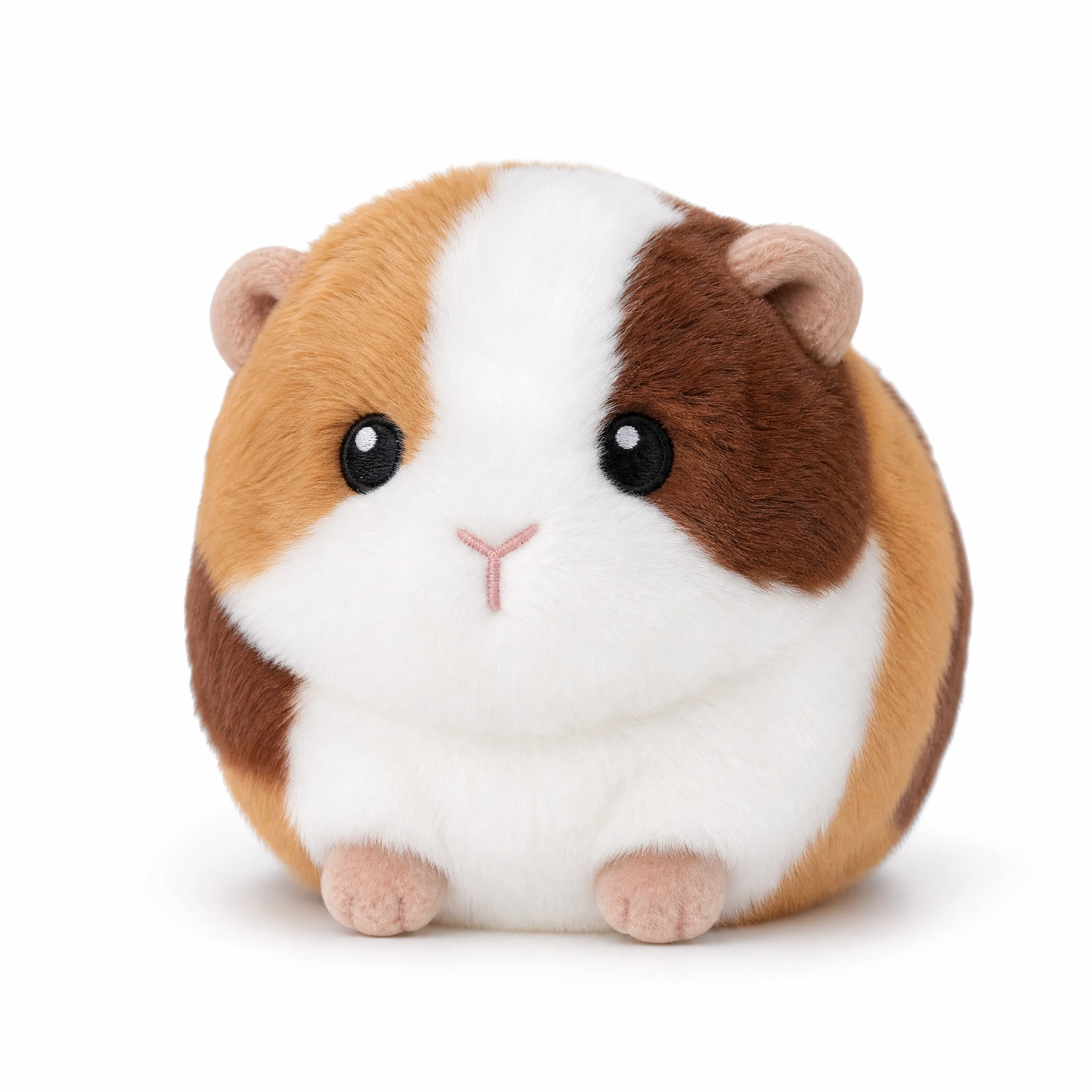 Guinea PigRounded body, white with brown patches.
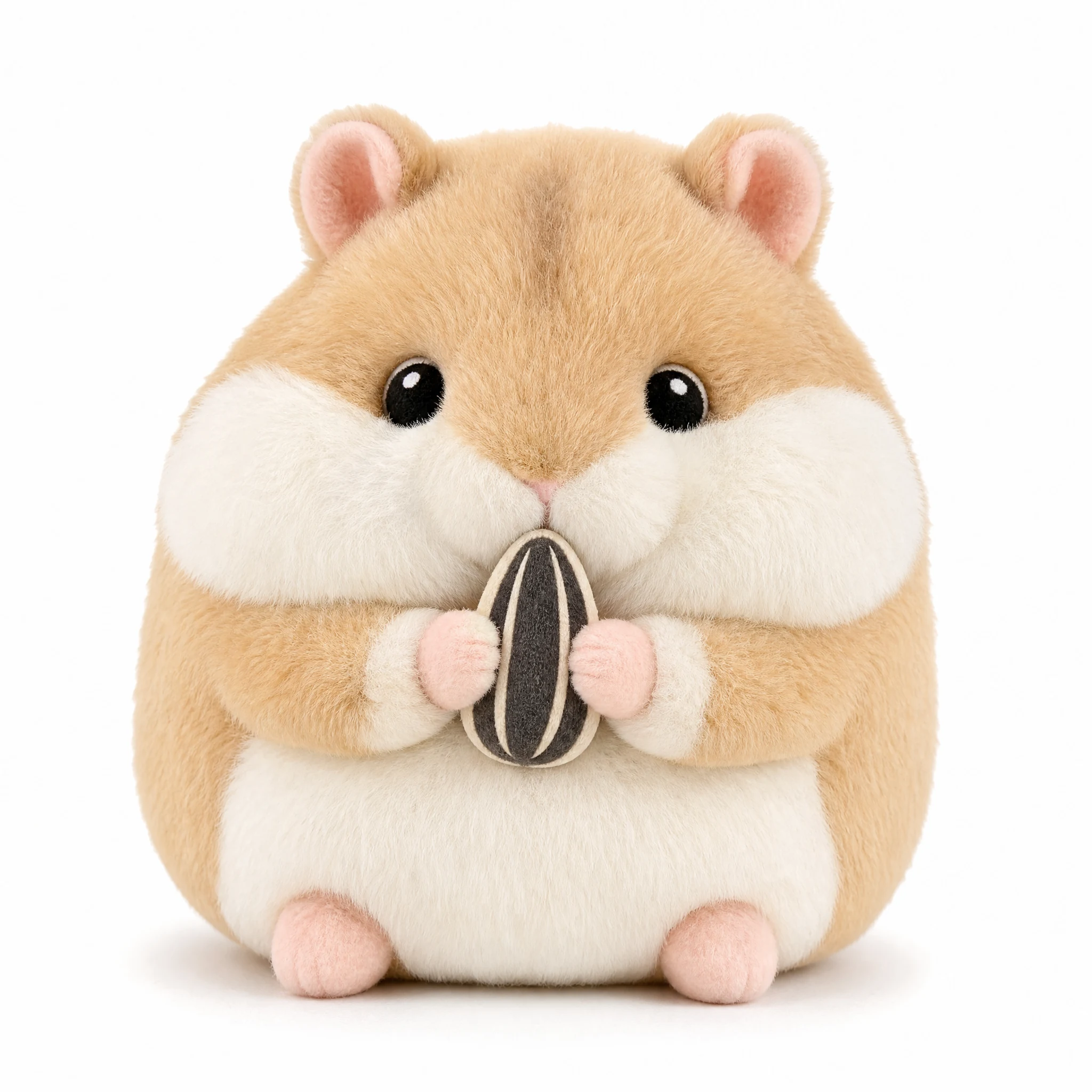 HamsterCream and brown coat, holding a seed.
Exotic Animals
Unusual silhouettes: a fanned tail, a long neck, a flat resting body. Each one is a different pattern problem rather than a colour change.
- CapybaraTan-brown body with a blocky muzzle.
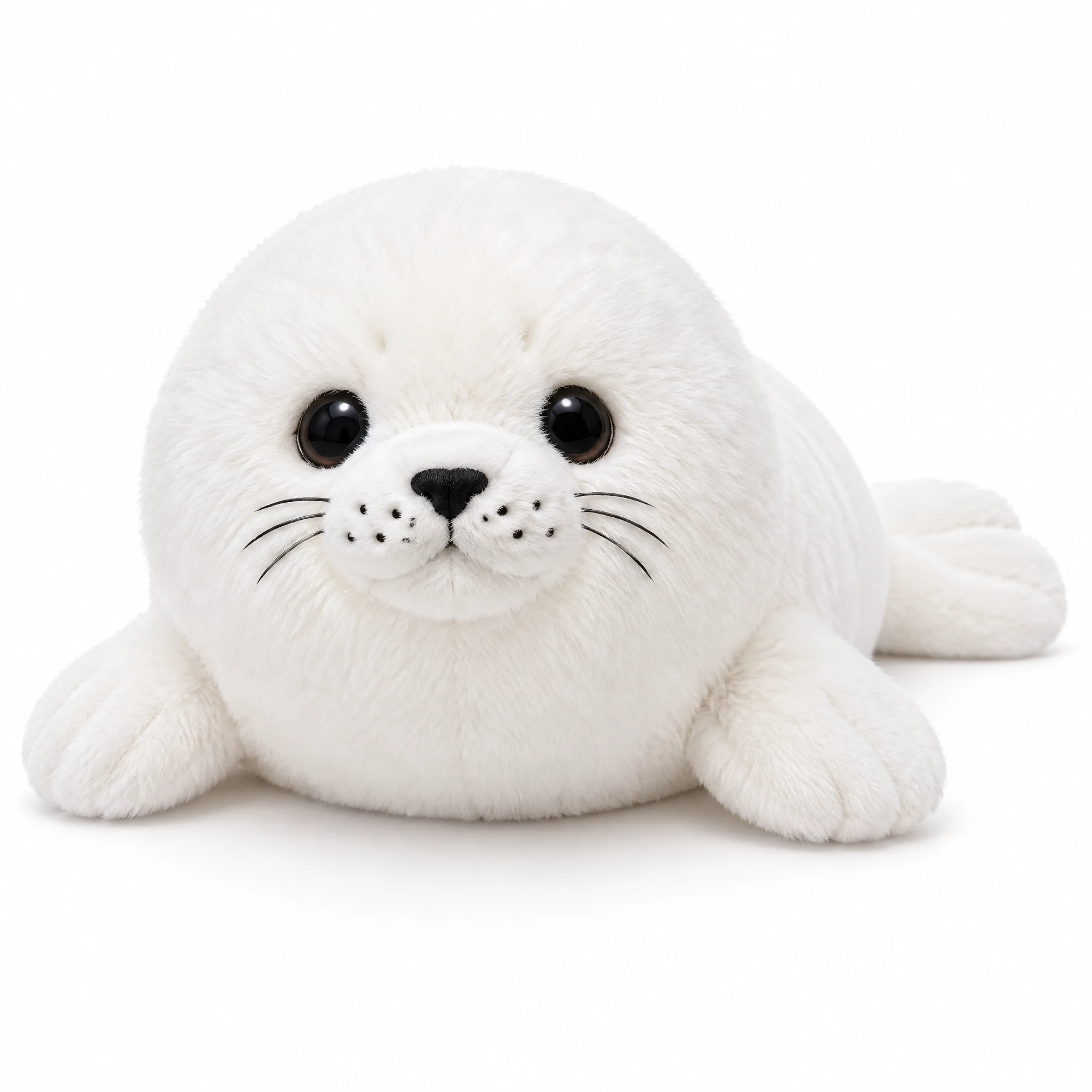 SealWhite fluffy body resting on its flippers.
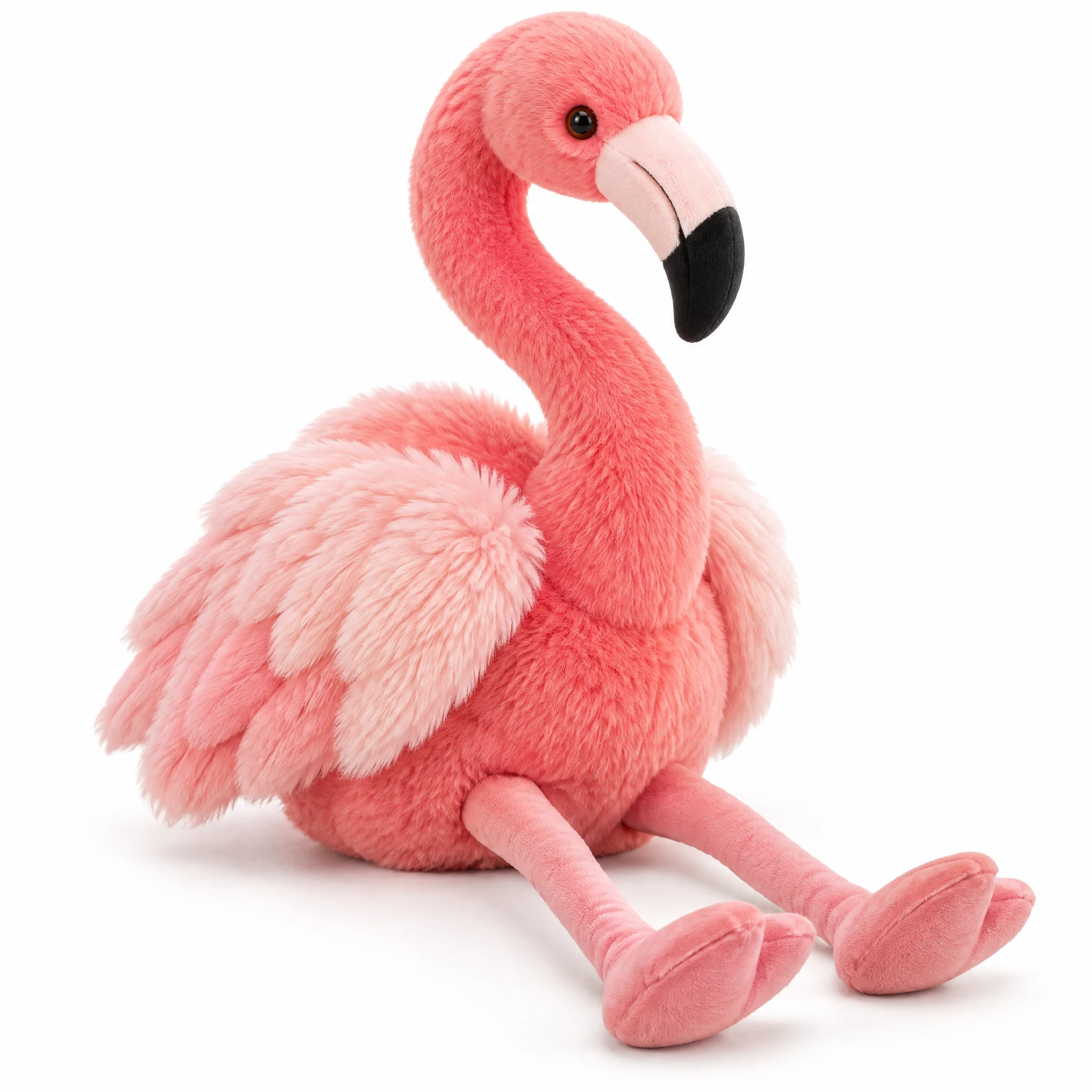 FlamingoLong pink neck, black-tipped beak and layered wing feathers.
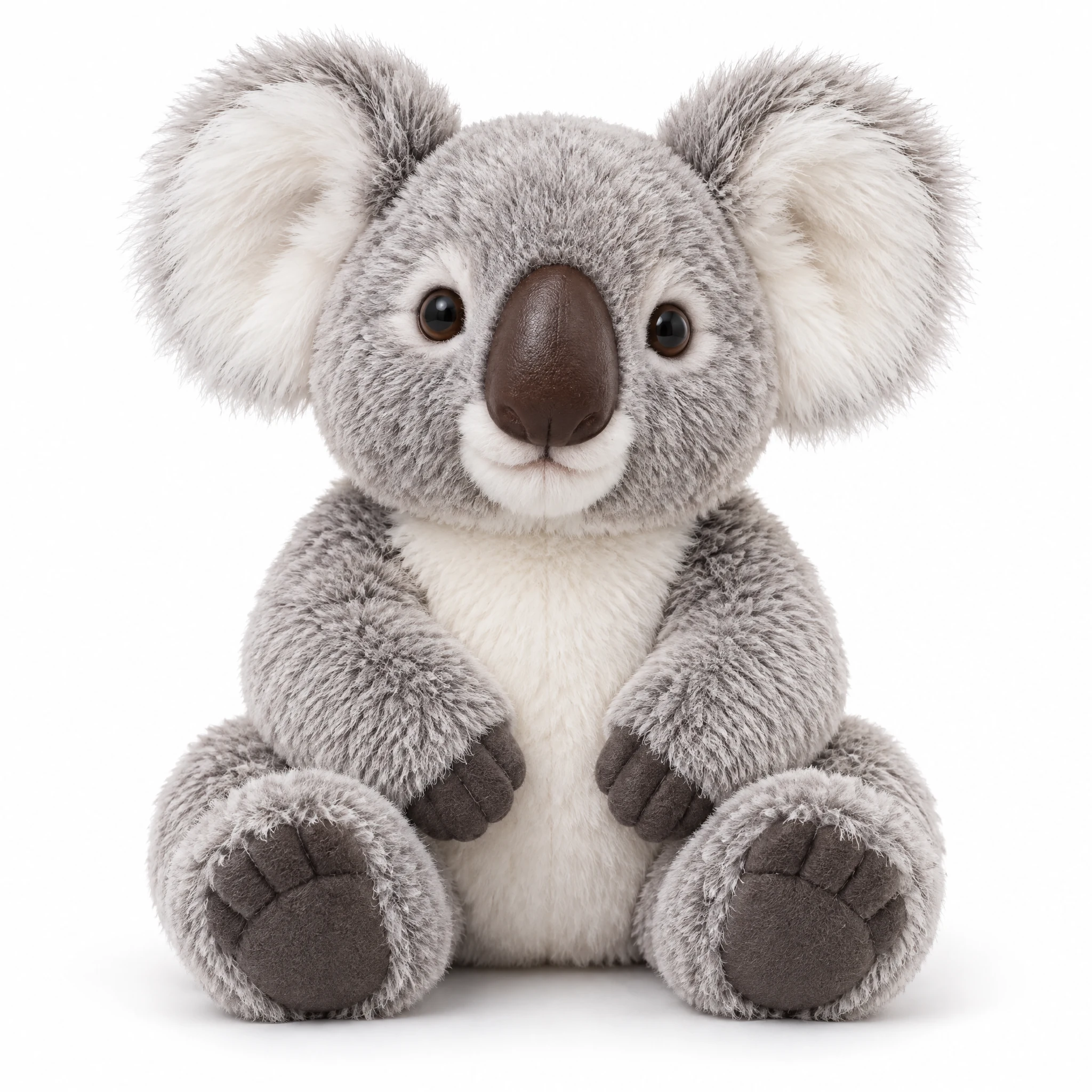 KoalaGrey coat, white inner ears and a large dark nose.
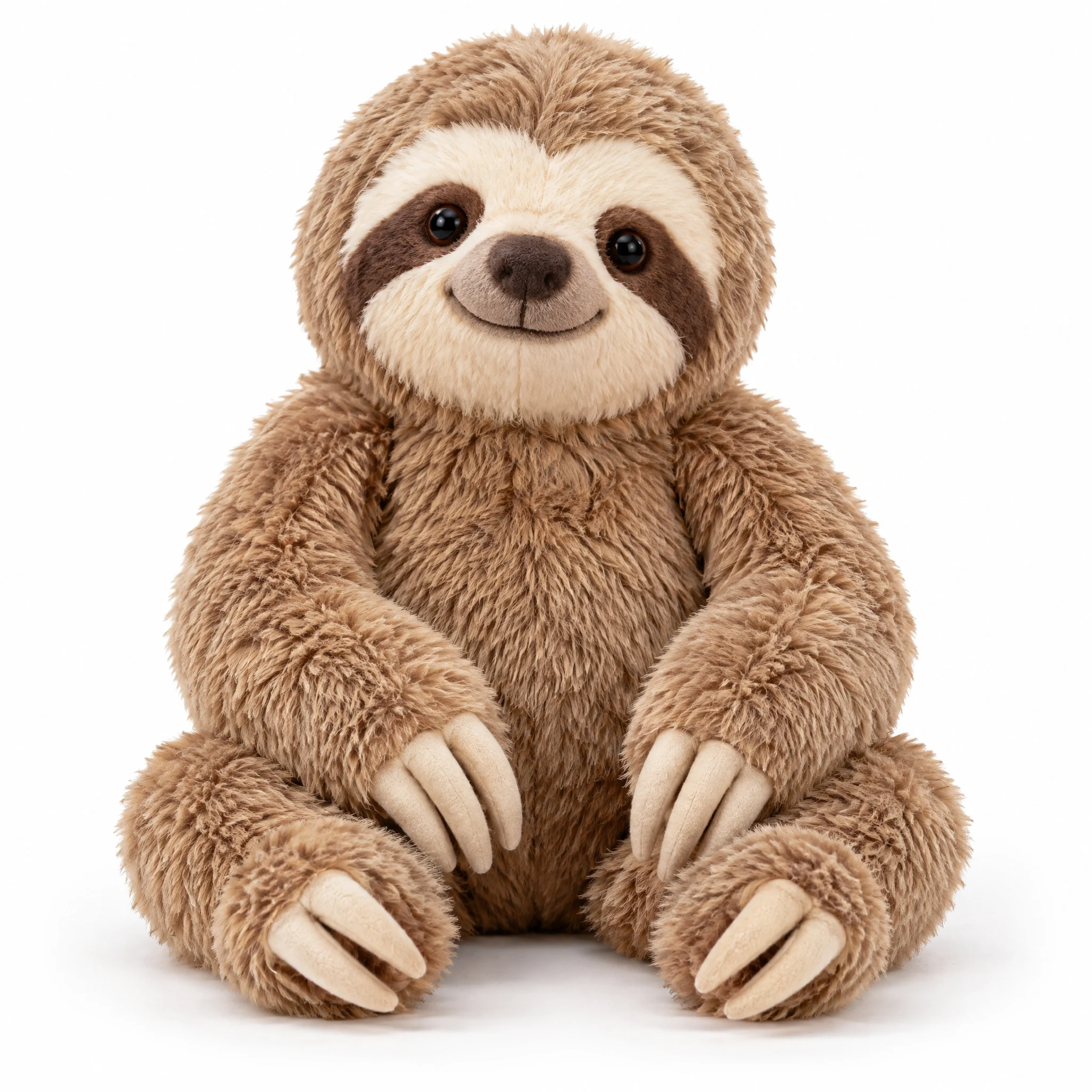 SlothShaggy brown coat with a cream face mask.
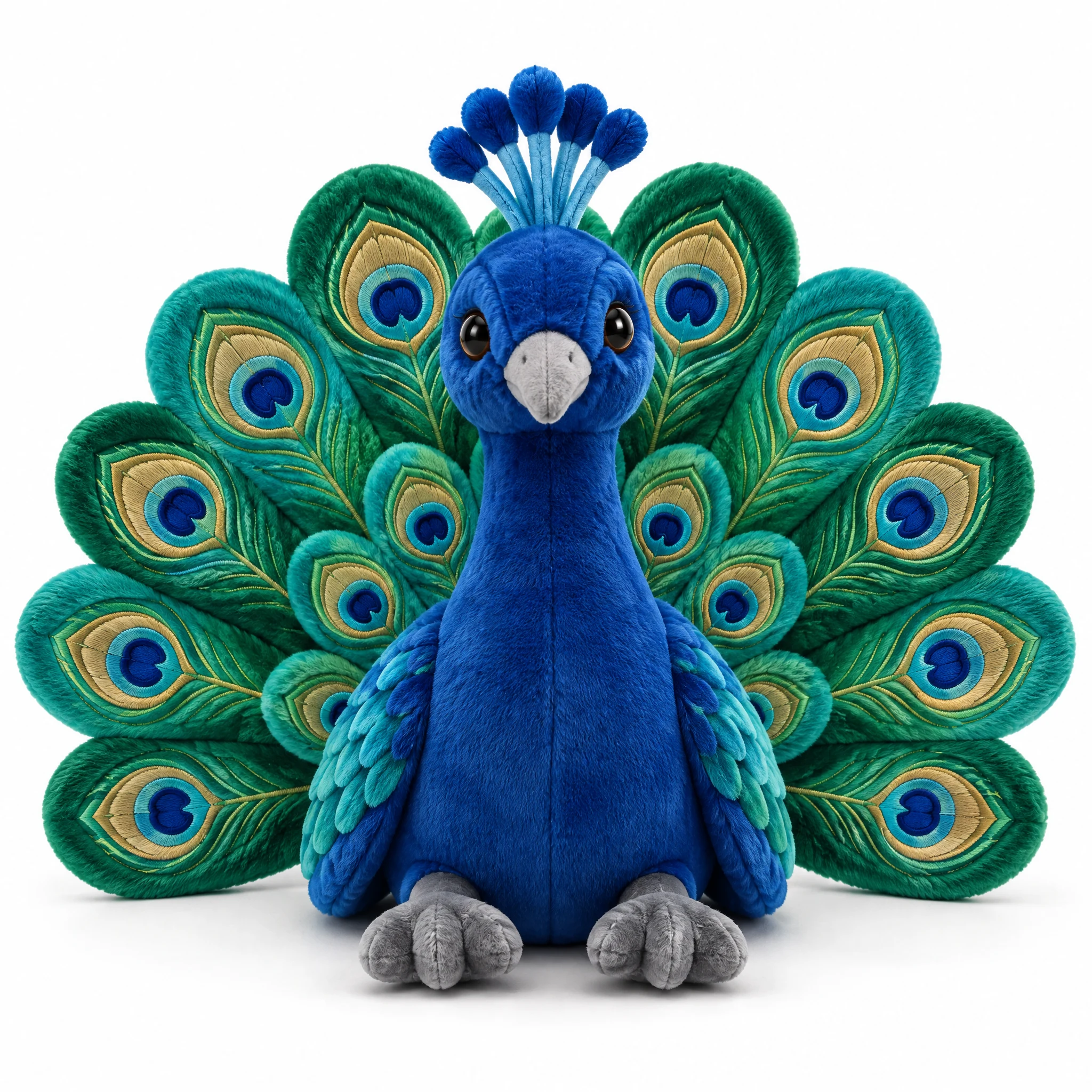 PeacockFanned tail with blue-green eyespots.
General And Realistic Animal Shapes: Proportion And Identity
Buyers ask for custom made plush animals and custom realistic stuffed animals from the same starting point: a reference, a size, and a decision about how closely the plush should follow the real animal. Both use the same pattern process. What changes is how closely the head-to-body ratio, stance and surface marks follow the reference. Decide that direction before the pattern is drawn, because it moves almost every panel.
What Changes With The Direction
- Head-to-body ratio. A cartoon animal keeps a large head and short body; a natural animal gives the body its real weight.
- Leg length and stance. Short, simple limbs versus a leg set that has to hold a standing proportion.
- Muzzle and ears. A short snout with round ears reads as friendly; a longer muzzle and a shaped ear read as the species.
- Surface marks. Patches, stripes and rosettes can be printed, appliquéd or built from separate panels, and each route changes where the seams fall.
- Eye size. A large eye is a cartoon signal; a smaller eye closer to the skull reads as natural, and it changes the whole face.
Two Shapes Side By Side
Proportion Starts As A Paper Pattern
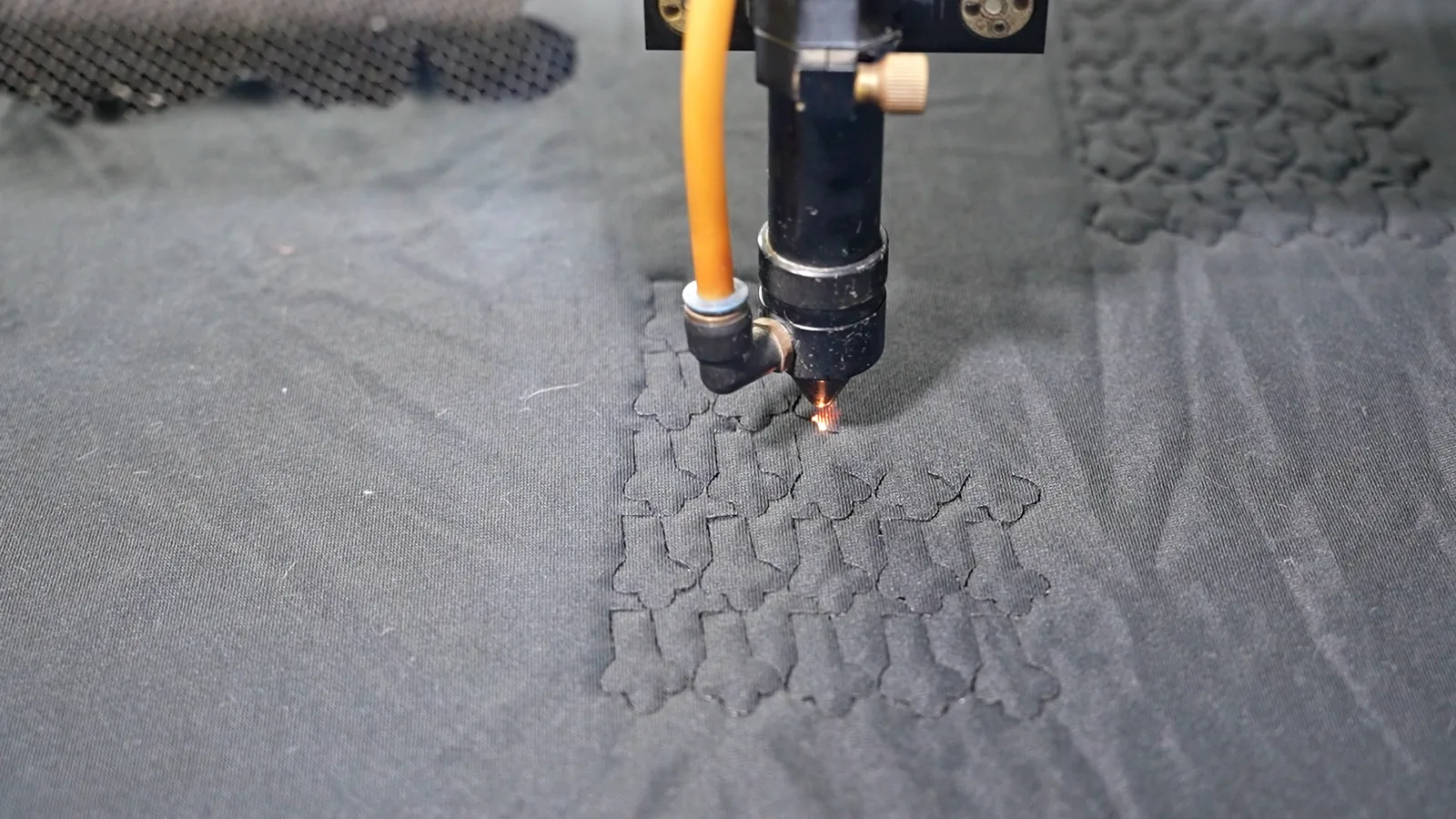
The drawing fixes the idea; the pattern fixes the shape. Head, body, limbs, ears and tail become separate pieces, and the seam lines decide whether the animal reads as one volume or as assembled parts.
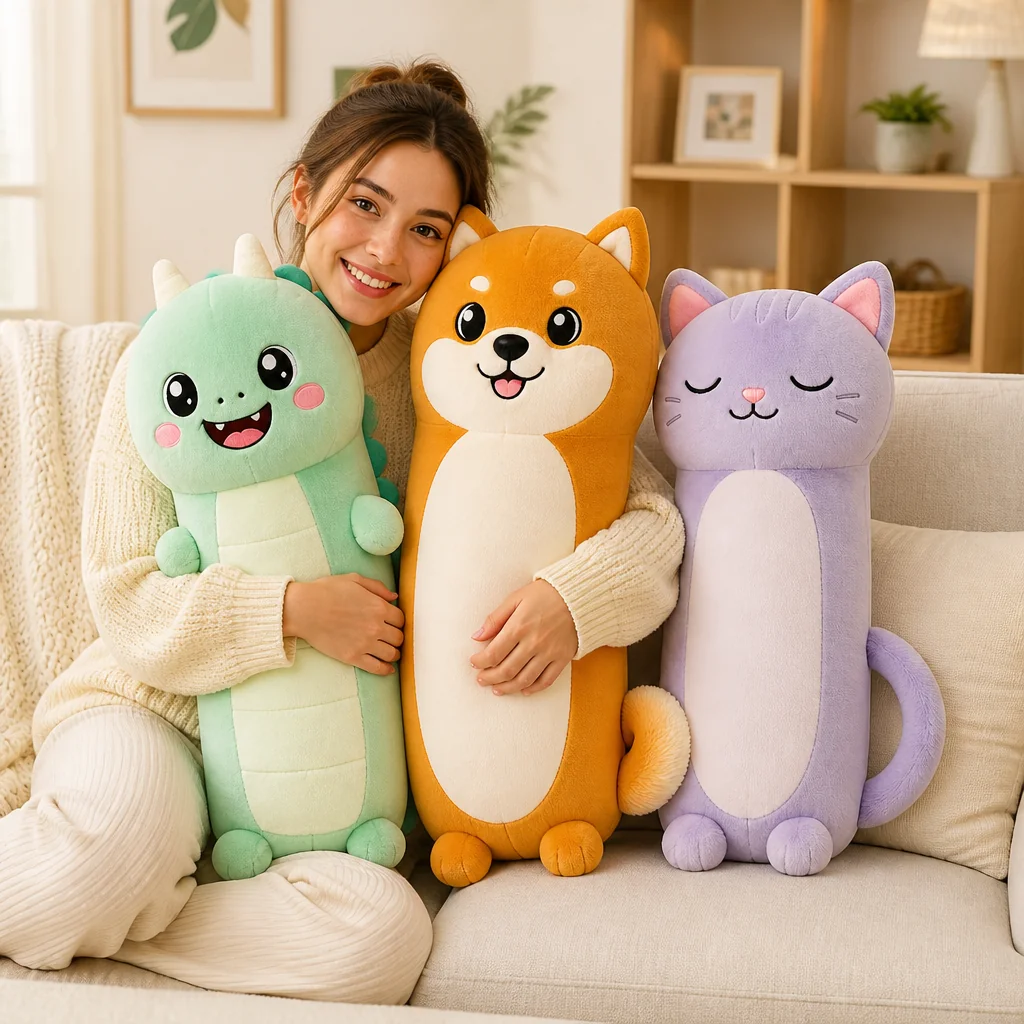
The two images above are appearance references, not finished realistic commissions and not delivered projects.
Fur Length, Nap Direction, Panels And Filling
Fur Length And Nap
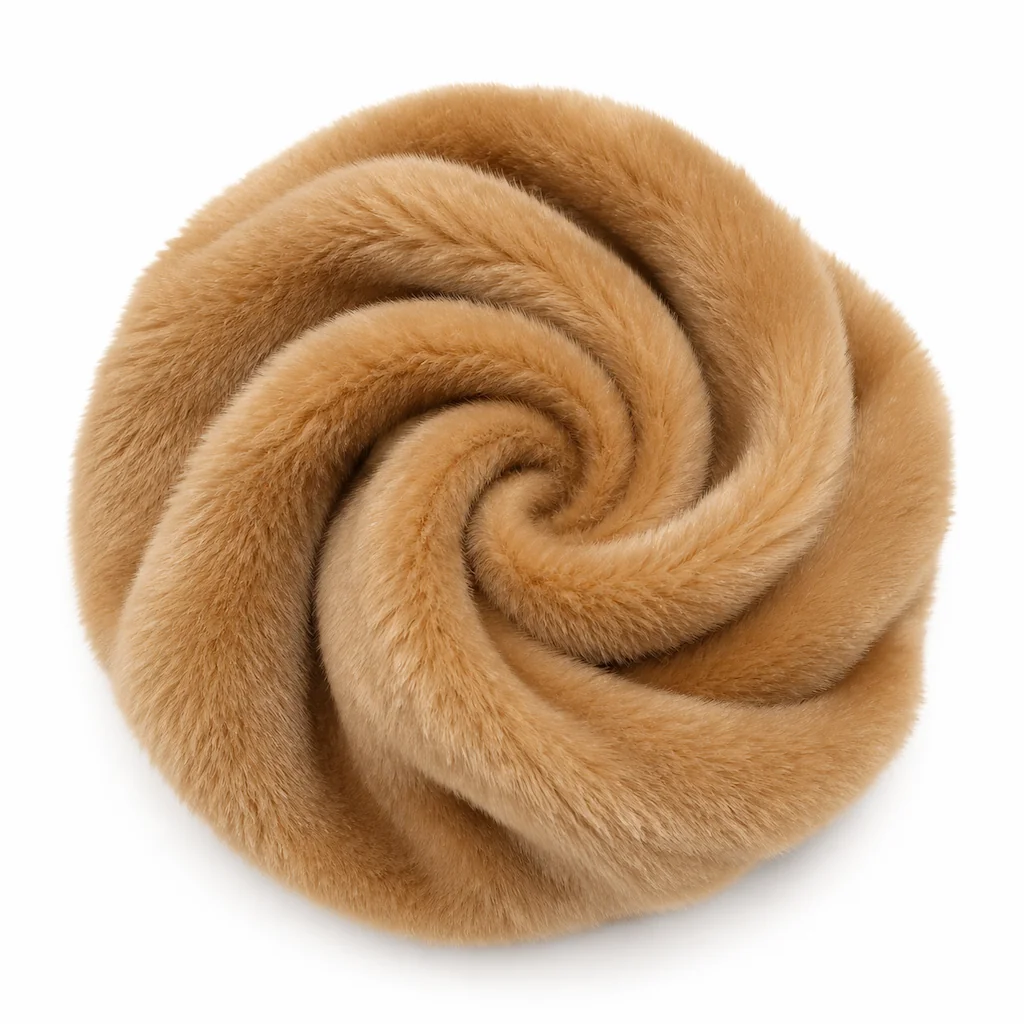
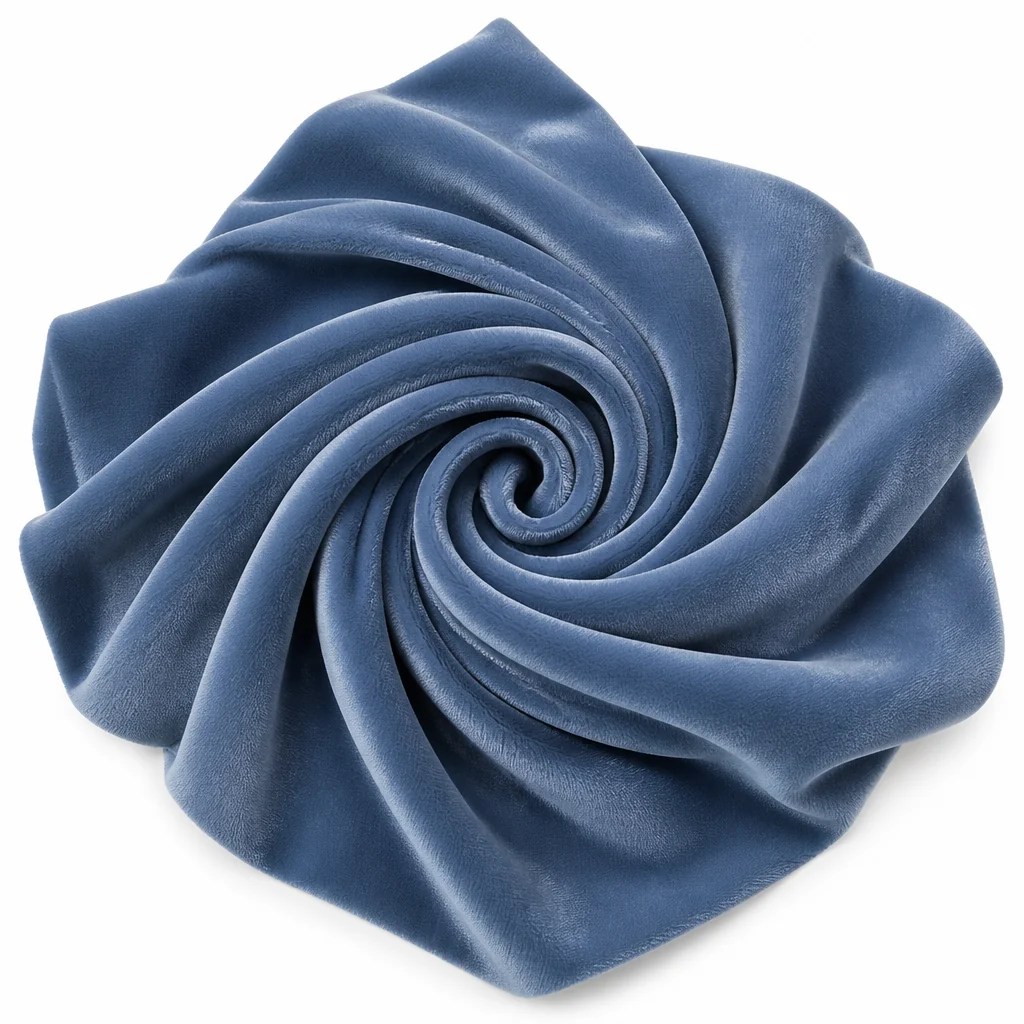
Pile length changes the outline before any detail is added. Long pile builds volume and softens edges, which suits a mane or a shaggy coat; short pile holds a clean edge and keeps small features readable. Nap direction shows on a curved surface, so the same fabric can look lighter or darker across one panel.
Panels Carry The Pattern
A stripe or a rosette that crosses a seam has to line up on both pieces. That is why a spotted animal is a pattern question before it is a printing question: the pattern maker decides where the marks sit relative to the seams, and the printer or the embroidery file follows.
Filling
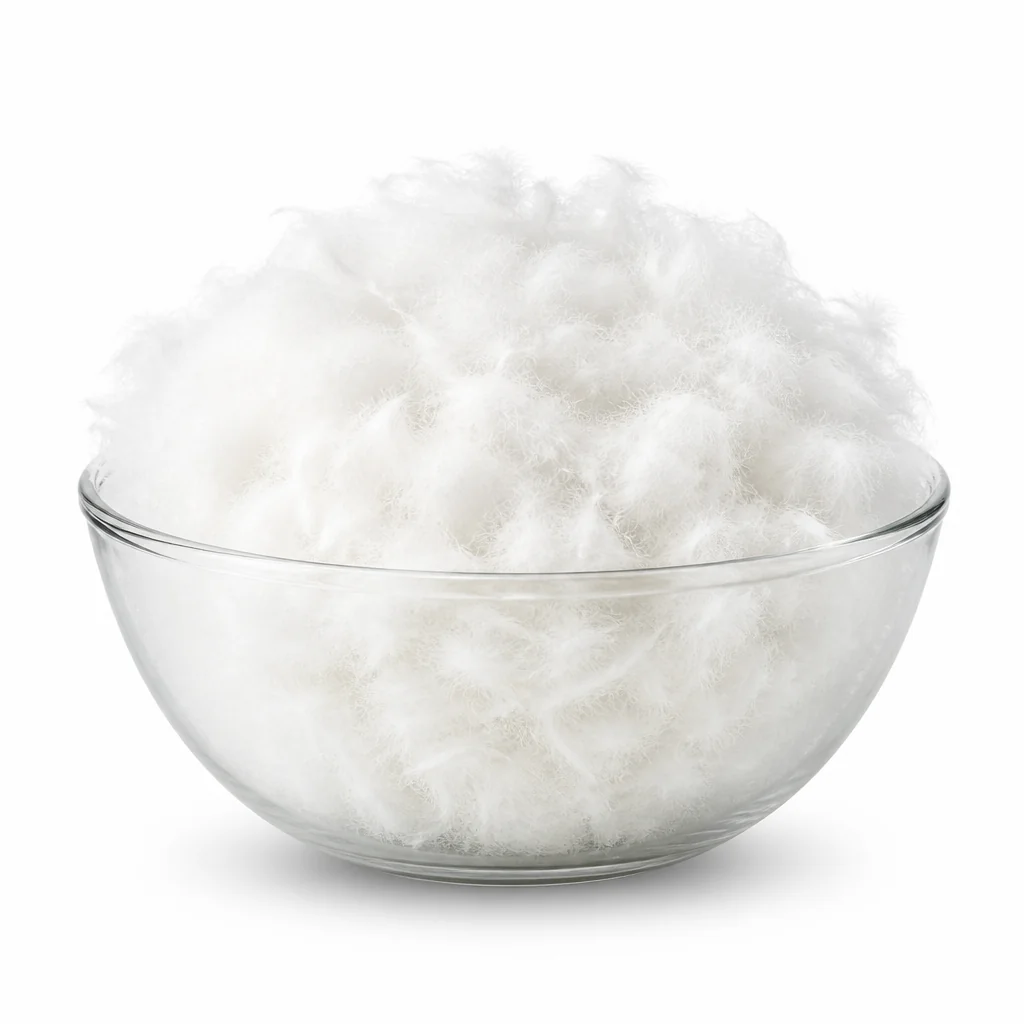
Filling decides whether the animal holds its shape or slumps, and how firm the body feels in the hand. It is judged on a physical sample. Composition, loft and any performance claim are confirmed for the project; they are not inferred from a photograph.
Standing, Sitting And Structural Stability
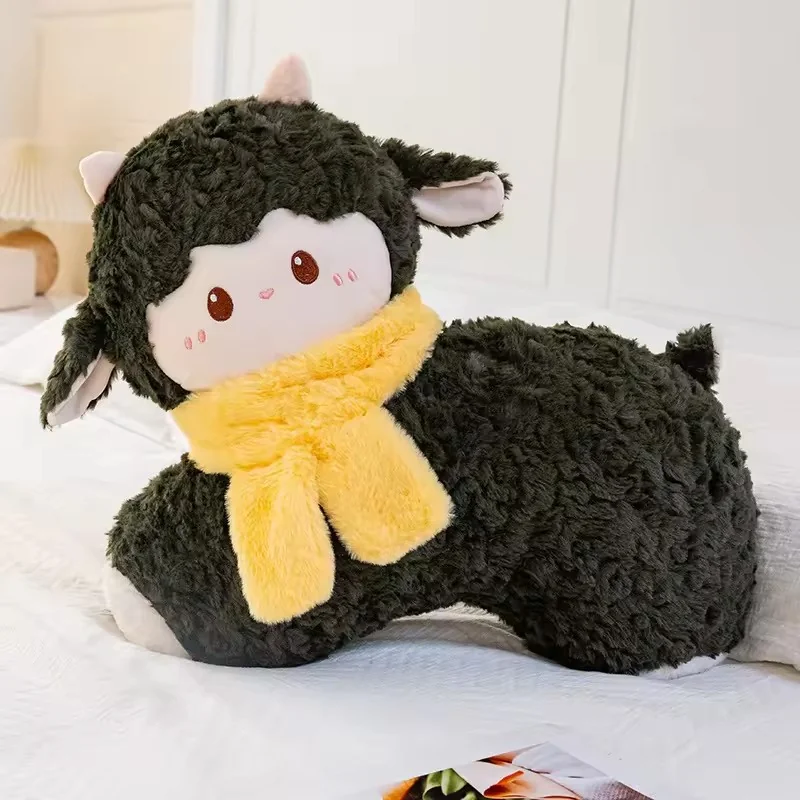
The pose decides the contact area with the surface, the balance of the body and how much of the pattern is spent on legs. A seated animal folds its legs into a broad base; a standing animal needs a longer leg set and a narrower footprint; a resting animal spreads the body across the floor.
 SeatedHips and folded legs form the contact area and the weight sits low in the body. Look at how much of the base touches the surface.
 RestingThe body lies along the surface with the legs forward, so a long section of the shape carries the weight. Look at how much of it touches the floor.
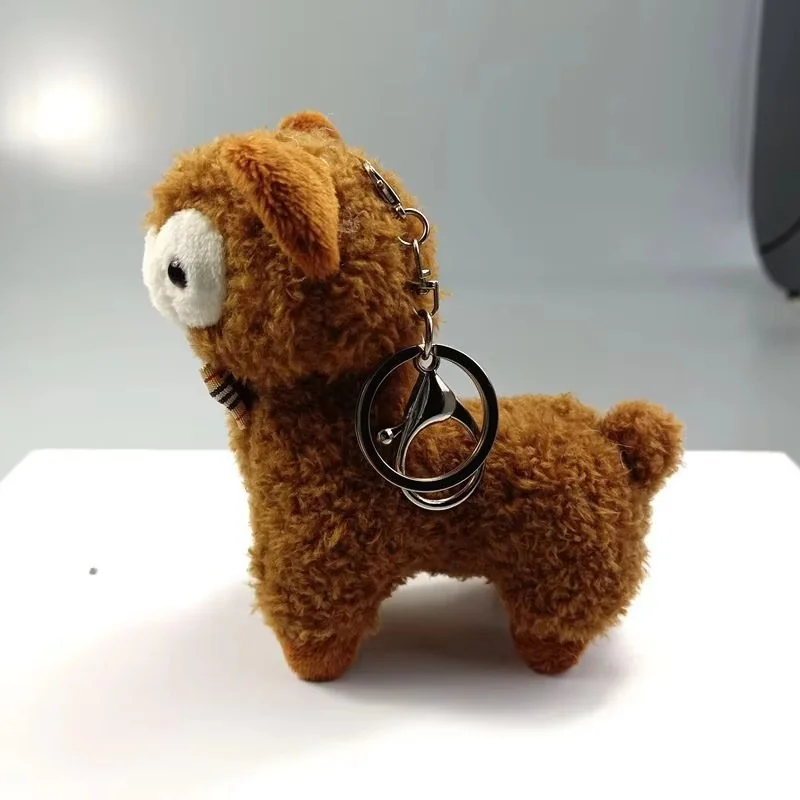 Four-footedUpright body on four short legs, seen from the side. Look at the stance width against the body depth.
What We Do Not Promise
An internal frame, a weighted base or a self-standing result is a separate design decision, reviewed for the project and for the intended user. A photograph shows the outside of a sample; it does not show balance, internal structure or a stability test. Those are checked by hand and by the agreed inspection points.
Eyes, Noses And Age-Appropriate Construction
The face is where appearance and product safety meet, so the build is decided together with the intended use and age, not at the end of sampling.
| Build | What It Gives | What To Confirm |
|---|---|---|
| Embroidered Eyes And Nose | Surface detail with no separate rigid component; suits simple expressions and line work. | Dense stitching stiffens the face and adds weight. An embroidered eye is a design choice, not a compliance result for any age. |
| Fabric Patches | Soft, low-relief features in the same material as the face. | Edge finish and colour fastness against the approved swatch. |
| Attached Eyes And Noses | Glossy, dimensional look; reads from a distance. | An applied part can become a small part if it works loose. Retention is controlled and the use and age are assessed first. |
Toys for children under three are not a standard advertised capability here. If a project targets that age, the design, parts, seams, materials and market tests have to be confirmed case by case, and any testing is arranged with a third-party laboratory for the destination market.
Keeping A Series Consistent
A run of custom animal plushies reads as one family when the same decisions repeat: head-to-body ratio, eye size, muzzle length, the colour palette and the way labels are placed. Each animal in the run still has to look like itself, so the shared rules sit around the parts that carry identity.
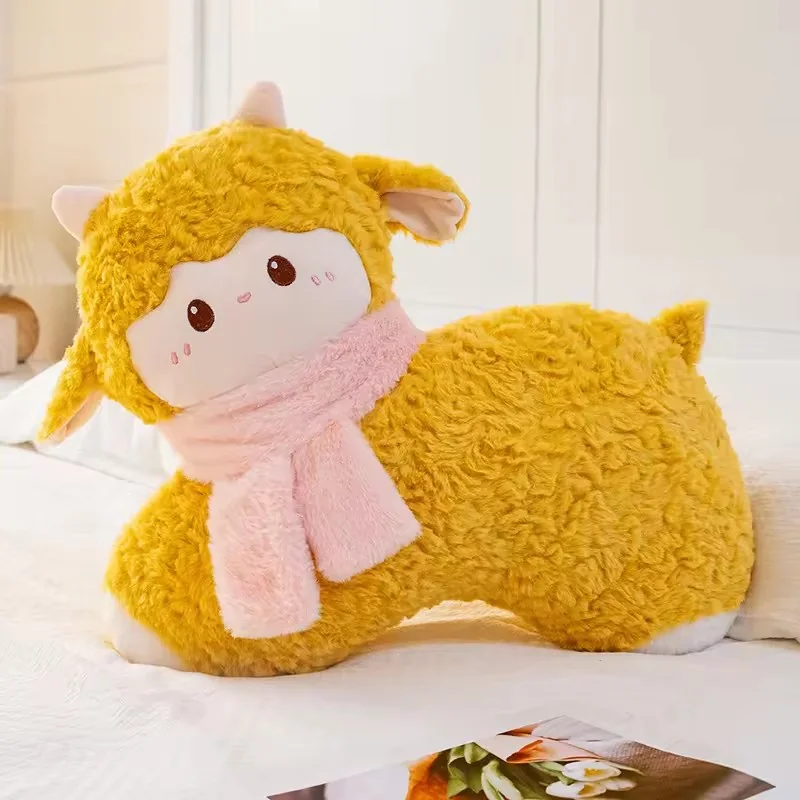 YellowCompare: same head, ears and muzzle length as the others; the fabric colour is the change.
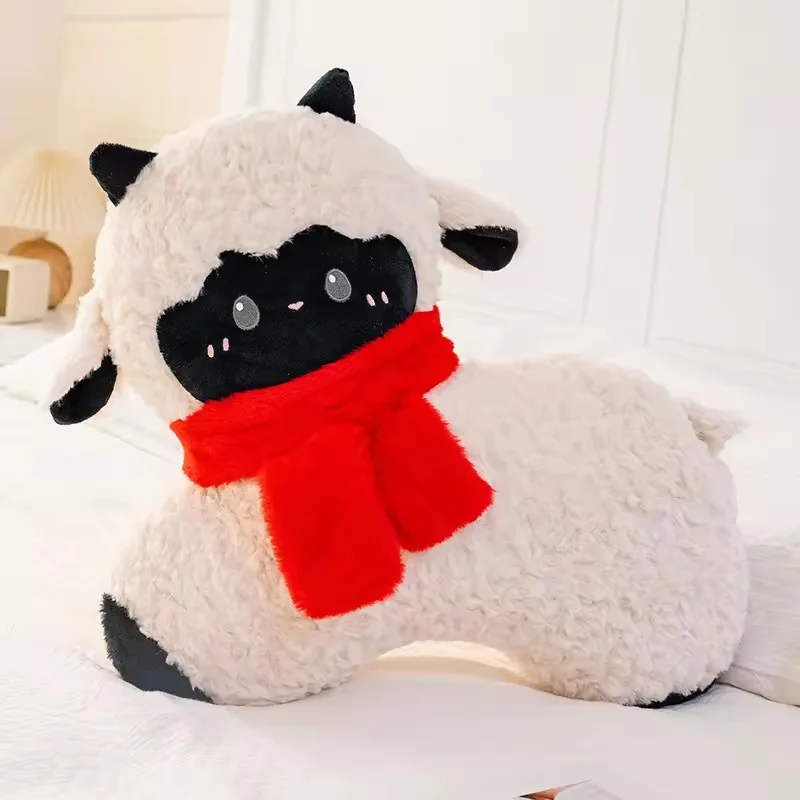 Black face on whiteCompare: the colour break follows a seam across the muzzle and around the eyes.
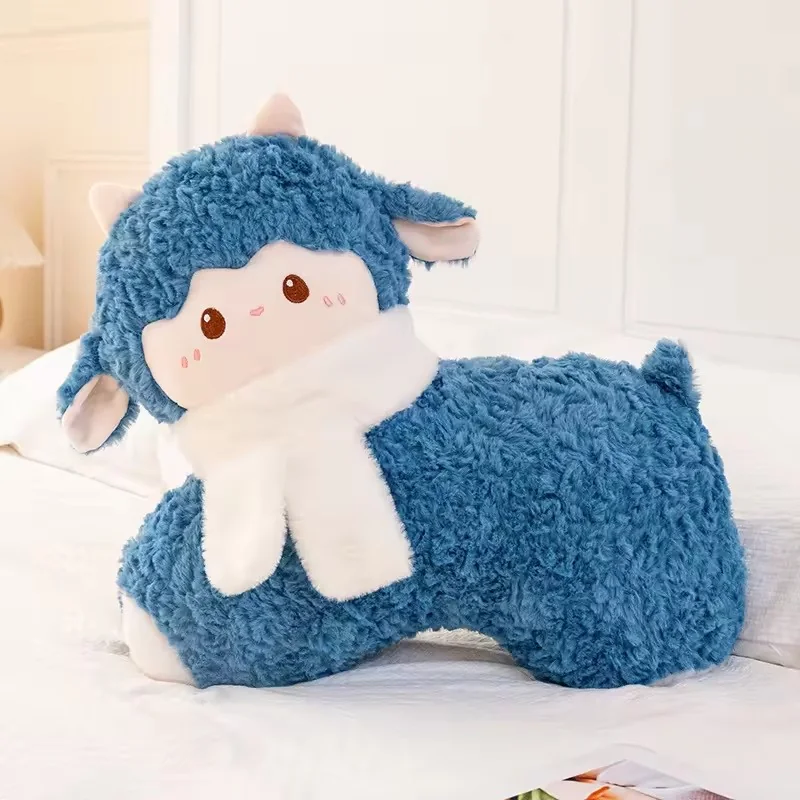
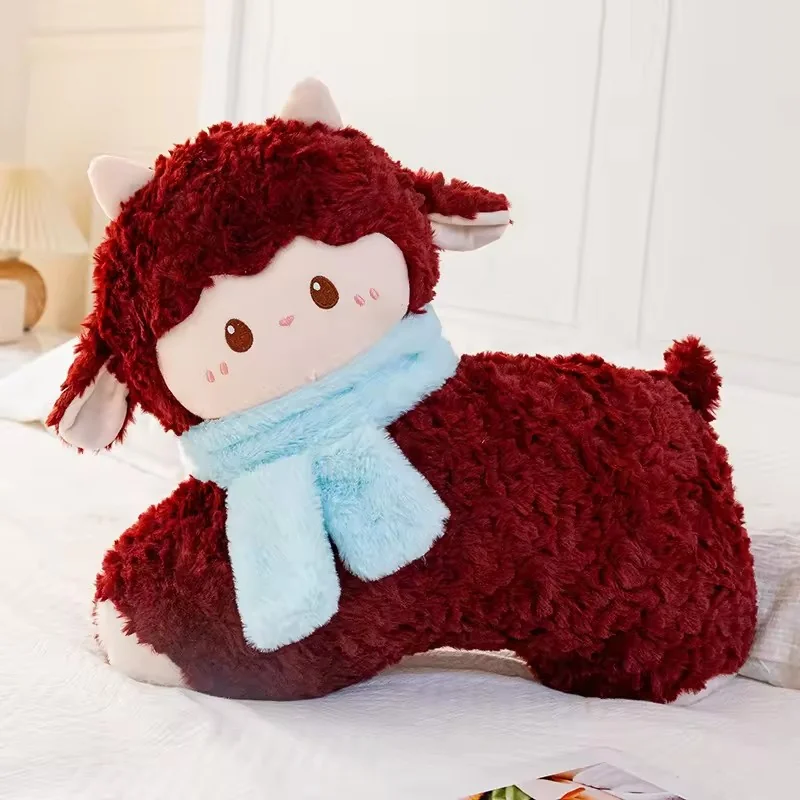 Deep redCompare: same pattern and eye size; the fabric tone and the scarf carry the difference.
Shared across a series, these are usually fixed: eye size and eye language, the filling firmness, the label position and the sample version that production refers to. Expected to differ: ear shape, muzzle length, tail and the colour break on the body.
The three images show one cushion design in three colourways; they are appearance references, not a delivered series for one customer.
How To Use These Animal References
Treat the 36 images on this page as appearance references: shape, proportion, colour direction and surface pattern. They are not a catalogue of stock items, and a reference does not confirm a size, a material composition, a test result or availability.
If you already have a physical sample or a pattern, we assess it against your target. If you are starting from a drawing, the reference tells us which direction you want before the pattern is drawn. For the production side of the range, see stuffed animals; for the custom process, see custom plush.
What To Send, And How The Sample Is Confirmed
What To Send
- The species, plus a sketch, a drawing or reference photos.
- Target size, pose and the parts that must stay recognisable.
- Pattern and colour direction, and any facial detail that must not change.
- Quantity per style and colour, the intended use, the market and the date you are working to.
- Whether you can use the reference material you send.
- Packaging and label direction, since a hang tag or a printed box changes how the piece is finished. How we work covers the approval steps.
How The Sample Is Confirmed
- The pattern is reviewed before the first sample: panels, seam lines and part placement.
- The sample is checked from several angles, at the finished size, against the approved drawing.
- Fabric, pile and colour are compared with physical swatches, and filling feel is judged by hand.
- The approved sample, its version and the date become the production reference; later changes are recorded against it.
Read design to sample for the wider sequence, and customization options for the choices behind each part.
Questions Buyers Ask Before An Animal Project
My Animal Is Not In The Six Groups. Can You Still Assess It?
Yes. The six groups are a way to show the range, not a closed list. Send the species and a reference, and we will say early whether the shape works in plush at your size.
Can You Make A Realistic Animal, Or Only A Cartoon One?
Both directions are assessed. A realistic animal depends on pattern engineering and proportion; a cartoon animal depends on a simple silhouette and colour. Tell us which direction you want and we will say whether the reference can carry it.
What Is The Minimum Order?
One piece. Custom orders start from 1 piece, and there is no ready stock; a single piece still goes through sampling or production before dispatch. Cost and lead time are confirmed for the project.
Is A Photograph Enough To Start?
For an assessment, yes; for production, no. A single photo leaves the back, the side and the depth undefined. Front, side and back views, or a physical sample, remove most of the guesswork before the pattern is cut.
Can The Animal Stand, Or Hold A Pose?
Pose and stability are confirmed on the sample. An internal frame or a weighted base is a separate design decision and is reviewed for the project and the intended user; it is not assumed from a photograph.
How Are Cost And Lead Time Set?
By the design: size, number of panels, pile, facial construction, printing or embroidery, and how the order is split across styles and colours. Both are quoted per project rather than published as one number.
Have An Animal In Mind?
Send the species, the size you want and any reference you already have. We will confirm the direction, the sample route and the points that need deciding before a pattern is cut.
Or email your brief to landy@oruitoys.com.
Custom only: 1 piece minimum, no ready stock, and a single piece still goes through sampling or production. Cost and lead time are confirmed per project. The quote form is still being prepared; email your brief in the meantime.