Products / Pillows and cushions
Plush Pillows And Cushions
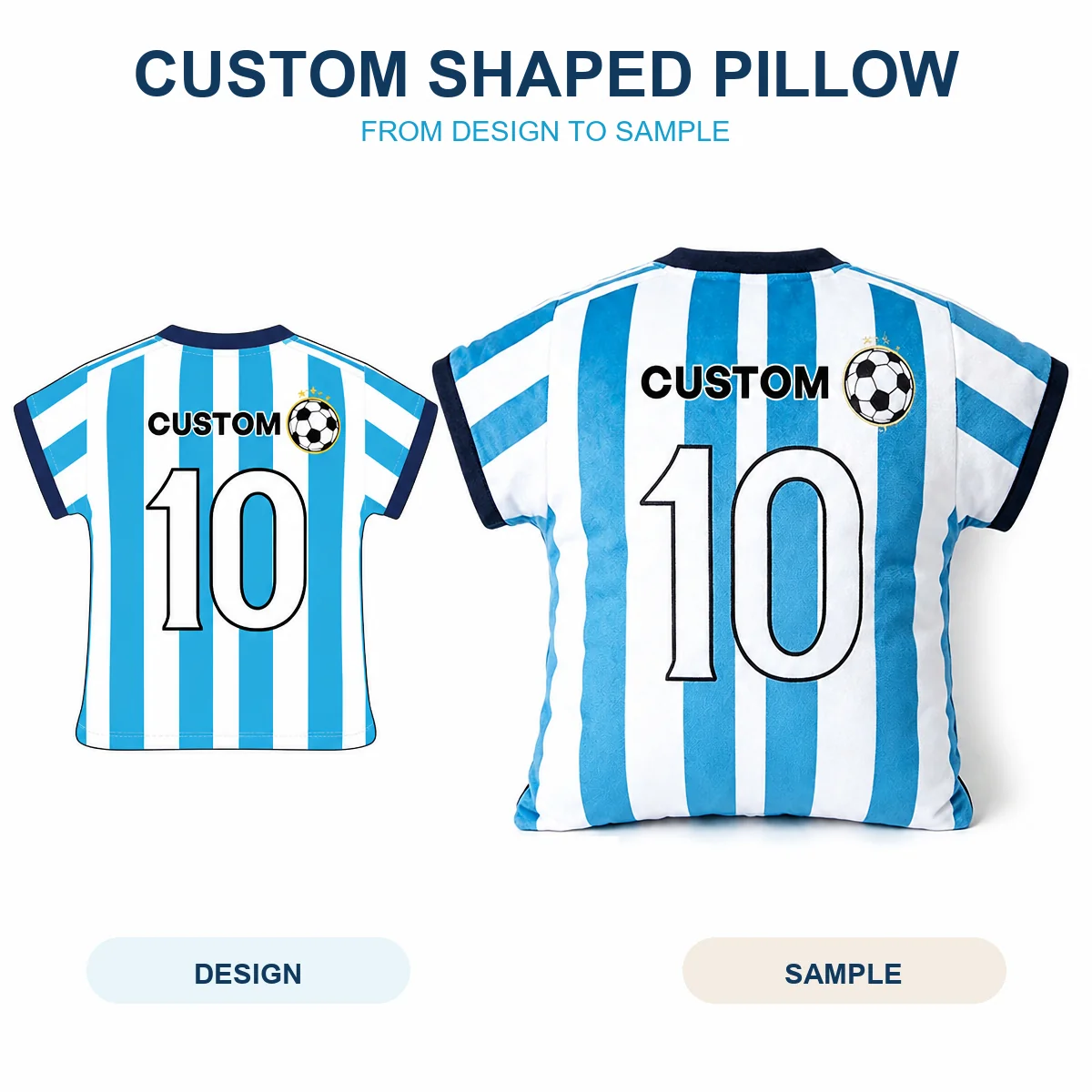
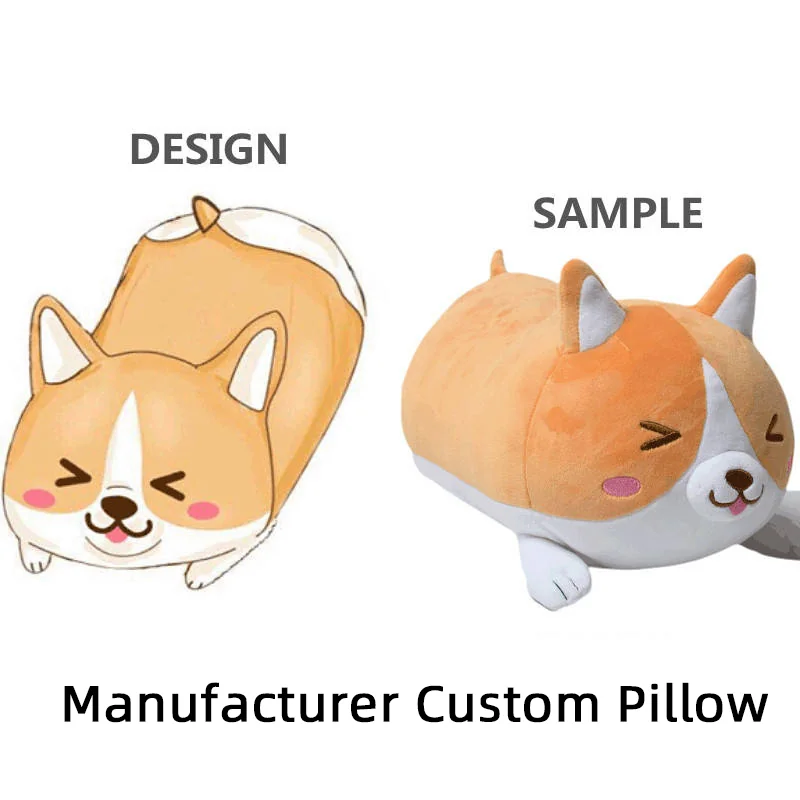
A pillow project is decided by silhouette and by how much body the object has. One pair is a shirt-shaped outline pillow; the other is a three-dimensional corgi lying down, with legs and a tail. Both are shown as front artwork beside a front sample.
Outline Versus Form
Two different objects, not two versions of one.
The shirt pair keeps a shallow outline: the shape is carried by the cut edge, and the graphic sits inside it. The corgi is a built animal: head, body, four legs and a tail, lying down, with the face features on the head rather than printed across a flat panel.
Those are different pattern problems. An outline pillow needs a clean edge and an even fill; a lying animal needs separate limbs and a head-to-body join, and those parts change how the object sits.
The images are front views. Neither file shows the reverse, and neither shows how filling is distributed or how firm the finished object is.
Both are design-to-sample pairs from the workshop’s product photography; no client or order is claimed.
Two Routes To A Shape
One outline pillow and one built animal.
Shirt Outline Pillow
The shape follows a shirt: a straight body with a collar notch. The number and crest sit inside that outline. The visible surface reads as one layer; whether there is more than one panel and how the back is finished are not shown.
- Reference
- Shirt-shaped pillow with a printed number
- Observed detail
- Shallow outline, collar notch, graphic inside the shape
Corgi, Lying Figure
A three-dimensional dog lying down: separate ears, four legs and a tail, with the face on the head. The body has thickness rather than being a flat panel. The reverse and the internal construction are not visible.
- Reference
- Corgi lying figure with ears, legs and tail
- Observed detail
- Built animal form, separate ears, four legs, tail, head with face
Outline Versus Built Form
Differences a buyer can see in the two images.
| Decision Point | What To Confirm | Why It Matters |
|---|---|---|
| Silhouette | A shirt outline with straight edges and a collar notch, against a dog silhouette with limbs and a tail. | Limbs and tail add pattern pieces and sewing steps. |
| Thickness | The shirt reads as a shallow filled shape; the corgi reads as a body with depth. | Depth changes fill volume and how the object sits. |
| Where The Graphic Sits | Inside the shirt outline on one face; on the corgi the face is worked into the head rather than printed across the body. | Print coverage and pattern detail are costed differently. |
| What Is Not Shown | Reverse of either item, panel layout, fill type and firmness. | These are sampling questions, not photo facts. |
Before You Ask For A Sample
Photographs show the finished piece, not the inside: filling, cover and print area has to be confirmed on the sample or in the brief rather than read from a picture.
- Proportion and size: state the finished height or length you need.
- Surface and craft: say whether the look depends on pile, print or embroidery.
- Build detail for this form: Plush Cushion Customization.
Decisions Before A Pillow Sample
Shape, print coverage, fill.
Choose the object first. An outline pillow and a lying animal answer different briefs, and the second carries limbs, a head join and a tail that the first does not.
Decide how much shape is print. A simple outline can carry a full graphic; a built animal usually carries the identity in its form and uses print only for small marks.
Then decide fill behaviour, which is a sampling question: a shallow outline and a body with limbs do not fill the same way, and the photos do not show either result.
Where This Connects
Category page and the sampling route.
Insert or foam constructions are specified per project and are not shown on this page.
Pillow Questions
Can A Cushion Be Shaped Like An Animal?
Yes, and the difference is whether it is an outline or a built body. The corgi on this page is a lying animal with legs and a tail, not a flat face panel; that means separate pattern pieces and a different fill behaviour.
Is The Print On Both Sides?
Not shown. The shirt image is a front view, so nothing on this page says what the reverse looks like. Two-sided printing is a separate decision and is quoted as one.
Can It Be Washed?
That depends on fabric, fill and print, and is set per project. Neither image is evidence of a care result.
Send The Outline And The Artwork
Say whether you need an outline or a built animal; that decides the pattern.