
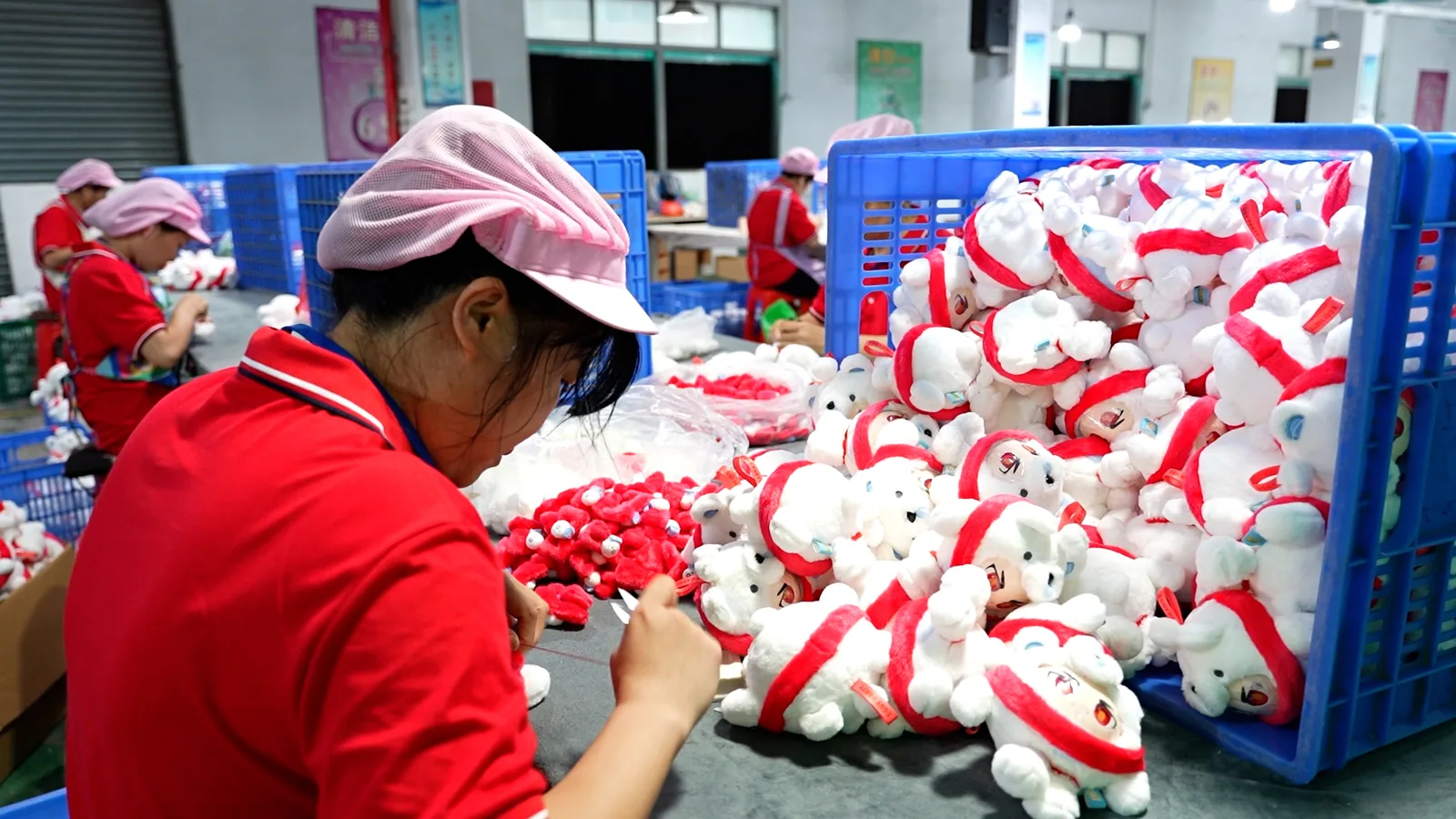
Production
Production And Delivery
Once a sample is approved, production is a sequence of freezes: specification, materials, labels, packing and inspection. Each one closes a decision so the next cannot reopen it.
When The Schedule Actually Starts
Not on the day the order is discussed, and not on a verbal yes. The clock starts when every condition below is met.
A production date is only meaningful if the inputs are fixed. If the design, material, quantity or packing is still moving, a start date produces a promise that cannot be kept.
The conditions on this page come from the project handover rules used before an order is released to production. They exist to protect both sides: production cannot be planned against an unfinished specification.
Any change after the start date is a re-planning event, not a small adjustment. It is priced and scheduled as such, in writing.
Prerequisites Before Production Is Scheduled
All six conditions must be satisfied for a start date to be confirmed.
- Approved sampleA dated, signed approval against a specific sample version, sealed as the production reference.
- Order confirmationA confirmed order or proforma invoice stating specification, quantity split, price and terms.
- Deposit receivedThe agreed deposit is in the seller’s account, not promised.
- Frozen specificationFinal BOM, pattern and size chart, colour and material standard, decoration files.
- Frozen packing and labelsLabel wording, barcode data, individual packing, carton marks and quantities per carton.
- Agreed test planRequired tests, laboratory and responsible party are stated before production, not after packing.
How A Run Moves Through The Factory
Twelve stages run from pre-production sample preparation through bulk production, inspection, packing, dispatch and receipt. Printing and embroidery apply only when the design calls for them, and the order of decoration, cutting and sewing follows the construction and the placement method. Laser cutting is used where the material suits it; other materials are cut by a method matched to them. This is the representative flow for a bulk custom plush order, not a fixed script for every project.
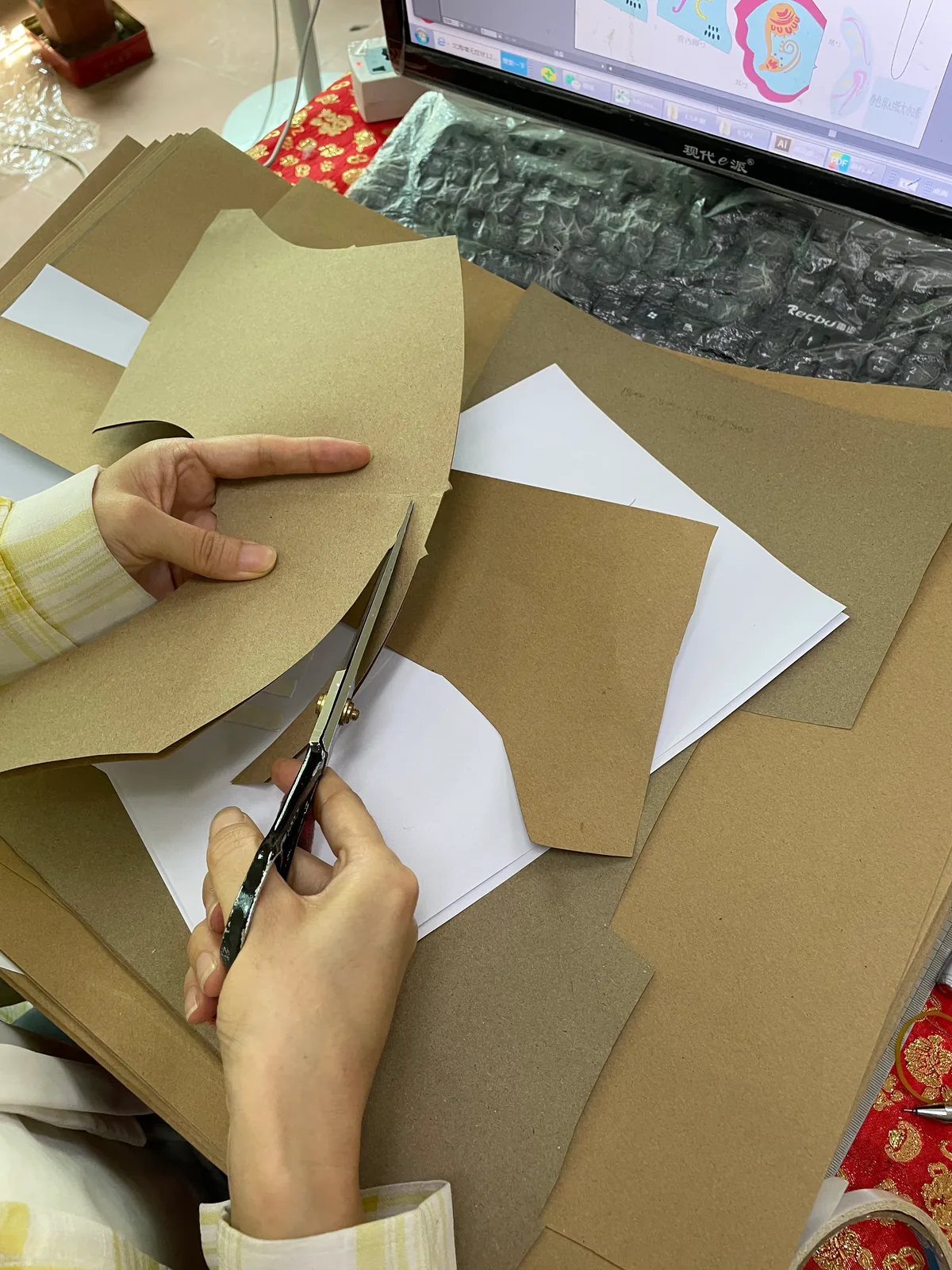
01
Pre-Production Sample Making
A pre-production sample is built from the approved design with the fabric, filling, trims and construction planned for the run. It proves the approved version can be reproduced, rather than reopening the design.
Pattern, finished size, colour and pile direction, fill and handfeel, decoration placement and label details are compared with the approved version. Any material difference is stated, not absorbed. Bulk material is not cut until this sample is approved.
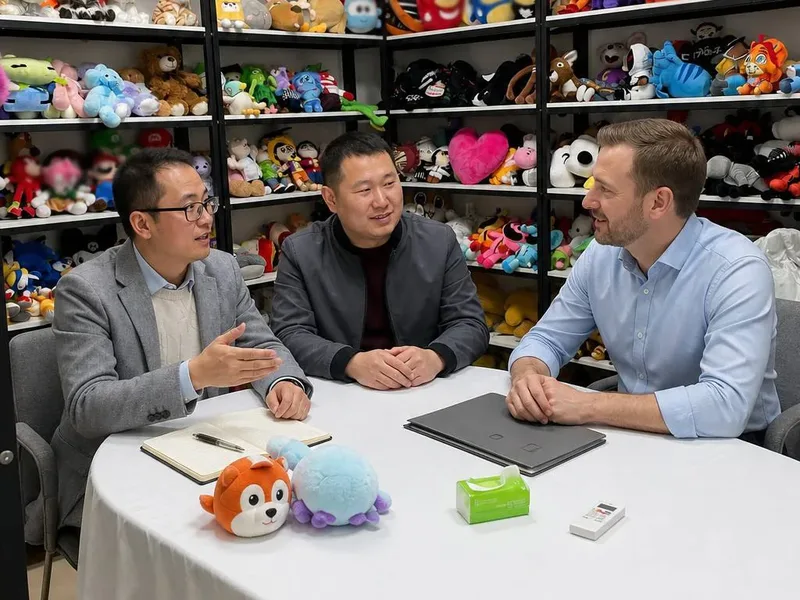
02
Pre-Production Sample Approval
You compare the pre-production sample with what you approved and confirm the result in writing. That written approval fixes the version production is measured against.
Check size and proportion, face and expression, colour, decoration position, fill firmness and accessories. Anything wrong is corrected before approval, because a verbal yes does not create a production reference. Materials are then prepared against the approved version.
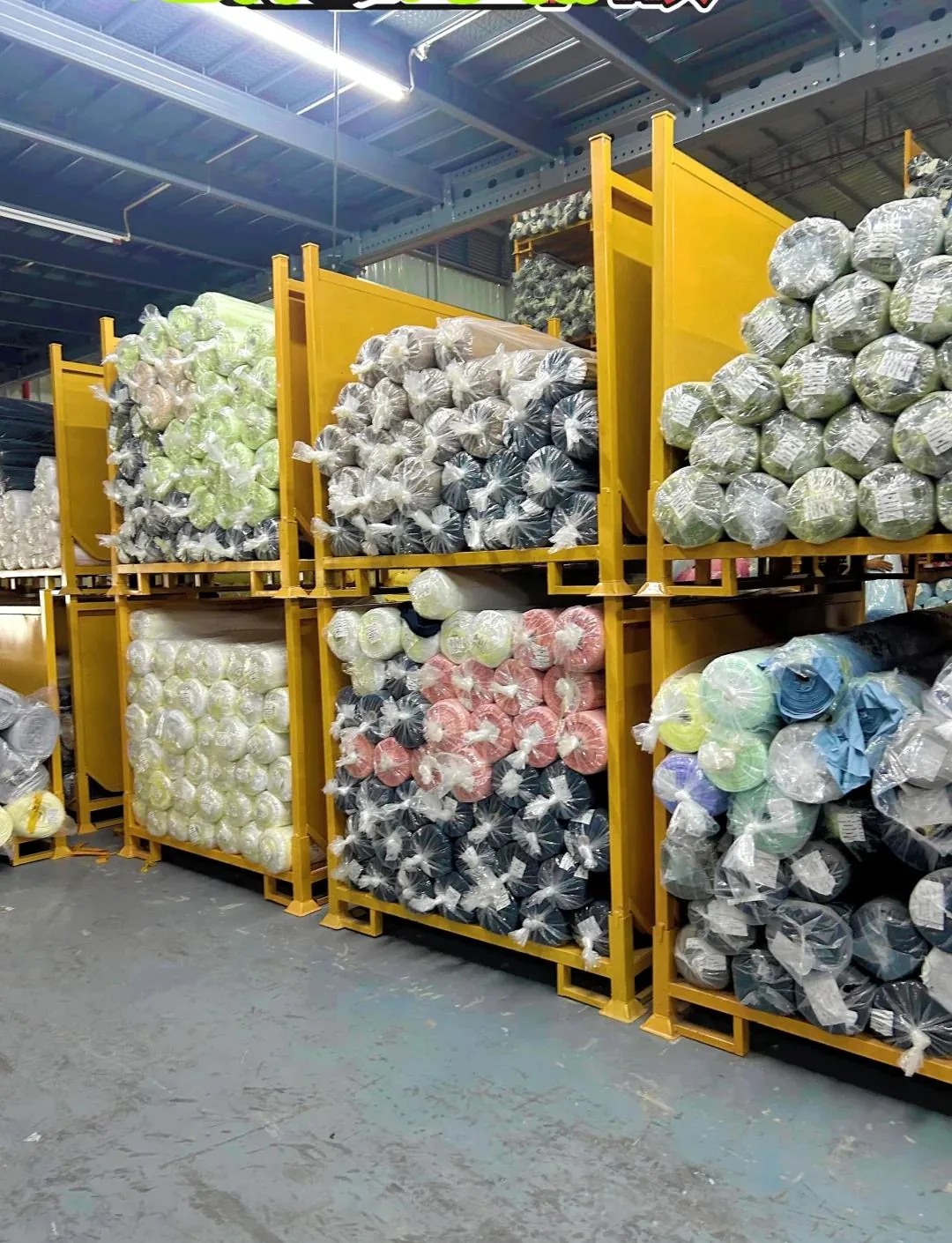
03
Material Preparation & Checks
After approval, fabric, filling, thread and trims are gathered against the approved sample before cutting, so a substitution is caught while it can still be corrected.
The checks agreed for the project are applied: fabric colour, pile direction and handfeel, filling type and loft, thread and trim match, and quantity. This is incoming material control, not a laboratory test programme, and it does not replace an agreed test plan. A substitution needs written approval before use.
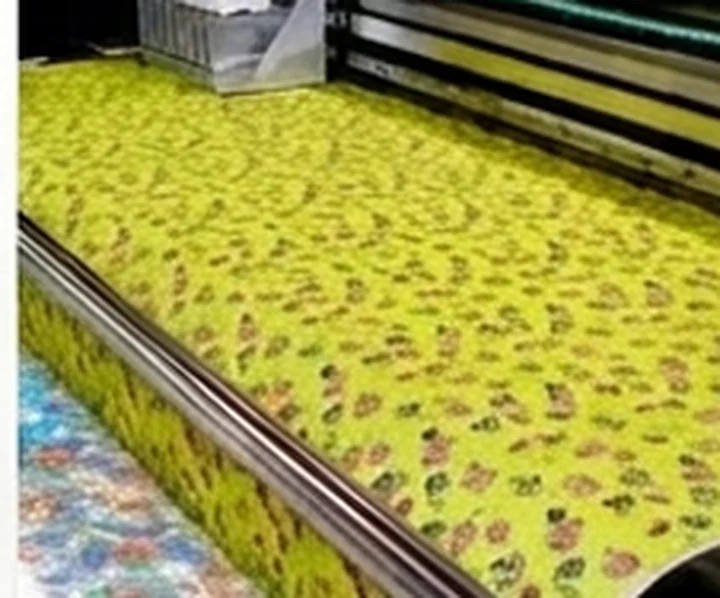
04
Printing
Printing is chosen when the target look needs printed colour or detail that the material and artwork suit. The method follows the appearance required, the fabric and the design; screen printing may be used where it suits the approved artwork and fabric, and the method is confirmed for your project.
Artwork version, colour reference and placement are confirmed on a first piece; adhesion and colour fastness are checked to the agreed requirement, and pieces are compared with the approved sample. Printing can be completed with a partner workshop.
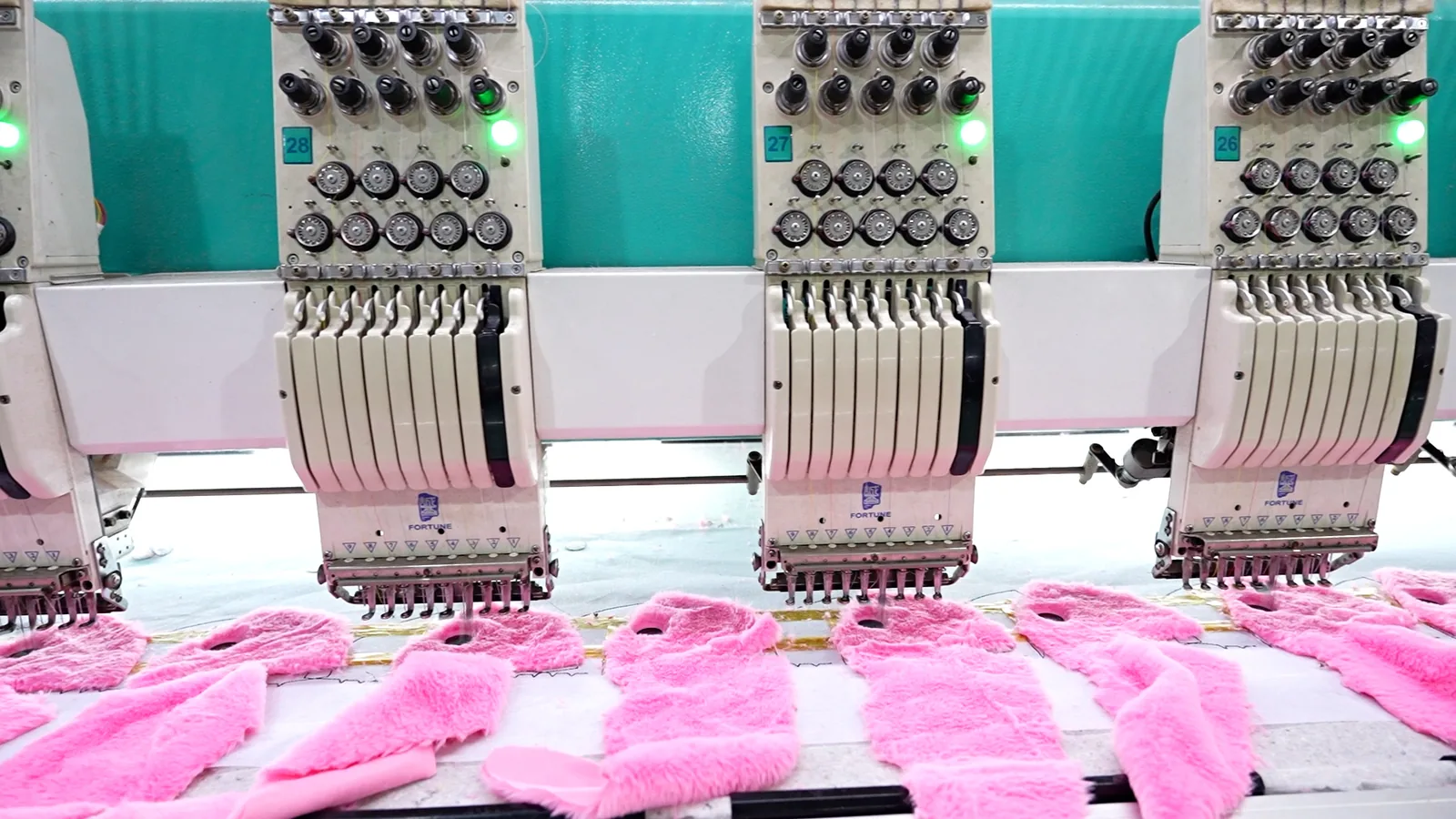
05
Embroidery
Embroidery is chosen for logos, faces or line detail where stitched texture suits the design and the material. The stitch file is set from the approved artwork, with stitch count, backing, area and position agreed for the product.
The first embroidered piece is compared with the approved sample for placement, size, colour and density. Thread colour follows the approved reference, and the back of the embroidery is checked for the finish the product needs. Embroidery can be completed with a partner workshop.
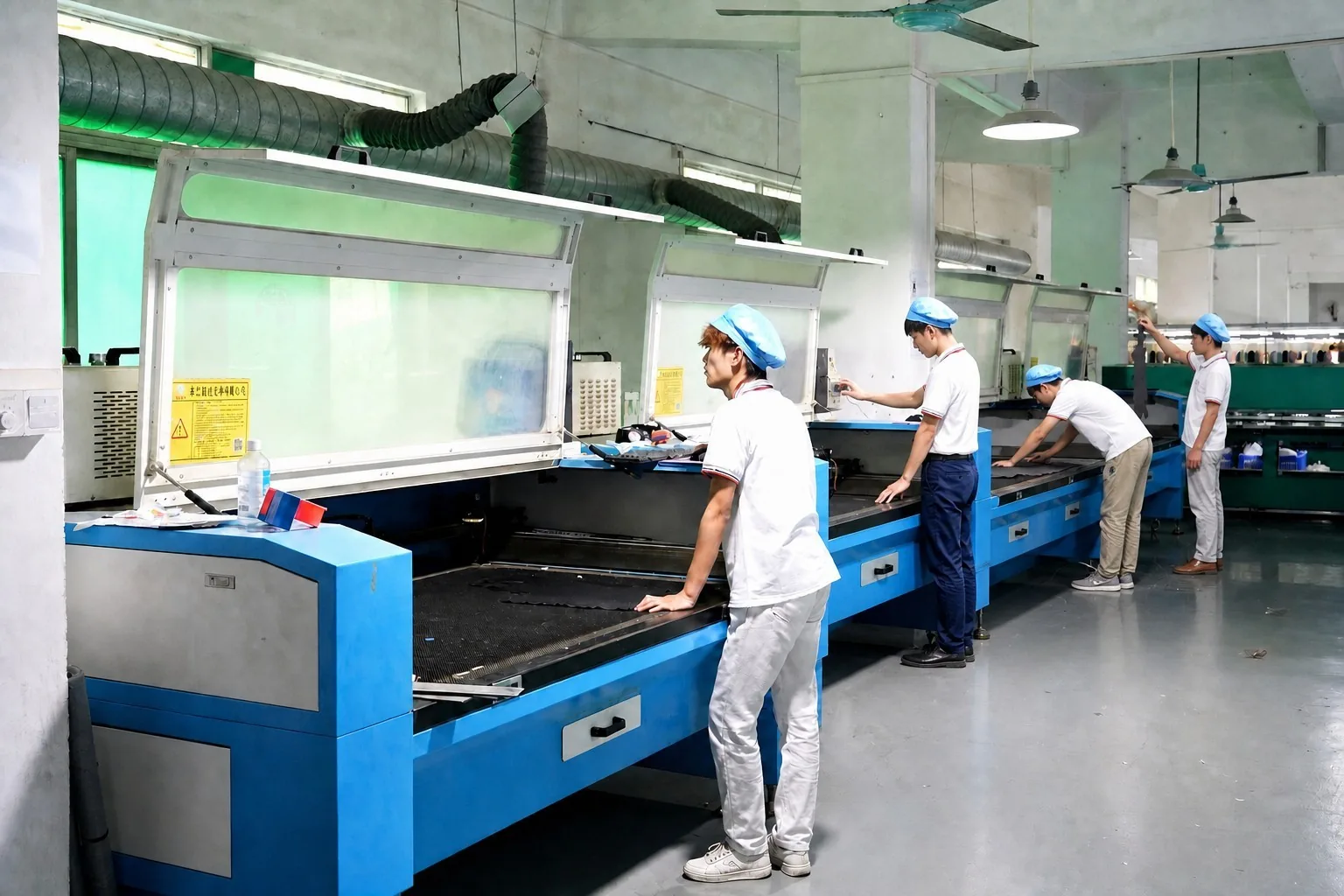
06
Laser Cutting
Panels are cut to the approved pattern. Laser cutting is one method, chosen where the material and shape suit it; other materials are cut by a method matched to them.
The first panels are measured against the pattern, and the cut edge is checked for scorching, hardening, smell or colour change. Pile direction and panel pairing are marked so pieces from the same face stay together. Special materials are validated before the run.
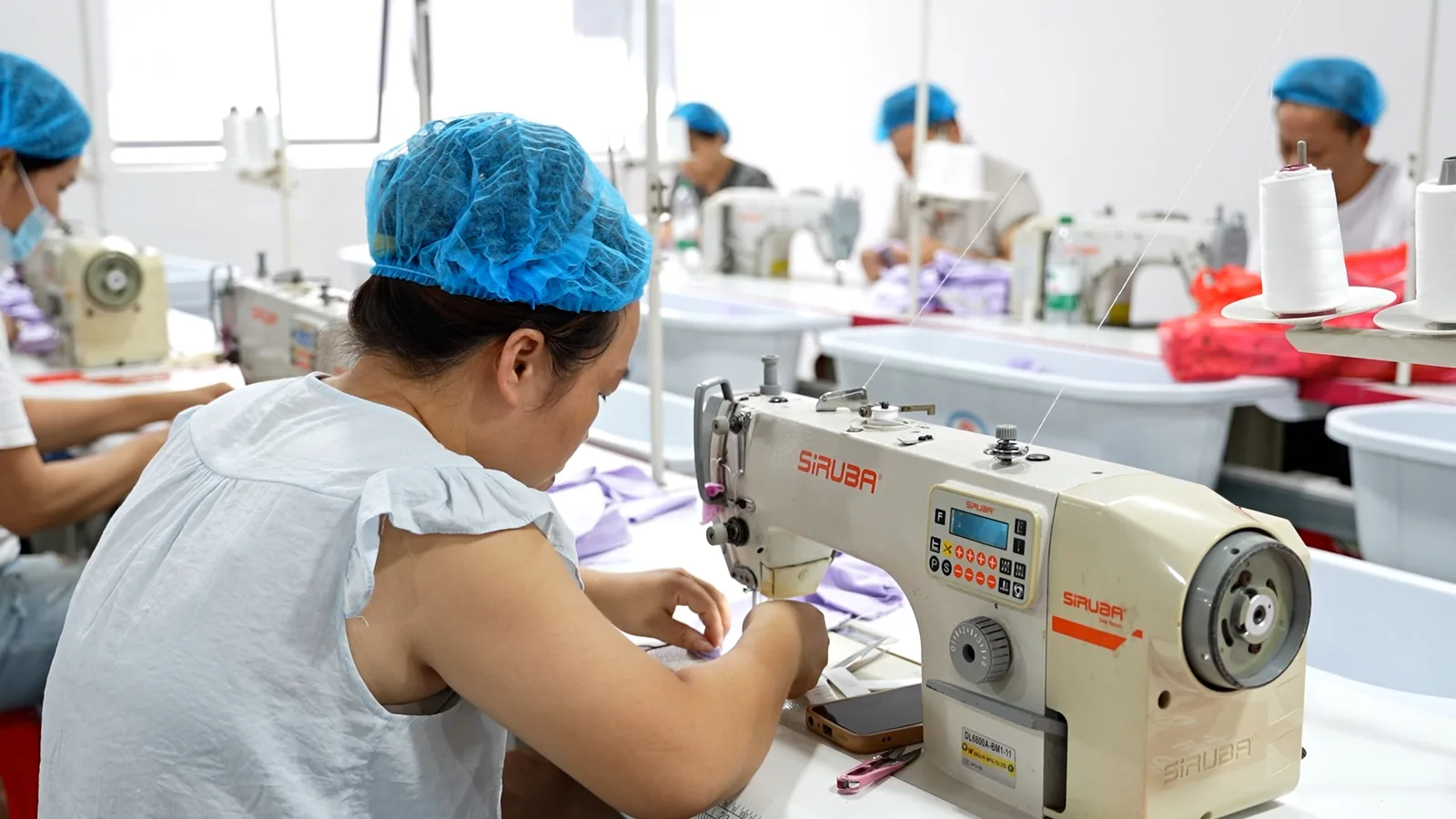
07
Sewing
Cut panels are assembled into the shell. Seams, darts and openings are sewn to the approved pattern, and labels, loops or accessory points are inserted here.
Checks are set for the project: the first piece, key seams, stitch density and seam allowance are compared with the approved sample, and in-process checks look at symmetry, seam security and stress points such as arm joints. Part of sewing can be completed with partner workshops.
08
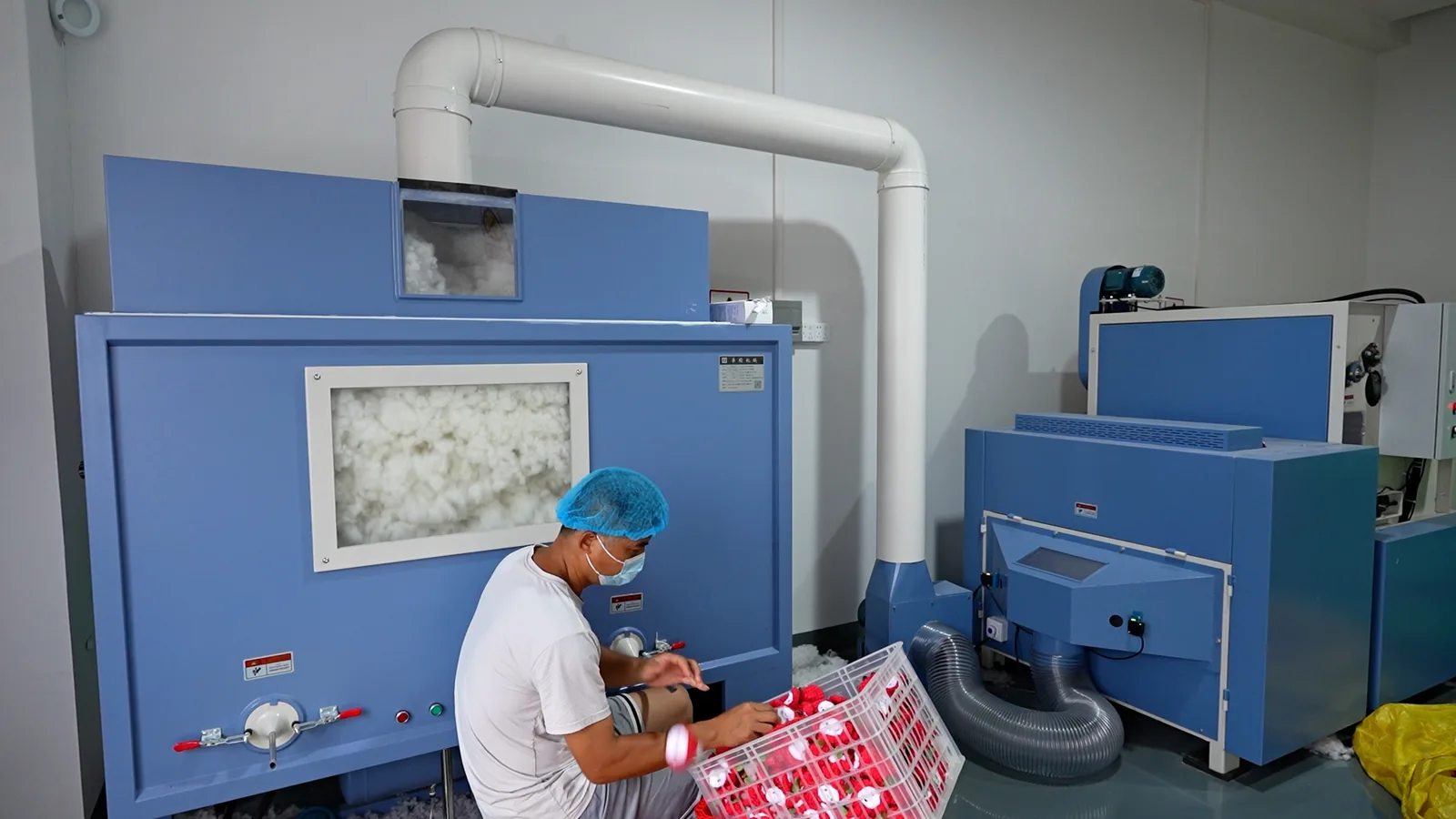
Stuffing
The shell is filled to the firmness and weight agreed on the approved sample, then worked into shape and closed. Filling, shaping and closing are one continuous stage.
Fill weight, firmness and distribution are compared with the approved sample, and the closed seam is checked for gaps and puckering. Symmetry and silhouette are checked before the piece moves to inspection.
09
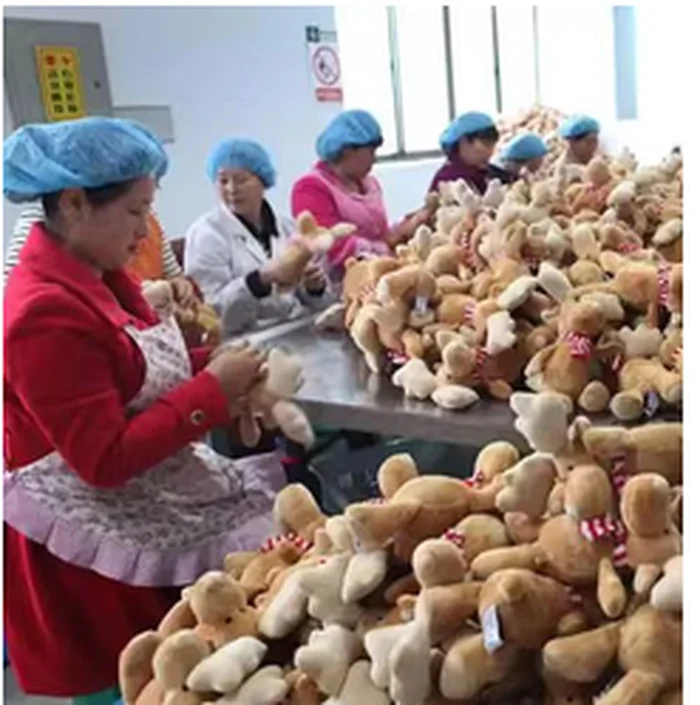
Bulk Quality Inspection
The run is checked against the approved sample and the defect criteria agreed for the order, covering appearance, dimensions, fill, function, labels and packing before cartons close.
The batch is compared with the reference sample, not from memory: colour, size, shape, decoration, seams and accessories. Scope and sampling follow the plan agreed for the order, and a customer or third-party inspection can be arranged before shipment when agreed in advance. No inspection removes every defect.
10
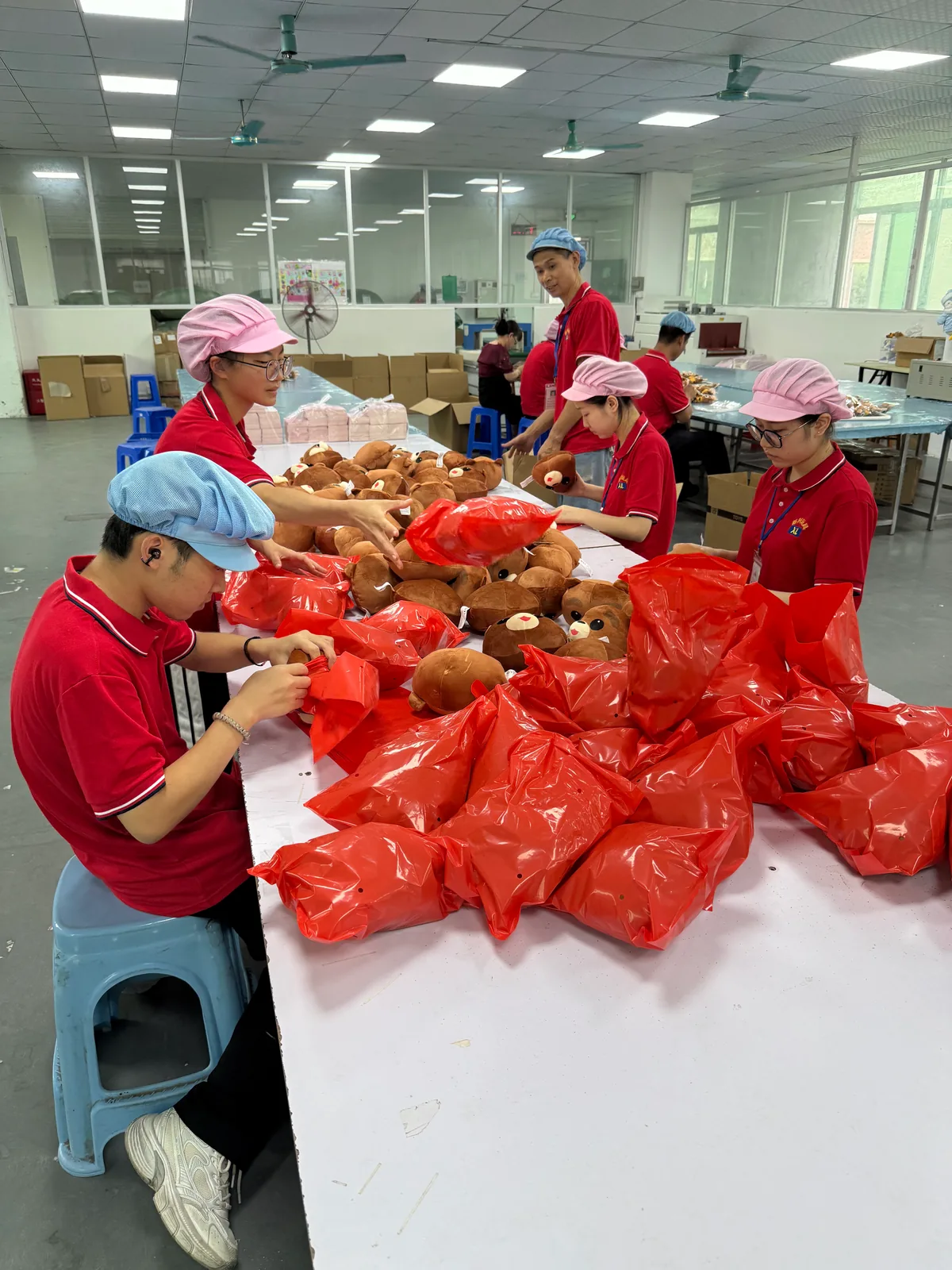
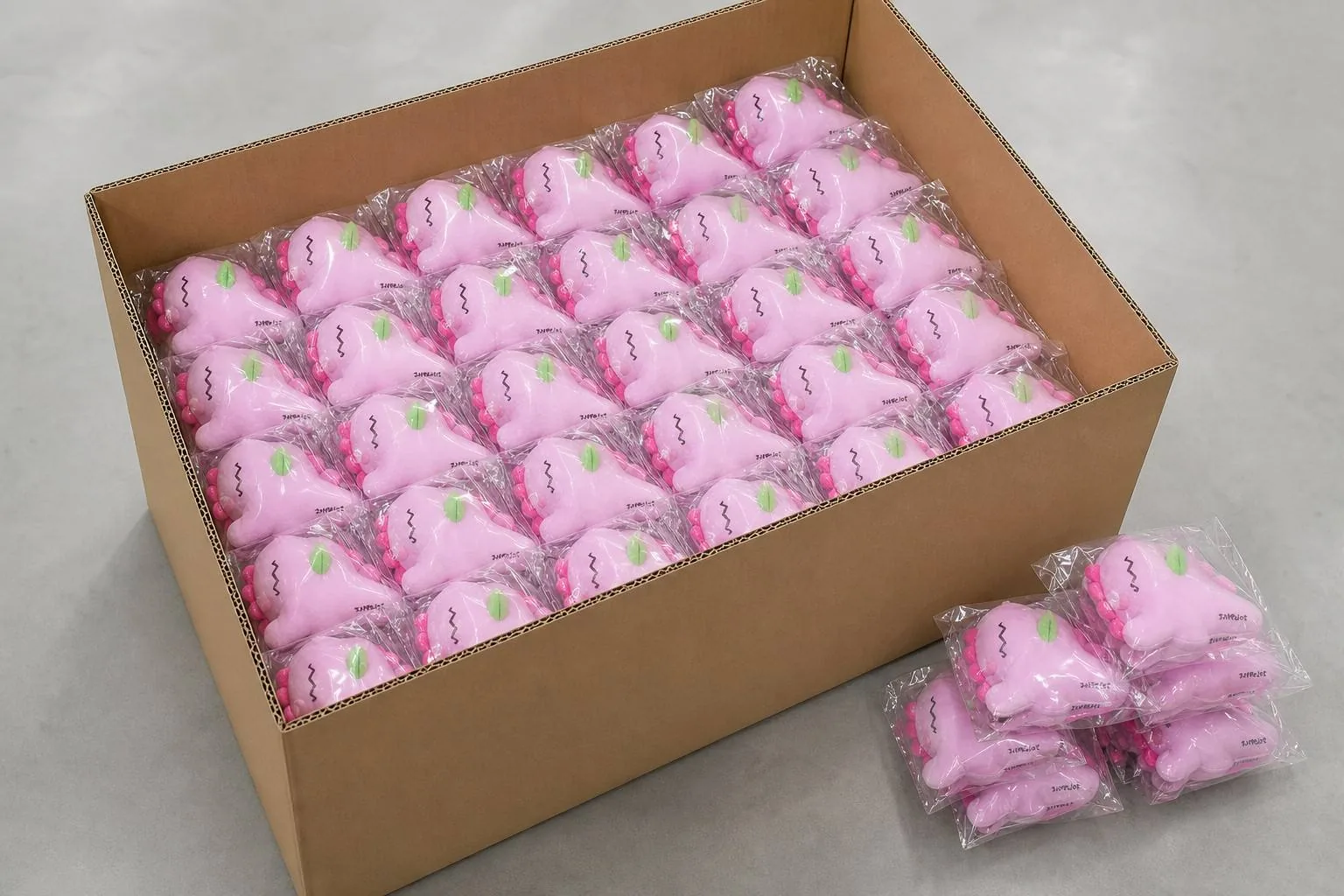
Bulk Packaging
Packing follows the approved packing specification, which sets the bag or vacuum pack, labels and barcodes, inner boxes, carton marks and quantity per carton.
Label and barcode proofs are checked against the approved version before packing starts. Carton count, marks and condition are checked against the packing list, and vacuum-packed items are checked for recovery after opening where that method is used.
11
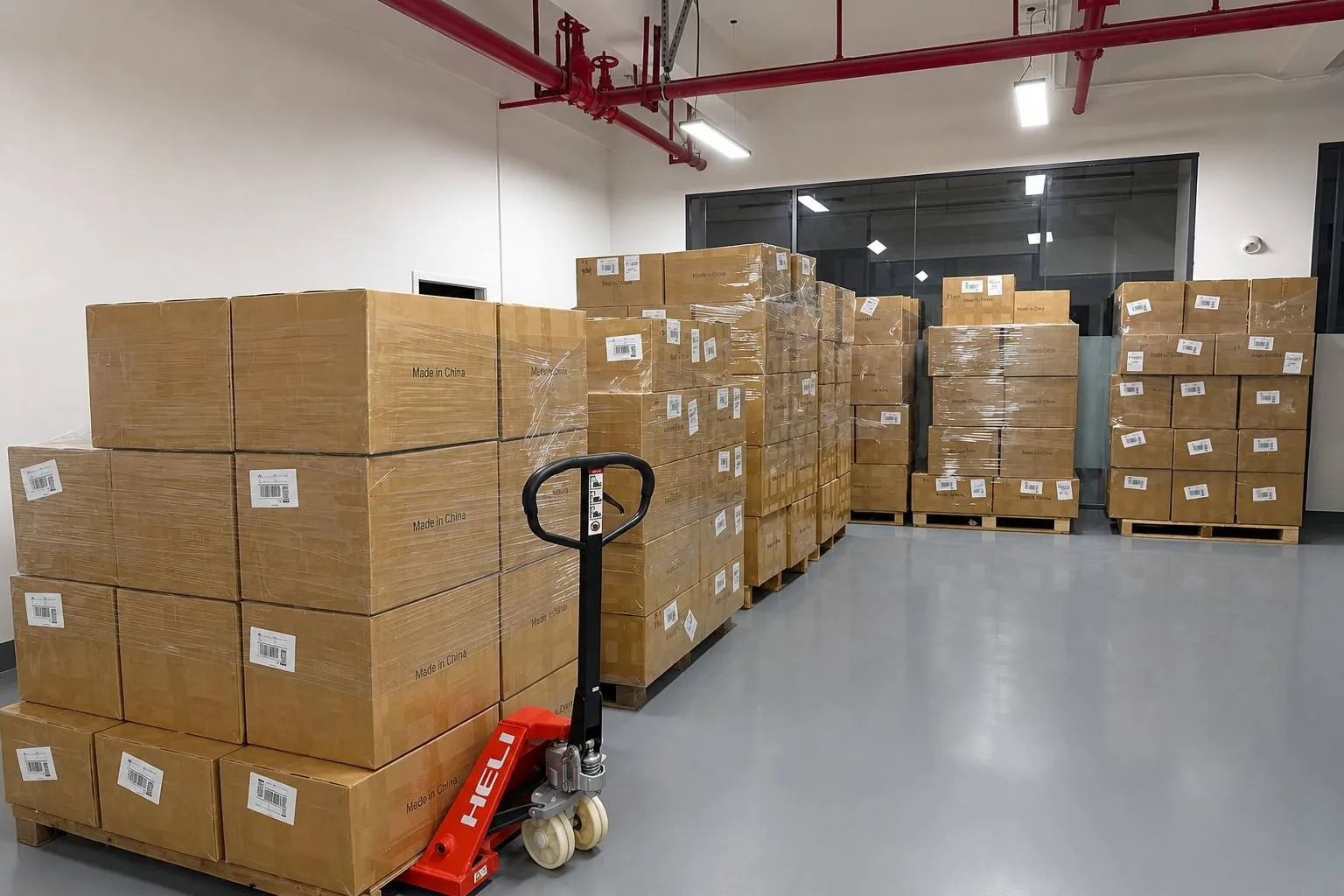
Shipping
Shipping is booked on the trade term and mode agreed for the order: courier, air or sea. The quotation states the port, the documents and which costs are included.
Cartons are checked against the packing list and marks before collection. Invoice, packing list and transport document are issued to the agreed terms; insurance or duty appears only where the quotation says so. Transit time is confirmed at booking, not fixed here.
12
Confirm Receipt
Check the carton count and condition on arrival, then the contents against the packing list and the approved sample. Signing for delivery confirms receipt, not that every piece has passed a quality check.
Report any problem with the order number and photos, and keep the affected pieces for review. How it is handled follows the terms agreed for the order.
Printing and embroidery sit inside this sequence rather than beside it. Depending on construction, decoration may be applied to the fabric or to cut panels before assembly, and the exact order can vary. When a design uses neither, those stages drop out and the run continues from material preparation to cutting. The sampling stage explains how the design and the first sample are agreed; quality and safety covers testing and records.
What A Change After Approval Costs
Changes are possible. Each one is assessed for its effect on cost and schedule, and the delay often matters more than the price.
| Decision Point | What To Confirm | Why It Matters |
|---|---|---|
| Design Or Size Change | New pattern and a new sample; production stops until approved. | Usually the largest delay of any change. |
| Material Substitution | Re-sourcing and a new pre-production sample; existing test reports may need review. | Can invalidate an existing test report. |
| Quantity Increase | Additional material booking and a revised schedule. | Material lead time, not sewing, usually decides the date. |
| Quantity Reduction | Material already booked may not be returnable. | Cost per unit rises even though fewer units ship. |
| Packing Or Label Change | New packing material, new label proof and re-inspection. | Cheap to decide early, expensive after packing starts. |
| Date Pulled Forward | Air freight or a split shipment may be needed. | Freight cost and capacity change, so the option is checked at booking. |
Shipping And Handover
Terms are agreed per order; nothing below is a standing commitment to a transit time.
- Trade terms
- EXW, FOB, CFR, CIF, FCA, CPT, CIP, DDP and DDU can be quoted, plus express courier.
- Export port
- Shenzhen is the recorded port of export for recent shipments.
- Modes
- Courier, air and sea are assessed per project; carrier and transit time are confirmed at booking.
- Documents
- Invoice, packing list and the transport document are issued to the agreed terms; certificates depend on the test plan agreed for the order (see testing and compliance support).
- Insurance and duty
- Stated explicitly in the quotation; not assumed to be included.
Freight, Tax And Changes After The Order Is Placed
Cartons are checked against the packing instruction and carton marks before collection. Freight is quoted for the agreed method; import duties, taxes and destination charges sit with the buyer unless the quotation says otherwise.
Changes after materials are cut or production has started are quoted as a new scope, because the work already done cannot be recovered. A repeat order re-checks the approved sample version, material availability, labels and packing, destination requirements and current cost and lead time before it is scheduled.
What A Reorder Needs
A reorder is faster only because the specification already exists.
- Project referenceThe original project or order number, so the approved specification can be retrieved.
- Unchanged specificationConfirmation that design, material, colour, labels and packing stay the same.
- New quantity and dateThe split and the required date for this run, which may differ from the first.
- Change declarationAny intended change is declared before quotation, so its effect can be priced.
Questions About Production And Delivery
Four answers that come up before every shipment.
How Long Does Production Take?
No single figure is published, because material lead time, decoration, quantity and the shipping mode all change it. The schedule is confirmed in writing against the start conditions on this page.
Can We Ship Part Of The Order Earlier?
Split shipment is possible when the order allows it. It is agreed at order stage, because it affects packing, documents and freight cost.
Who Arranges Inspection?
Inspection follows the agreed standard before packing. A third-party inspection can be arranged before shipment when the buyer requests it and the scope is agreed in advance.
What Happens If Goods Arrive Damaged?
Report with the order number, batch, quantity, photos and retained samples. Responsibility is assessed against the approved sample, inspection records, packing and transport evidence, and the remedy follows the contract terms.
Fix The Inputs, Then The Date
Send the specification status and the date you need. The reply will say which conditions are still open.
Custom-made from 1 piece. No ready-to-ship stock. Sampling or production is required before dispatch.