
Solutions / Bulk and private label
Bulk Custom Plush For Retail And Private Label
Custom production at volume for retailers, importers and private-label brands: one design or a small range, produced to your labels and packing, with batch consistency agreed before the first carton.
What Bulk Custom Means Here
Every unit is made to your approved sample. Nothing on this page is stock, surplus or ready to ship.
This route is for buyers ordering a production run of a custom plush design: retail chains, importers, distributors and brands selling under their own label.
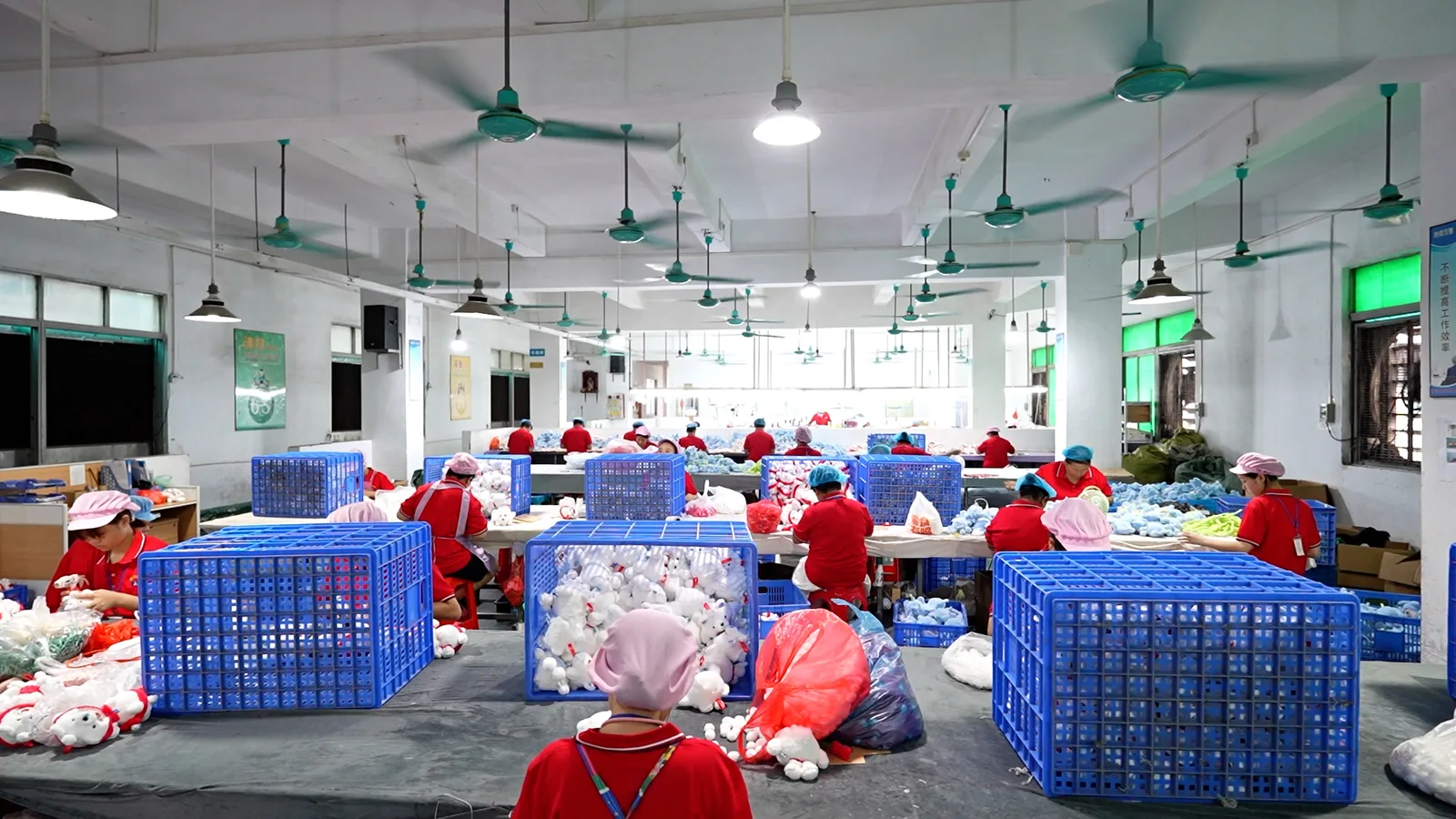
The design is developed or adapted first, sampled, approved, and then produced. Because the goods are made after approval, the quantity, the style and colour split and the packing have to be settled before production starts.
Bulk is not a discount tier on a catalogue item. It is a production commitment, and most of the commercial risk sits in the split: how many units per style, per colour and per packing variant.
What A Bulk Enquiry Has To Contain
Six inputs decide whether the run can be quoted and scheduled.
- Approved or reference designAn approved sample, or artwork complete enough to sample. Bulk cannot start from an unresolved design.
- Quantity by style and colourUnits per design, per colourway and per packing variant, not a single total.
- Labels and compliance markingCare label, fibre content, origin, age marking, barcode and any market-specific wording required by your channel.
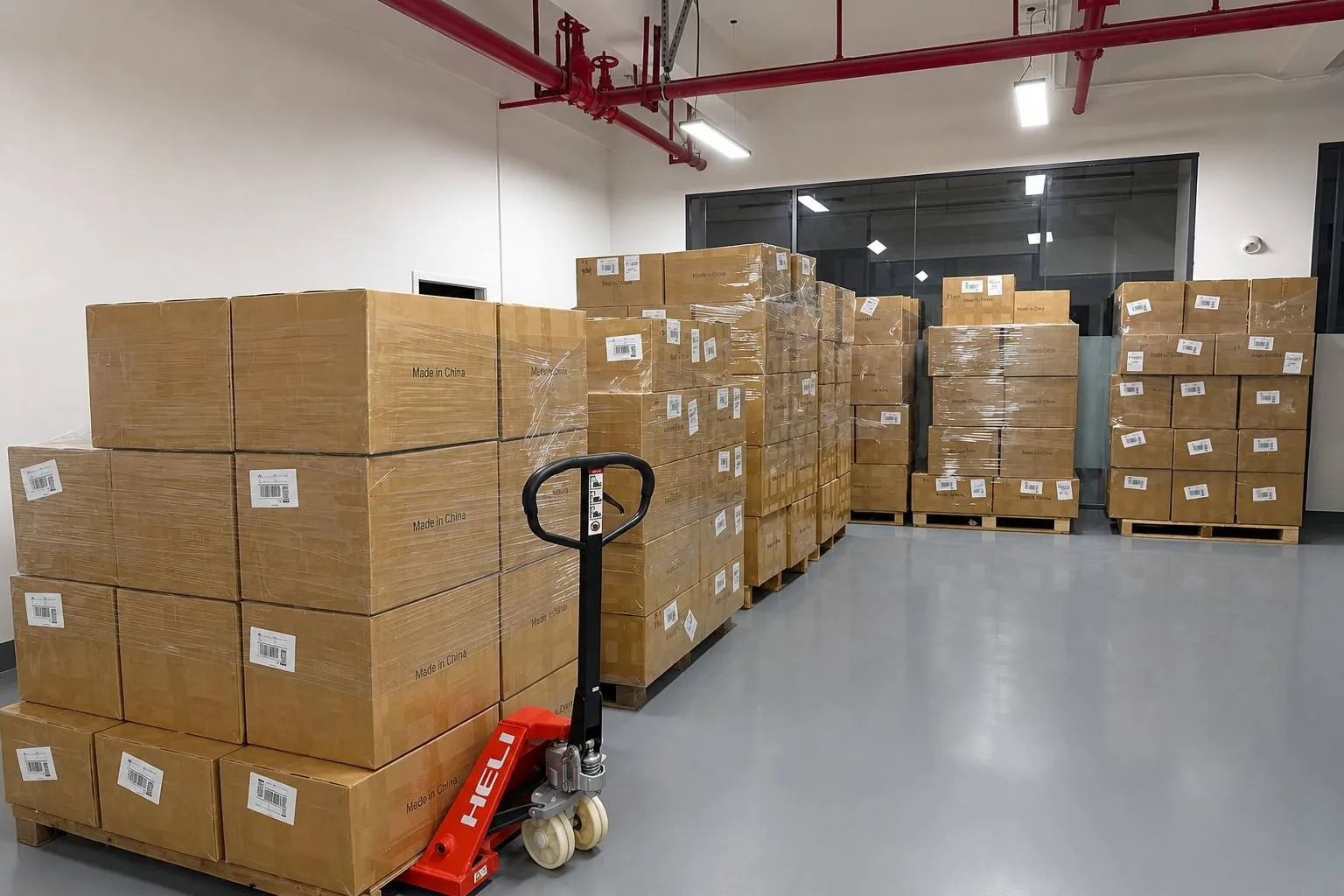
- Packing specificationIndividual bag, vacuum compression, inner box, display carton, shipping carton and carton marks.
- Market and age groupDestination market and intended user, which decide the test plan and the warning content.
- Delivery terms and destinationIncoterm, port or door, and the date the goods must be available.
Four Decisions That Change The Price Most
In bulk, structure and split matter more than the artwork.
Quantity And Split
Total volume helps, but the number of styles, colours and packing variants usually moves the unit price more.
Size And Construction
Finished size, number of pattern pieces and sewing time per unit set the labour content.
Decoration
Stitch count for embroidery, print area for print, and attached parts each add handling per unit.
Packing
Retail-ready packing adds material, handling and inspection steps that bulk cartons do not.
Choosing By Starting Point
| Question | What To Decide | What It Changes |
|---|---|---|
| Retail Chain | Carton marks, label content, delivery windows | Packing spec and shipping schedule |
| Distributor | Mixed styles in one shipment | Style split and carton plan |
| Marketplace Seller | Labels, poly bags, receiving rules | Packing detail and documentation |
Who Decides What
Bulk disputes are usually specification disputes. These are the points to freeze in writing.
| Decision Point | What To Confirm | Why It Matters |
|---|---|---|
| Approved Sample | Buyer approves a dated sample; Orui seals one and produces to it. | Without it, batch consistency has no reference. |
| Label Content | Buyer supplies label wording and barcode data; Orui applies and checks it. | Wrong label content is a compliance failure, not a cosmetic one. |
| Quantity Split | Buyer fixes units per style, colour and packing. | Changes after material purchase move cost and date. |
| Test Plan | Buyer states market and age; the applicable tests are agreed before production. | Testing after packing risks rework. |
| Inspection Standard | Agreed in the order: defect classes and who releases. | Without a written standard, ‘quality’ is an opinion. |
| Reorder Basis | Orui keeps the frozen specification for the next run. | Material changes require a new approval. |
How A Bulk Run Is Sequenced
Each stage closes a decision so the next one cannot reopen it.
Freeze Design And Split
Confirm the approved sample, the quantity split and the packing variants.
Freeze Labels And Test Plan
Label wording, barcode data, market and age requirements are locked with the specification.
Confirm Order And Materials
Order terms, deposit and material booking; long-lead materials are the usual schedule risk.
Produce With In-Process Checks
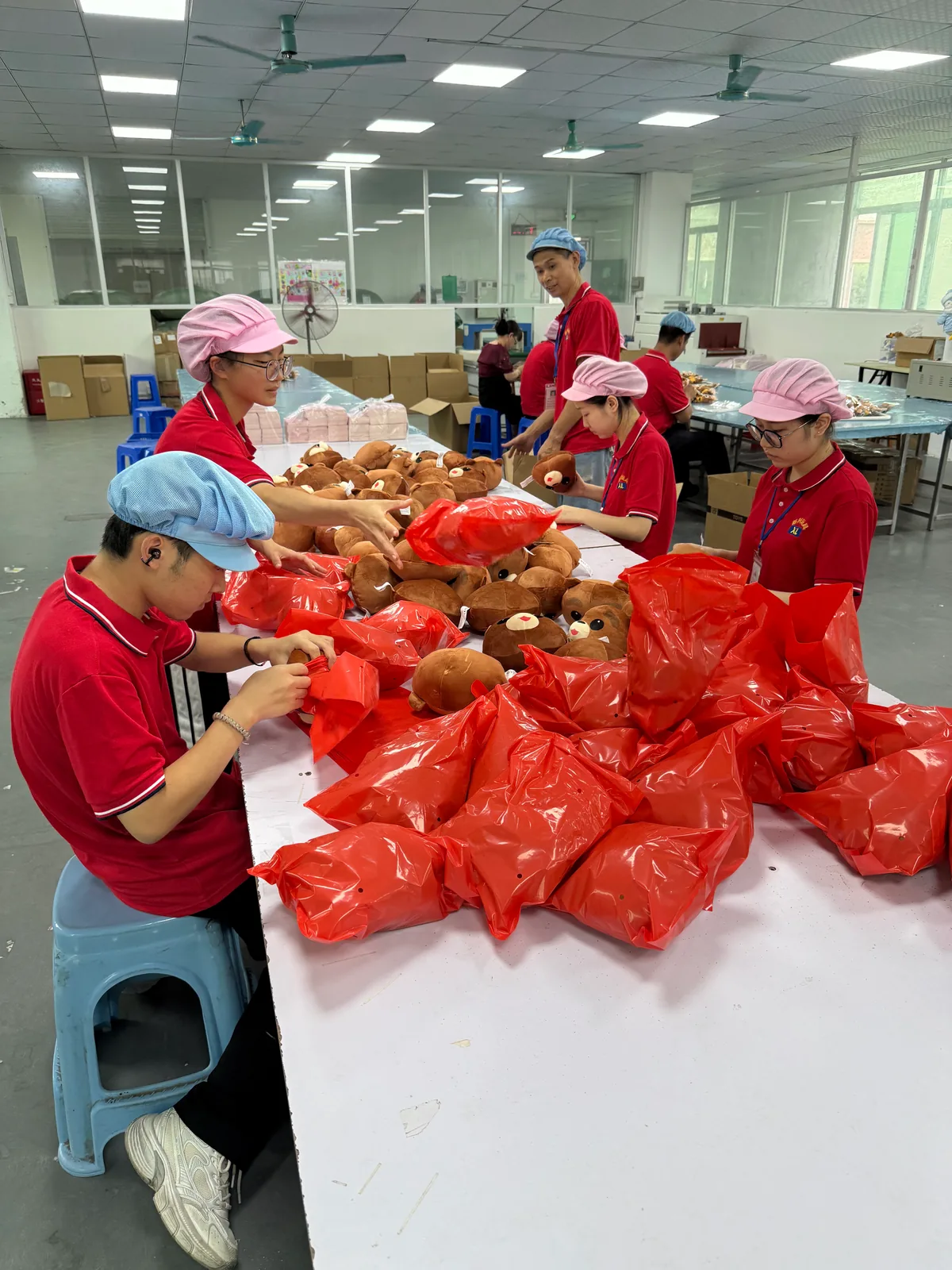
Cutting, decoration, sewing and filling are checked against the approved sample as the batch moves.
Inspect, Pack, Ship
Final inspection before packing, packing to specification, then documents and dispatch.
Questions Bulk Buyers Ask First
Four answers that decide whether a run is straightforward.
How Are Several Styles Priced In One Order?
Usually not. Different styles carry their own pattern, sample and production minimum, and mixed colours are limited by the fabric minimum per colour. Mixed packing adds material minimums and changeover time. The split is quoted explicitly rather than absorbed into one figure.
How Is Batch Consistency Maintained Across A Large Run?
Production is compared against the sealed approved sample throughout, and inspection happens before packing. If material, construction or packing changes between runs, a new pre-production sample is approved first.
Do You Supply Retail-Ready Packing?
Individual bagging, labels, barcodes and cartons can be specified. Only vacuum packing equipment is confirmed in house; other formats and their minimums are confirmed per order rather than assumed.
What Is Needed For A Reorder?
The original project reference, the approved specification and the quantity split. A reorder is faster because the pattern and specification already exist, but it is still a new production commitment with its own schedule.
Send The Split, Not Only The Total
Units per style, colour and packing is the number that makes a bulk quotation real.