Products / Stuffed animals
Custom Stuffed Animals
Three builds show how an animal is read in fabric: a koala where the head carries the recognition, a monkey labelled as a hand puppet, and a crocodile labelled as weighted. The labels are on the artwork; the images do not show what is inside any of them.
What These Three Builds Demonstrate
Each answers a different question about an animal form.
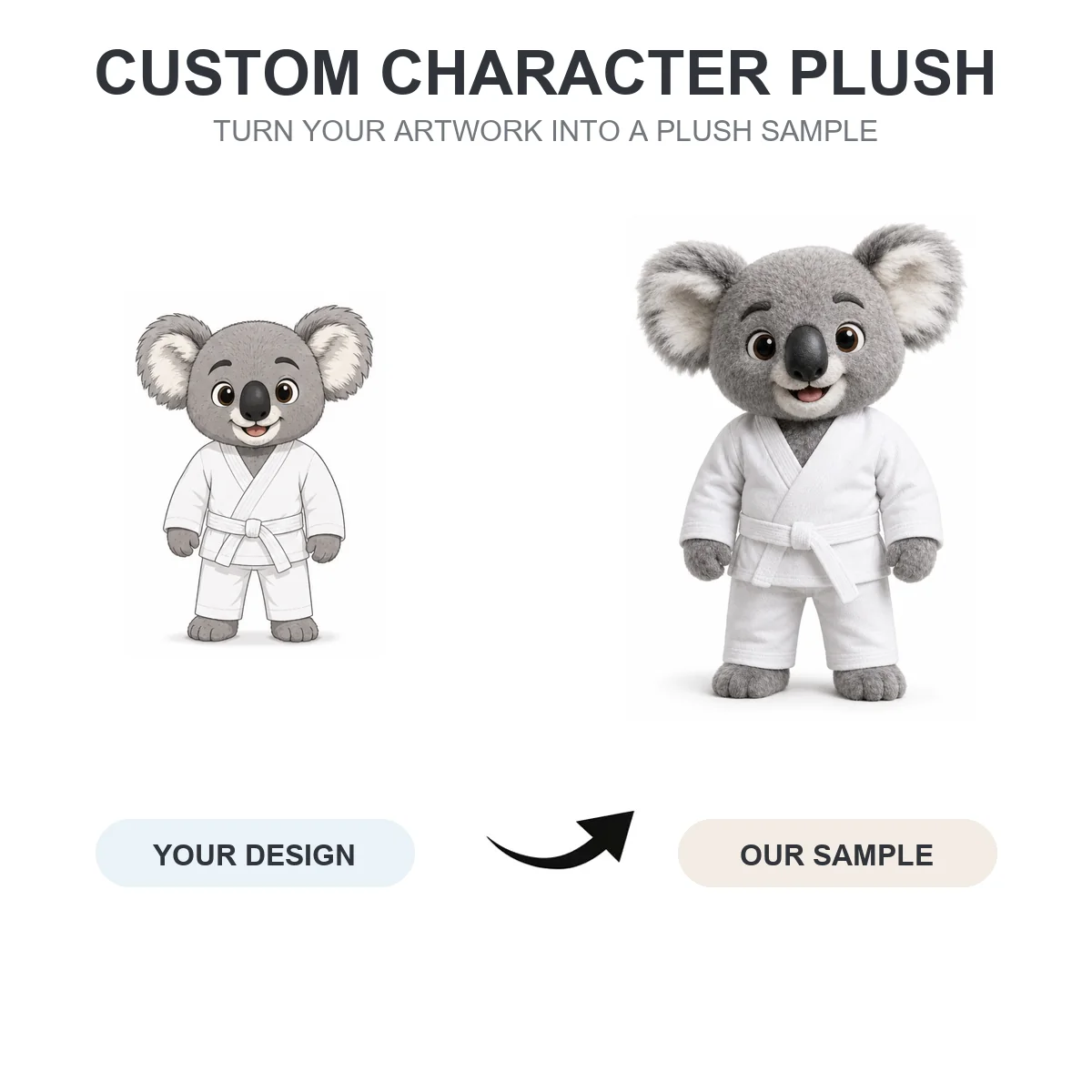
The koala shows proportion: a rounded head, low ears and short limbs do the recognition work, and a white garment sits over the body as a separate layer.
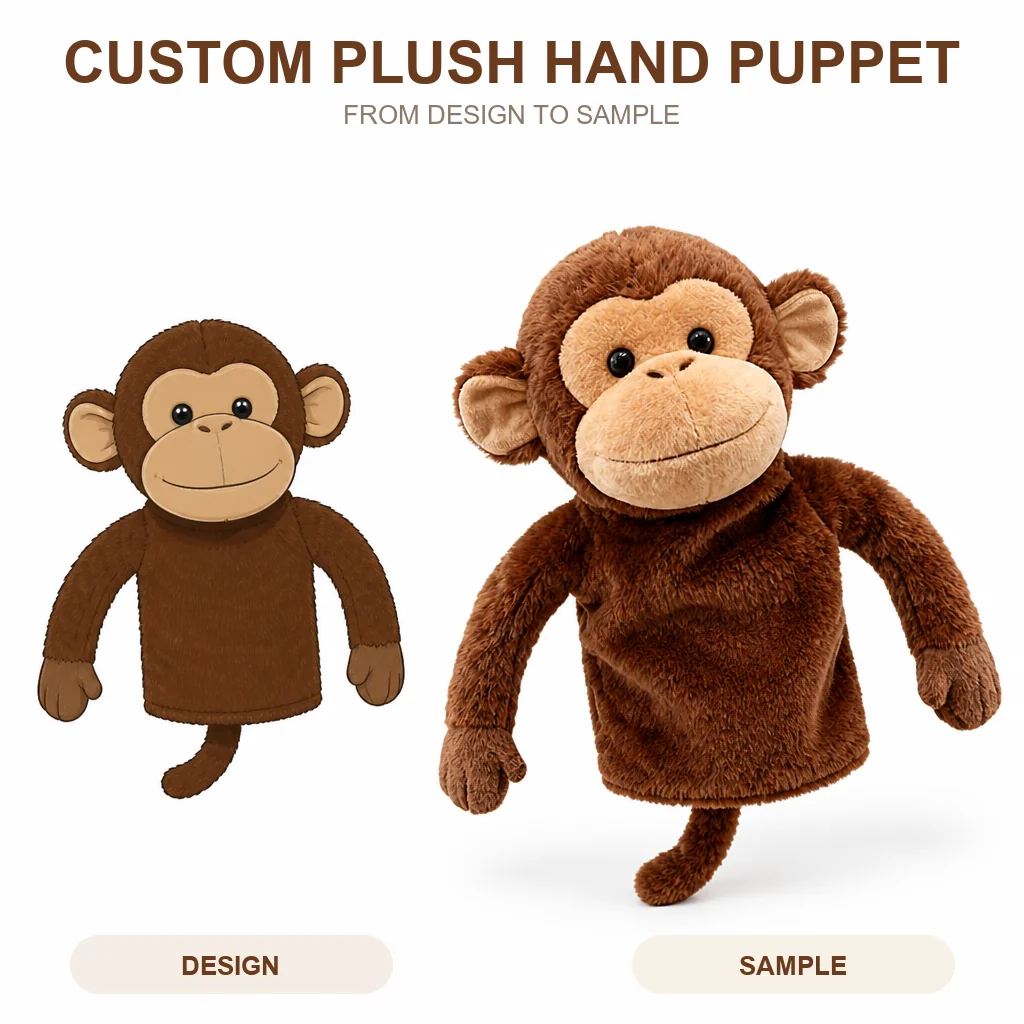
The monkey is labelled a hand puppet. The label is part of the artwork; the photograph does not show the base, the inside, or how a hand enters it.
The crocodile carries a ‘Weighted’ label and shows a circular texture swatch above the body. That swatch indicates granular filling in principle; it does not show a separate bag, how the weight is distributed, or how it is fixed.
These are design-to-sample pairs from the workshop’s product photography. No client or order is claimed.
Three Animals, Three Constructions
Read the pairs for what changes between drawing and fabric.
Koala, Garment Build
Head and body read as one soft form, with a white garment sitting over it. Ear placement sits low on the head, which is what makes the shape read as a koala rather than a bear. Seam lines and the garment’s construction are not resolvable at this size.
- Reference
- Koala with a separate garment
- Observed detail
- Rounded head, low ears, garment as an outer layer; seams not visible
Monkey, Hand Puppet
The label on the artwork reads ‘hand puppet’. What the picture supports is the outside: a soft body with arms held forward and a head shaped for a puppet. The base, the opening and any lining are not visible.
- Reference
- Monkey hand puppet
- Observed detail
- Labelled hand puppet; outer shape only; interior not shown
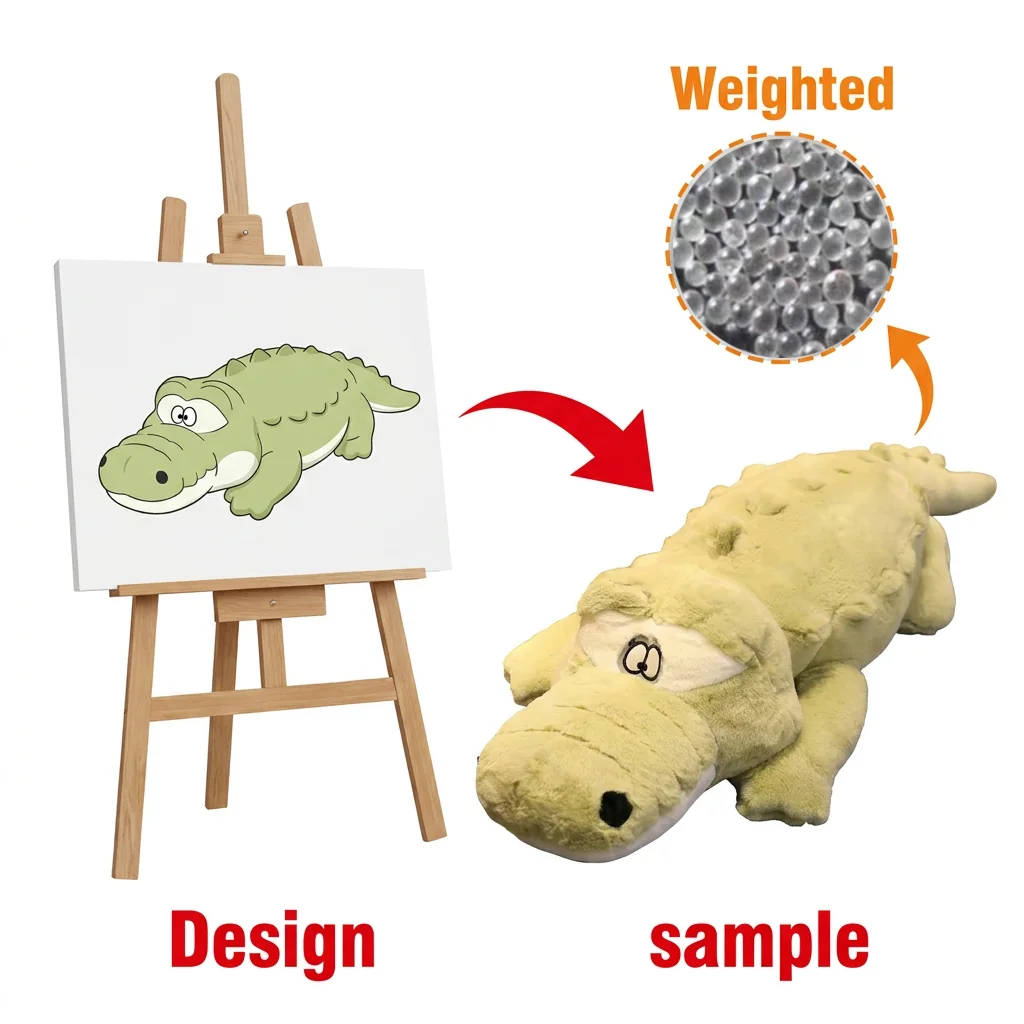
Crocodile, Weighted Body
The artwork is labelled ‘Weighted’ and shows a circular granular swatch above the sewn crocodile. The image does not show an inner bag, the amount of weight, or where it sits in the body.
- Reference
- Weighted crocodile, lying form
- Observed detail
- Labelled weighted; granular swatch shown; internal construction not visible
What Differs Across The Three
Derived from the images on this page.
| Decision Point | What To Confirm | Why It Matters |
|---|---|---|
| What The Label Says | ‘Hand puppet’ on the monkey, ‘Weighted’ on the crocodile; the koala carries no label. | A label is a claim by the supplier, not a construction drawing. |
| What The Photo Adds | Outer shape, pose and surface. The monkey’s body opening and the crocodile’s filling are not shown. | Interior questions have to be asked, not read off the image. |
| Recognition Cue | Head proportion for the koala; limb and tail outline for the crocodile. | Tells you where the pattern budget should go. |
| Surface | Short pile on the koala keeps the face readable; the crocodile’s longer pile softens edges. | Longer pile hides small features. |
Before You Ask For A Sample
Photographs show the finished piece, not the inside: jointing and filling density has to be confirmed on the sample or in the brief rather than read from a picture.
- Proportion and size: state the finished height or length you need.
- Surface and craft: say whether the look depends on pile, print or embroidery.
- Build detail for this form: Stuffed Animal Customization.
Decisions That Change The Animal
Pose, filling and surface, in that order.
Start with how the animal will be used. A shelf item, a puppet and a weighted cushion are different builds, and only the first two are labelled here. Which filling, how much, and how it is contained are specification decisions, not things the photos settle.
Then check the recognition cue. If the species reads from the head, protect the head proportion and simplify the body. If it reads from the outline, protect the silhouette and simplify the surface.
Surface comes last. Longer pile forgives seams and loses detail; shorter pile keeps faces crisp and shows every seam.
Where This Connects
The category page and the process behind the samples.
Sizes, weights and filling specifications are agreed per project; nothing on this page is a fixed specification.
Stuffed Animal Questions
Can A Realistic Animal Be Made Rather Than A Cartoon One?
Yes, and the pattern does more work than the decoration. Realistic eyes and muzzles usually need attached components, which is a different construction from the embroidered faces shown here.
Can One Design Be Made In Several Sizes?
Each size is graded and sampled separately. Scaling a pattern distorts proportion, and proportion is what makes the animal recognisable.
Is The Weighted Version Safe For Children?
That depends on the filling, how it is contained, the age group and the market. None of it can be read from the photo, so it is specified per project with the intended age known.
Can You Make A Cat, Dog Or Dragon Rather Than A Bear?
Yes. Species changes the pattern, not the process: a cat needs ear and muzzle shaping, a dog needs a longer snout, a dragon needs a tail and wing decision. None of those three is photographed on this page, so the shapes would be new rather than a modification of a sample shown here.
Name The Animal, The Pose And The Use
Those three decide the construction before artwork does.